









Dernière mise à jour le 04/09/2025 par Usine de solénoïdes
Electromagnets are critical components in industries ranging from automotive manufacturing to renewable energy systems. Over time, wear and tear, environmental factors, or operational stresses can lead to component failures. Knowing how to repair and replace électro-aimant parts is essential for minimizing downtime, reducing costs, and ensuring operational safety. This guide provides step-by-step instructions, industry best practices, and real-world case studies to empower users to perform effective repairs and replacements.
1. Safety First: Preparing for electromagnet parts Repairs
1.1 Pre-Repair Safety Protocols
- De-Energize the System: Disconnect power and follow Lockout/Tagout (LOTO) procedures.
- Discharge Residual Energy: Use a grounding probe for capacitors or superconducting magnets.
- Wear Protective Gear: Insulated gloves, safety goggles, and flame-resistant clothing.
1.2 Tools and Materials
- Basic Tools: Multimeter, torque wrench, screwdrivers, and pliers.
- Specialized Tools: Coil winder, bearing puller, and megohmmeter.
- Replacement Parts: Coils, armatures, springs, and seals (always use OEM or manufacturer-approved parts).
2. Identifying Replaceable Parts and electromagnet Common Failures
2.1 Key Electromagnet Components
- Coils: Prone to insulation breakdown, open circuits, or overheating.
- Armatures/Cores: Susceptible to corrosion, scoring, or demagnetization.
- Springs: Fatigue or deformation due to cyclic loading.
- Mounting Hardware: Bolts, brackets, and bushings may loosen or corrode.
- Seals and Gaskets: Degrade in harsh environments (e.g., moisture, chemicals).
2.2 Common Failure Symptoms
- Coil Burnout: Charred insulation, open circuit (infinite resistance).
- Weak Magnetic Force: Demagnetized core or misaligned armature.
- Mechanical Jamming: Corroded slides or worn bearings.
3. Step-by-Step Repair and Replacement Procedures
3.1 Replacing a Faulty Coil
Symptoms: No activation, burnt smell, or visible insulation damage.
Steps:
- Disassemble the Electromagnet:
- Remove mounting bolts and carefully separate the core from the housing.
- Label wires to ensure correct reconnection.
- Extract the Damaged Coil:
- Use a coil winder or gentle prying tools to avoid damaging the bobbin.
- Install the New Coil:
- Wind the new coil tightly, matching the original turns and direction.
- Secure with epoxy or high-temperature tape.
- Test Continuity and Insulation:
- Verify resistance matches specs (e.g., 10Ω ±5%).
- Use a megohmmeter to ensure insulation resistance >100MΩ.
Case Study 1:
A food processing plant’s conveyor electromagnet failed due to moisture ingress. Replacing the coil with an IP68-rated, epoxy-encapsulated version eliminated future failures.
3.2 Replacing a Worn Armature
Symptoms: Reduced holding force, visible pitting, or rust.
Steps:
- Remove the Armature:
- Detach retaining clips or bolts.
- Use a bearing puller if the armature is stuck.
- Clean the Core Surface:
- Polish with fine-grit sandpaper to remove rust or debris.
- Install the New Armature:
- Apply anti-corrosion grease to sliding surfaces.
- Align within 0.1mm tolerance using a dial indicator.
Case Study 2:
A steel mill’s crane electromagnet dropped loads due to a corroded armature. Replacing it with a nickel-plated armature and weekly graphite lubrication restored 100% grip force.
3.3 Replacing Springs and Bushings
Symptoms: Slow release, chattering, or misalignment.
Steps:
- Remove Old Springs/Bushings:
- Compress the spring safely using a C-clamp.
- Press out worn bushings with an arbor press.
- Install New Components:
- Select springs with matching spring rate and preload.
- Press bushings into housing with alignment jigs.
- Lubricate:
- Apply high-temperature grease (e.g., lithium complex).
Case Study 3:
A packaging machine’s electromagnet chattered due to a fatigued return spring. Installing a spring with 20% higher preload eliminated noise and improved cycle times.
3.4 Replacing Seals and Gaskets
Symptoms: Fluid ingress, corrosion, or loss of pressure.
Steps:
- Disassemble the Housing:
- Carefully peel off old gaskets without scratching surfaces.
- Clean Sealing Surfaces:
- Use isopropyl alcohol to remove residue.
- Install New Seals:
- Apply silicone sealant for static gaskets.
- Use Viton or PTFE seals for chemical resistance.
Case Study 4:
A hydraulic valve’s electromagnet failed due to oil contamination. Replacing nitrile seals with PTFE versions extended service life by 300%.
4. Reassembly and Post-Repair Testing
4.1 Reassembly Best Practices
- Follow Torque Specs: Over-tightening bolts can warp components (e.g., 15 N·m for M8 bolts).
- Reconnect Wiring: Ensure correct polarity for DC coils.
- Verify Air Gaps: Use feeler gauges to maintain manufacturer-specified gaps.
4.2 Functional Testing
- Electrical Tests:
- Continuity: Confirm no open/short circuits.
- Insulation Resistance: >100MΩ at 500V DC.
- Mechanical Tests:
- Actuation Force: Use a load cell to verify holding force.
- Response Time: Measure engagement/disengagement speed with a strobe light.
- Environmental Tests:
- Thermal Cycling: Operate at min/max rated temperatures.
- Vibration Testing: Ensure no loosening at 5–500 Hz.
Case Study 5:
After replacing a coil in a wind turbine’s pitch control system, technicians used a thermal camera to validate even heat distribution and a megohmmeter to confirm 150MΩ insulation resistance.
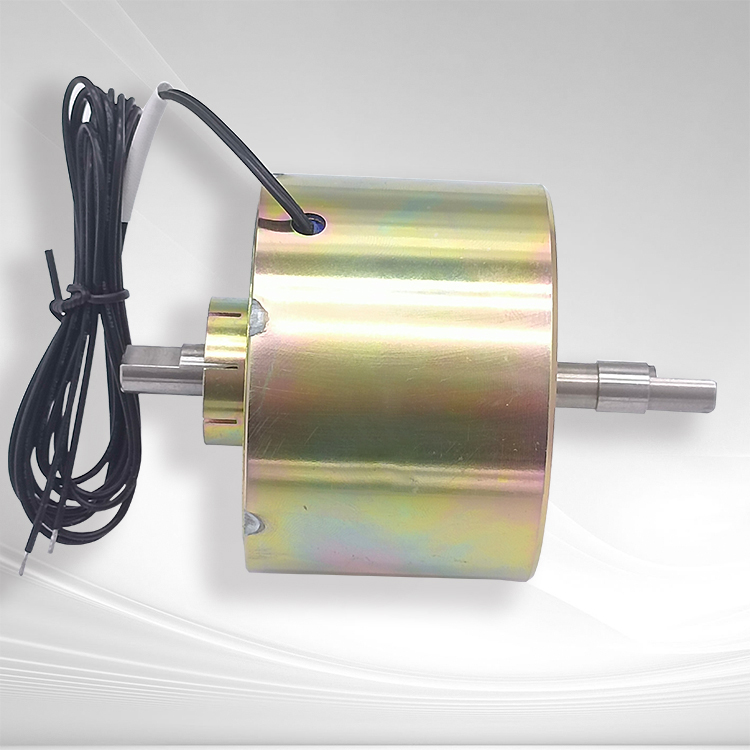

5. Industry-Specific electromagnet Repair Case Studies
5.1 Automotive Manufacturing: Solenoid Valve Repair
Problème: A robotic paint shop’s solenoid valve leaked due to a worn plunger seal.
Solution:
- Replaced the seal with Kalrez® (chemically resistant fluoropolymer).
- Upgraded to a dual-coil design for redundancy.
Résultat: Zero leaks over 12 months, saving $50K annually in paint waste.
5.2 Healthcare: MRI Magnet Quench Repair
Problème: A superconducting magnet quenched, damaging its cryogenic system.
Solution:
- Replaced fractured Nb₃Sn coil sections.
- Installed a redundant quench detection circuit.
Résultat: Magnet restored to 3 Tesla operation with enhanced safety protocols.
5.3 Renewable Energy: Wind Turbine Brake Repair
Problème: A turbine’s electromagnetic brake overheated due to a cracked armature.
Solution:
- Replaced the armature with a forged steel variant.
- Added active cooling fans.
Résultat: Brake lifespan extended from 2 to 7 years.
6. Preventive Maintenance to Reduce Repairs
6.1 Scheduled Inspections
- Monthly: Check bolt torque, electrical connections, and lubrication.
- Annually: Perform full disassembly and component replacement if wear exceeds 10%.
6.2 Environmental Protection
- Enclosures: Use NEMA 4X cabinets for outdoor installations.
- Coatings: Apply ceramic or epoxy coatings to resist corrosion.
6.3 Training and Documentation
- Workshops: Train staff to recognize early failure signs (e.g., unusual noises, slower response).
- Digital Logs: Track part lifespans and failure modes using CMMS software.
7. When to Consult a electromagnet Professional
While many repairs can be done in-house, seek expert help for:
- Superconducting Magnets: Require cryogenic expertise and specialized tools.
- High-Voltage Systems: Risks of arc flashes or lethal shocks.
- Custom Components: Proprietary designs needing OEM tooling.
Case Study 6:
A nuclear plant’s control rod electromagnet required proprietary cobalt-free alloys. The OEM performed the repair under radiological supervision, ensuring regulatory compliance.
Empowering Users with Repair Expertise
Learning how to repair and replace electromagnet parts is a vital skill for maintaining operational efficiency and safety. By following this guide—backed by real-world examples and best practices—users can tackle common issues confidently, reduce downtime, and extend equipment life.
As your trusted électro-aimant partner, we provide custom repair kits, technical support, and training programs to ensure your systems perform at their peak. Remember: Proactive maintenance and skilled repairs are the keys to unlocking decades of reliable service.
À propos de l'usine d'électroaimants SF
Shengfeng Electromagnet Co., Ltd., fondée en 2015, est située dans le parc industriel de Xiansha, bénéficiant d'un cadre agréable et d'une excellente desserte. L'entreprise s'étend sur 16 000 mètres carrés et dispose d'usines de production modernes, d'équipements de pointe et d'une équipe technique hautement qualifiée. Depuis sa création, elle s'est toujours attachée à sa philosophie d'entreprise axée sur l'innovation, la qualité et le service, en se concentrant sur la recherche, le développement et la production de… électroaimants, en promouvant constamment les mises à jour de produits et les progrès technologiques, et en fournissant aux clients des produits et services de la meilleure qualité.
Pourquoi choisir un électroaimant SF ?
HAUTE QUALITÉ :En tant que premier fabricant d'électroaimants à solénoïde en Chine, notre équipe de contrôle qualité veille à ce que chaque produit que vous recevez soit d'une qualité irréprochable. Nous disposons d'équipements professionnels pour les tests de qualité.
CONCEPTION DU PRODUIT :Notre service d'échantillonnage maîtrise l'ensemble du processus de concrétisation de vos plans. Nous optimisons également la conception de vos produits en nous appuyant sur nos années d'expérience. Faites-nous part de vos avis.
DÉLAI DE LIVRAISON STABLE :En tant que fabricant et fournisseur d'électroaimants de premier plan, nous disposons d'une capacité de production suffisante ; les commandes importantes ne nous effraient pas et nous sommes en mesure de les livrer dans les délais.
MEILLEUR PRIX :Nous sommes une usine d'origine spécialisée dans les électroaimants et le meilleur fabricant de solénoïdes en Chine ; c'est pourquoi nous pouvons proposer des produits de haute qualité au meilleur prix.
GESTION PRÉCISE :Rien ne peut être accompli sans une gestion rigoureuse. Nous sommes une entreprise dotée d'un système de gestion complet.
SERVICE 7-24 :En tant que fabricant leader de solénoïdes, nous vous garantissons une réponse immédiate 24h/24 et 7j/7 : vos commentaires nous permettent de nous améliorer constamment. Contactez-nous. WhatsApp +86 18902611680
FAQ sur les électroaimants
Nous sommes un leader chinois électro-aimant Notre usine de fabrication est située à Dongguan. Nous serions ravis de vous accueillir !
Nous sommes spécialisés dans la conception et la production de produits de haute qualité. électro-aimant,électrovanne,tel que solénoïde rotatif, solénoïdes bistables, solénoïdes de verrouillage, solénoïdes à cadre ouvert, solénoïdes tubulaires, solénoïde auto-maintenu
Bien entendu, nous fournissons généralement des échantillons gratuits ; vous n’avez qu’à prendre en charge les frais de port. Pour les échantillons d’électroaimants sur mesure, veuillez nous communiquer vos exigences afin que nous puissions vous indiquer le coût de l’échantillon.
• La production d'un échantillon prend environ 7 jours.
Oui, nous proposons des services de conception gratuits, incluant la conception structurelle et la conception graphique simple.
Bien sûr. Nous pouvons fabriquer n'importe quel électroaimant selon votre conception. Nous proposons désormais un service ODM de solénoïdes pour les petites séries (de 100 à 500 pièces), avec la possibilité d'y apposer votre logo.
En fonction de la quantité commandée et des détails de production, cela prendra environ 15 à 20 jours.
Toujours un échantillon de préproduction avant la production en série ; toujours une inspection finale avant l'expédition
• Puissance, consommation, dimensions, matériau, quantité, destination de livraison, etc.
• Vous pouvez aussi simplement nous faire part de vos besoins et nous vous recommanderons des produits.
• Par mer, par air ou par transport express.
• Si vous avez votre propre transitaire en Chine, il s'agit du prix départ usine ou FOB.
•CFR ou CIF, etc., si vous avez besoin que nous expédiions en votre nom.
• Le DDP et le DDU peuvent également être utilisés.
• Plus de choix, nous prendrons en compte vos choix.
Le prix est déterminé par la quantité, le matériau, le procédé de fabrication, la taille et d'autres facteurs. De plus, grâce à notre croissance continue, nous proposons des tarifs compétitifs.
Grâce à l'innovation technologique, les prix de certains de nos produits sont extrêmement compétitifs ; veuillez nous contacter pour obtenir un devis.