









Ultimo aggiornamento il 04/09/2025 da Fabbrica di Solenoidi
Elettromagneti are indispensable in industries ranging from automotive manufacturing to renewable energy. However, like all electromechanical devices, they are prone to specific issues that can affect performance, safety, and longevity. As a professional produttore di elettromagneti, we’ve compiled this comprehensive guide to help users identify, troubleshoot, and prevent the most common electromagnet problems. With real-world case studies and actionable solutions, this blog equips you to maximize uptime and optimize operations.s leo.
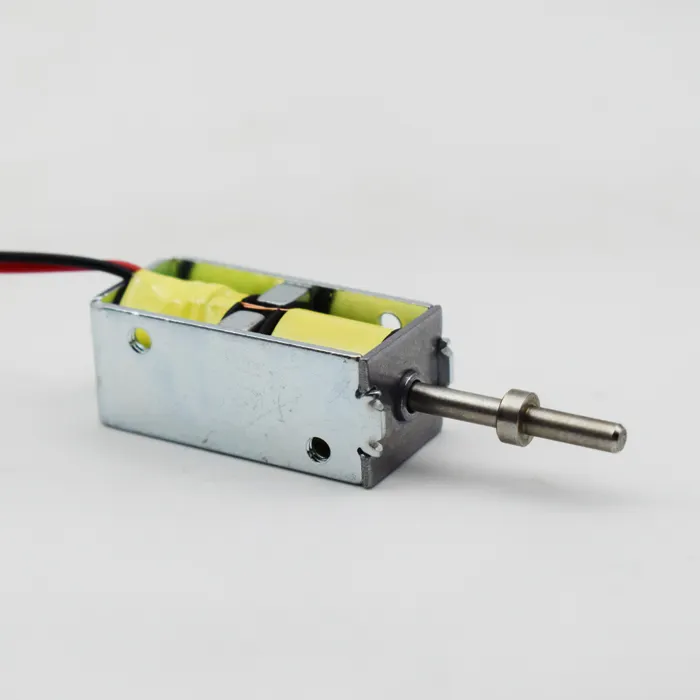
1. electromagnet problems--Overheating: The Silent Killer of Electromagnet
1.1 Causes of Overheating
- Excessive Duty Cycle: Continuous operation beyond rated ON/OFF times.
- High Ambient Temperatures: Poor ventilation or hot environments.
- Voltage Fluctuations: Overvoltage increases current, accelerating heat buildup.
Caso di studio 1:
A factory’s conveyor system electromagnets overheated after 12 hours of non-stop use. Thermal imaging revealed coil temperatures reaching 120°C—50% above the 80°C limit.
1.2 Solutions
- Install Cooling Systems: Add fans, heat sinks, or liquid cooling jackets.
- Use PWM Controllers: Reduce hold current after activation (e.g., from 100% to 30%).
- Upgrade Insulation: Switch to Class H (180°C-rated) insulation materials.
Result: The factory reduced coil temperatures to 75°C by adding fans and implementing a 60% duty cycle.
2. electromagnet problems--Coil Burnout: From Sparks to System Failures
2.1 Causes of Coil Burnout
- Insulation Breakdown: Due to moisture, chemical exposure, or aging.
- Short Circuits: Damaged wires or contaminants bridging terminals.
- Inrush Current Surges: Uncontrolled startup currents exceeding coil ratings.
Caso di studio 2:
A hospital elevator’s electromagnetic brake failed abruptly, trapping passengers. Diagnosis revealed a short circuit caused by corroded wiring in a humid shaft.
2.2 Solutions
- Regular Megohmmeter Tests: Check insulation resistance (>100MΩ).
- Surge Suppressors: Install inrush current limiters or NTC thermistors.
- Environmental Sealing: Use epoxy-encapsulated coils in damp areas.
Result: Post-repair, the hospital adopted IP67-rated coils and quarterly insulation tests—no failures in 3 years.
3. electromagnet problems--Reduced Holding Force: When Electromagnets Lose Their Grip
3.1 Causes of Force Loss
- Air Gap Changes: Misalignment or worn armature plates.
- Demagnetization: Excessive heat or mechanical shock.
- Power Supply Issues: Undervoltage or unstable current.
Caso di studio 3:
A robotic welding cell dropped components due to a 40% force reduction in its gripper electromagnets. Inspection found a 0.5mm air gap deviation from the ideal 0.2mm.
3.2 Solutions
- Laser Alignment Tools: Ensure air gaps within ±0.1mm.
- Armature Resurfacing: Machine worn plates to restore flatness.
- Current Stabilization: Use regulated power supplies with ±2% accuracy.
Result: Realigning the gap and upgrading to a stabilized 24V DC supply restored full holding force.
4. electromagnet problems--Mechanical Wear and Tear: The Cost of Friction
4.1 Common Mechanical Failures
- Worn Bushings/Bearings: Leading to misalignment and noise.
- Fatigue in Springs: Reduced return force in latching systems.
- Corroded Fasteners: Compromising structural integrity.
Caso di studio 4:
A steel mill’s electromagnetic crane dropped a 5-ton load due to a fractured mounting bracket. Root cause: stress corrosion cracking from acidic fumes.
4.2 Solutions
- Lubrication Schedules: Apply high-temperature grease every 500 cycles.
- Corrosion-Resistant Materials: Use stainless steel (A4-80) or titanium fasteners.
- Vibration Monitoring: Detect imbalance before catastrophic failure.
Result: The mill switched to galvanized brackets and implemented biweekly lubrication—zero incidents in 18 months.

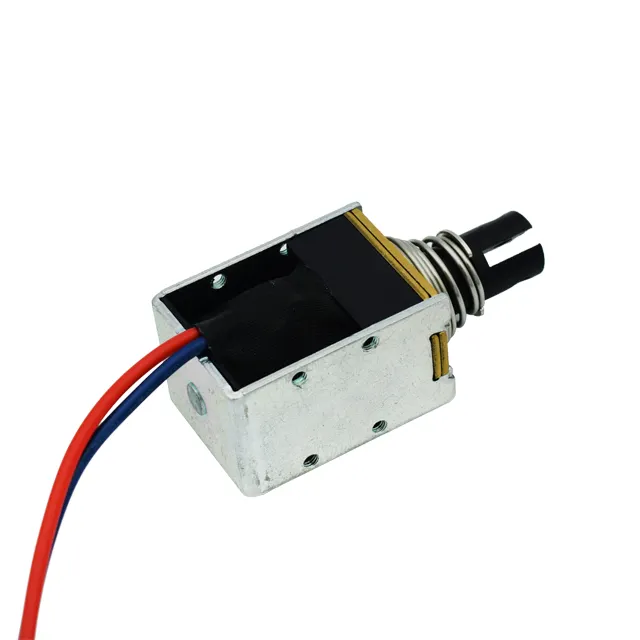

5. electromagnet problems--Electrical Noise and EMI: Disrupting Sensitive Systems
5.1 Causes of Electromagnetic Interference (EMI)
- Arcing Contacts: During rapid ON/OFF switching.
- Unshielded Cables: Acting as antennas for radiated noise.
- Poor Grounding: Creating ground loops.
Caso di studio 5:
A semiconductor fab’s MRI-compatible robot malfunctioned due to EMI from nearby electromagnets. Oscilloscope traces showed noise spikes disrupting control signals.
5.2 Solutions
- Ferrite Chokes: Install on power and signal cables.
- Twisted Pair Wiring: Reduces magnetic field coupling.
- Shielded Enclosures: Use mu-metal or conductive coatings.
Result: Adding ferrite beads and shielded conduits eliminated EMI, restoring nanoscale positioning accuracy.
6. electromagnet problems--Armature Sticking: When Release Becomes a Problem
6.1 Causes of Sticking
- Residual Magnetism: Common in DC electromagnets.
- Contaminated Surfaces: Oil, grease, or debris on armatures.
- Weak Return Springs: Fatigue or incorrect sizing.
Caso di studio 6:
A packaging machine’s electromagnet failed to release, causing jams. Residual magnetism of 0.3 Tesla was detected post-power-off.
6.2 Solutions
- Degaussing Circuits: Apply reverse polarity pulses to neutralize residual fields.
- Non-Stick Coatings: Use PTFE or ceramic coatings on armatures.
- Spring Upgrades: Replace with high-cycle-life springs (e.g., 1 million+ cycles).
Result: Installing a degaussing module and coated armatures eliminated sticking.
7. electromagnet problems--Power Supply Issues: The Root of Many Problems
7.1 Common Power-Related Failures
- Voltage Drops: From undersized wiring or long cable runs.
- Ripple Current: Causing coil vibration and noise.
- Phase Imbalance: In 3-phase systems, leading to uneven forces.
Case Study 7:
A wind turbine’s pitch control electromagnet overheated due to 20% voltage drop in 100-meter cables.
7.2 Solutions
- Cable Sizing: Use 125% of rated current capacity (e.g., 10A load → 12.5A cable).
- Active Power Factor Correction (PFC): Reduce reactive power losses.
- Voltage Boosters: Compensate for line drops in long-distance applications.
Result: Upgrading to 16 AWG cables and adding a 28V booster stabilized the system.
8. electromagnet problems--Corrosion and Environmental Damage
8.1 High-Risk Environments
- Marine/Saltwater Exposure: Accelerating galvanic corrosion.
- Chemical Plants: Acidic/alkaline fumes attacking metals.
- Food Processing: Moisture and organic residues.
Case Study 8:
A fish processing plant’s stainless steel electromagnets corroded within 6 months due to chlorine-based sanitizers.
8.2 Solutions
- Material Selection: Use titanium, Hastelloy, or nickel-plated components.
- Protective Coatings: Apply epoxy or DLC (Diamond-Like Carbon) layers.
- Routine Cleaning: Neutralize chemicals with pH-balanced cleaners.
Result: Switching to titanium armatures and daily rinses extended lifespan to 5+ years.

9. Case Studies: Lessons from the Field
9.1 Case Study 9: Aerospace Actuator Failure
Problem: An aircraft’s landing gear electromagnet jammed at -50°C due to lubricant freezing.
Soluzione:
- Low-Temperature Grease: Switched to perfluorinated polyether (PFPE) lubricant.
- Cold Testing: Validated performance at -65°C.
Result: Zero failures in Arctic operations.
9.2 Case Study 10: Automotive Assembly Line Downtime
Problem: Robotic welders’ electromagnets failed weekly due to welding spatter.
Soluzione:
- Install Protective Shields: Made of boron carbide-coated steel.
- Air Blast Cleaning: Removed spatter after each cycle.
Result: Maintenance intervals extended from 7 to 90 days.
9.3 Case Study 11: Renewable Energy Storage
Problem: A battery recycling plant’s electromagnets lost 50% force due to rare-earth magnet demagnetization.
Soluzione:
- Upgrade to AlNiCo Magnets: Higher Curie temperature (800°C vs. 310°C for NdFeB).
- Thermal Shields: Reduced operating temperatures by 100°C.
Result: Demagnetization rate dropped to <1% per year.
10. Preventive Maintenance Checklist
10.1 Daily/Weekly Tasks
- Inspect for debris, corrosion, and loose connections.
- Measure coil temperature with an IR thermometer.
- Verify air gaps with feeler gauges.
10.2 Monthly/Quarterly Tasks
- Test insulation resistance (>100MΩ).
- Lubricate moving parts with approved grease.
- Degauss coils if residual magnetism exceeds 0.1 Tesla.
10.3 Annual Tasks
- Perform vibration analysis to detect mechanical wear.
- Replace consumables (springs, bushings, seals).
- Recalibrate control systems for voltage/current.
Proactive Solutions for Reliable Performance
Understanding and addressing common electromagnet problems is key to minimizing downtime and maximizing ROI. By combining regular maintenance, robust design choices, and lessons from real-world failures, users can ensure their systems operate safely and efficiently for years.
As your trusted electromagnet partner, we offer customized solutions tailored to your operational environment. From corrosion-resistant materials to advanced cooling systems, we’re here to help you conquer every challenge—one magnetic field at a time.
Informazioni sulla fabbrica di elettromagneti SF
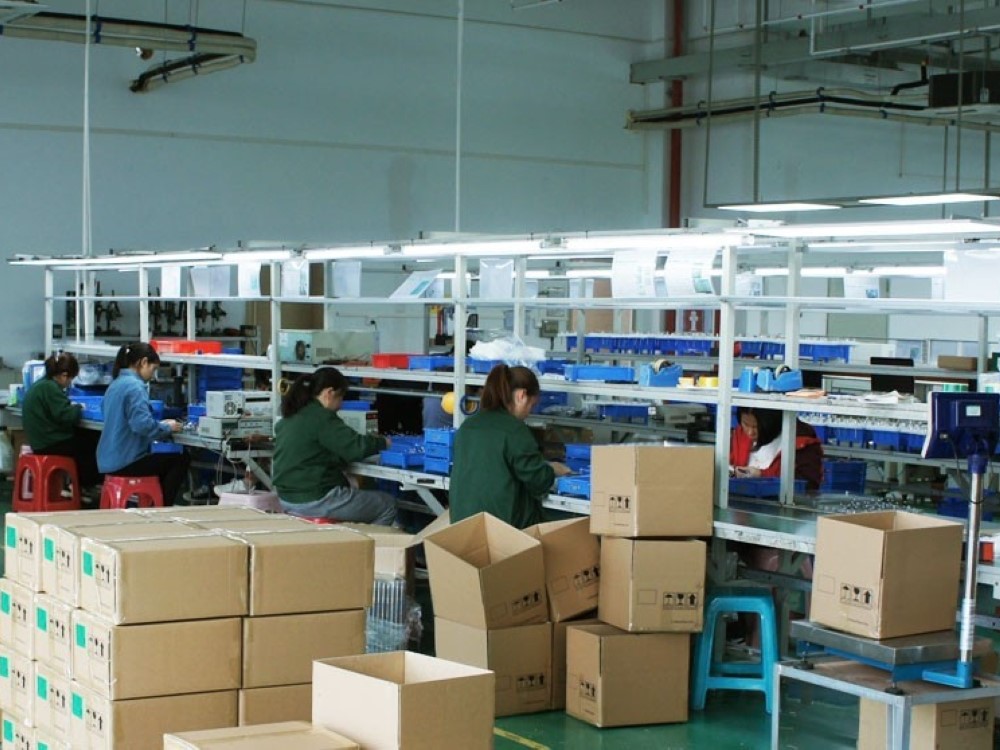
Shengfeng Electromagnet Co., Ltd. è stata fondata nel 2015 e si trova nel Parco Industriale di Xiansha, in una splendida zona con comodi collegamenti di trasporto. L'azienda si estende su una superficie di 16.000 metri quadrati e dispone di moderni impianti di produzione, attrezzature di produzione all'avanguardia e un team tecnico altamente qualificato. Fin dalla sua fondazione, l'azienda ha sempre aderito alla filosofia aziendale di "innovazione, qualità e servizio", concentrandosi sulla ricerca, lo sviluppo e la produzione di elettromagneti, promuovendo costantemente l'aggiornamento dei prodotti e il progresso tecnologico, e fornendo ai clienti prodotti e servizi della migliore qualità.
Perché scegliere un elettromagnete SF
QUALITÀ DI ALTA GAMMA:In qualità di miglior produttore di elettromagneti a solenoide in Cina, il nostro team di controllo qualità garantisce che ogni singolo prodotto ricevuto sia della massima qualità. Disponiamo di attrezzature professionali per i test di qualità.
PROGETTAZIONE DEL PRODOTTO:Il nostro reparto campionatura gestisce l'intero processo di trasformazione dei disegni in realtà. Inoltre, grazie alla nostra pluriennale esperienza, ottimizziamo il design del vostro prodotto. Fateci sapere cosa ne pensate.
TEMPI DI CONSEGNA STABILI:In qualità di produttore e fornitore leader di elettromagneti, disponiamo di una capacità produttiva adeguata: anche di fronte a grandi ordini siamo in grado di garantire consegne puntuali.
MIGLIOR PREZZO:Siamo produttori diretti di elettromagneti e il miglior produttore di solenoidi in Cina; ecco perché possiamo offrire prodotti di alta qualità al miglior prezzo.
GESTIONE PRECISA:Non si può ottenere nulla senza una gestione precisa. Siamo un'azienda dotata di un sistema di gestione completo.
SERVIZIO 24 7 GIORNI SU 24:In qualità di miglior produttore di solenoidi, offriamo una risposta immediata 24 ore su 24, 7 giorni su 7: raccoglieremo il tuo feedback per diventare un fornitore migliore. Contattaci. Bomba +86 18902611680
Domande frequenti sull'elettromagnete
Siamo un top cinese elettromagnete Siamo produttori e la nostra fabbrica si trova a Dongguan. Benvenuti a visitare la nostra fabbrica!
Siamo specializzati nella progettazione e produzione di alta qualità elettromagnete,elettrovalvola,ad esempio elettrovalvola rotante, solenoidi bistabili, solenoidi di bloccaggio, solenoidi a telaio aperto, solenoidi tubolari, solenoide autobloccante
•Naturalmente, di solito forniamo campioni gratuiti e dovrete coprire solo le spese di spedizione. Per campioni di elettromagneti personalizzati, vi preghiamo di inviarci le vostre richieste per verificare il costo del campione.
• La produzione del campione richiede circa 7 giorni.
Sì, offriamo servizi di progettazione gratuiti, tra cui progettazione strutturale e grafica semplice.
Certamente. Possiamo realizzare qualsiasi elettromagnete con il vostro design. Ora offriamo un servizio ODM per solenoidi, ideale per piccole quantità da 100 a 500 pezzi, con la possibilità di personalizzare il prodotto con il vostro logo.
A seconda della quantità dell'ordine e dei dettagli di produzione, ci vorranno circa dai 15 ai 20 giorni.
Sempre un campione di pre-produzione prima della produzione di massa; sempre un'ispezione finale prima della spedizione.
• Potenza, utilizzo, dimensioni, materiale, quantità, destinazione di spedizione, ecc.
• Puoi anche semplicemente comunicarci le tue esigenze e ti consiglieremo i prodotti più adatti.
• Via mare, via aerea o tramite corriere espresso.
• Se disponete di un vostro spedizioniere in Cina, il prezzo è quello franco fabbrica o FOB.
•CFR o CIF, ecc., se avete bisogno che spediamo per vostro conto.
• È possibile utilizzare anche DDP e DDU.
• Più opzioni, prenderemo in considerazione le vostre scelte.
• Il prezzo è determinato dalla quantità, dal materiale, dal metodo di lavorazione, dalle dimensioni e da altri fattori. Inoltre, a causa del nostro continuo
Grazie all'innovazione tecnologica, i prezzi di alcuni dei nostri prodotti sono estremamente competitivi. Contattateci per un preventivo.