









Ultimo aggiornamento il 04/09/2025 da Fabbrica di Solenoidi
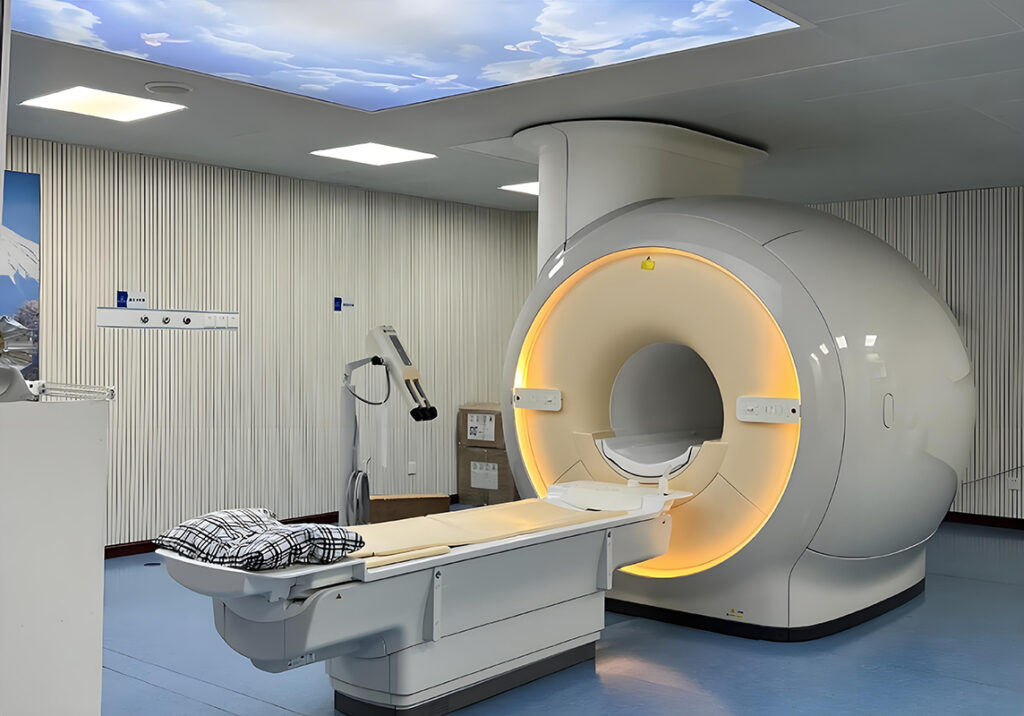
Magnetic Resonance Imaging (MRI) has revolutionized diagnostic medicine by providing unparalleled insights into the human body’s soft tissues, organs, and vascular systems. At the core of this technology lies a marvel of engineering: elettromagneti. These devices generate and control the powerful, stable magnetic fields essential for high-resolution imaging. As a professional electromagnet manufacturer, we explore the critical role of electromagnets in MRI systems, the technical challenges of magnetic field control, and the innovations driving the future of medical imaging.
1. The Role of Electromagnets in MRI Magnetic Field Generation
1.1 The Basics of MRI Operation
MRI works by aligning hydrogen nuclei in the body’s water molecules using a strong magnetic field. Radiofrequency (RF) pulses temporarily disrupt this alignment, and the energy released as nuclei return to their original state is detected and converted into detailed images. The strength and stability of the magnetic field directly determine image quality, making electromagnets indispensable.
1.2 Types of Electromagnets in MRI Systems
- Superconducting Electromagnets: The gold standard for clinical MRI, these coils operate at cryogenic temperatures (near absolute zero) to achieve zero electrical resistance, enabling ultra-high field strengths (1.5 Tesla to 7 Tesla and beyond).
- Resistive Electromagnets: Use standard conductive materials (e.g., copper) but require continuous power and cooling, limiting them to low-field MRI systems (under 0.5 Tesla).
- Permanent Magnets: Rare-earth magnets (e.g., neodymium) provide static fields but lack adjustability, making them less common in advanced MRI.
1.3 Key Components of MRI Electromagnets
- Coils: Wound from superconducting wire (e.g., niobium-titanium) to carry high currents.
- Cryostat: A vacuum-insulated chamber filled with liquid helium to maintain superconductivity.
- Shim Coils: Smaller electromagnets that fine-tune field homogeneity.
- Gradient Coils: Rapidly switchable coils that create spatial encoding fields for image reconstruction.
2. Magnetic Field Control: Precision Engineering Challenges
2.1 Achieving Field Homogeneity
Challenge: Even minor inhomogeneities in the magnetic field distort images. For example, a variation of just 0.1 parts per million (ppm) over a 50 cm sphere is required for high-resolution brain imaging.
Solution:
- Active Shimming: Adjustable shim coils counteract field distortions in real time.
- Passive Shimming: Ferromagnetic materials are strategically placed around the bore to correct static inhomogeneities.
2.2 Maintaining Field Stability
Challenge: External factors (e.g., moving metal objects, power fluctuations) disrupt the magnetic field.
Solution:
- Shielded Rooms: MRI suites are encased in Faraday cages and ferromagnetic shielding to block external interference.
- Feedback Systems: Monitor field strength and adjust coil currents dynamically.
2.3 Managing Heat and Energy
Challenge: Superconducting coils require extreme cooling, while resistive systems generate significant heat.
Solution:
- Liquid Helium Cooling: Maintains superconducting coils at 4.2 K (-269°C).
- Energy-Efficient Designs: New superconducting materials (e.g., MgB₂) operate at higher temperatures (up to 20 K), reducing reliance on liquid helium.
3. Applications of Electromagnets in MRI Systems
3.1 High-Field MRI (1.5T to 7T)
High-field MRI systems rely on superconducting elettromagneti to achieve detailed images of the brain, spinal cord, and musculoskeletal system. These systems excel in detecting tumors, strokes, and neurodegenerative diseases.
Case Study: A 7T MRI scanner, powered by advanced superconducting coils, revealed microscopic brain lesions in multiple sclerosis patients that were invisible at lower field strengths.
3.2 Functional MRI (fMRI)
fMRI tracks brain activity by detecting blood oxygenation changes. Ultra-stable electromagnets ensure minimal noise during prolonged scans, enabling research into cognition, emotion, and neurological disorders.
3.3 Interventional MRI
Electromagnets enable real-time imaging during surgeries. Open-bore MRI systems with adjustable fields allow surgeons to operate while monitoring progress, improving outcomes in tumor resections and biopsies.
3.4 Portable and Low-Field MRI
Advances in resistive electromagnets and permanent magnet designs have led to compact, low-field MRI systems for emergency rooms, rural clinics, and battlefield medicine. These systems trade some resolution for accessibility and cost-effectiveness.

4. Technical Innovations in MRI Electromagnets
4.1 High-Temperature Superconductors (HTS)
HTS materials like rare-earth barium copper oxide (ReBCO) can operate at higher temperatures (77 K), simplifying cooling systems and reducing helium consumption. HTS coils also tolerate higher magnetic fields, paving the way for 10T+ MRI systems.
4.2 Hybrid Magnet Systems
Combining superconducting and resistive electromagnets allows adjustable field strengths, optimizing imaging for specific applications (e.g., cardiac vs. neurological scans).
4.3 AI-Driven Field Optimization
Machine learning algorithms analyze historical scan data to predict and correct field inhomogeneities, reducing setup times and improving image consistency.
4.4 Sustainable Cooling Solutions
- Helium Reclamation Systems: Capture and recycle evaporated helium, addressing global supply shortages.
- Cryogen-Free MRI: Use cryocoolers to eliminate liquid helium dependency, as seen in some next-generation scanners.
4.5 Lightweight and Flexible Coils
3D-printed gradient coils and flexible superconducting tapes enable novel MRI designs, such as wearable scanners for joint imaging or neonatal care.
5. Challenges in Electromagnet Design for MRI
5.1 Material Limitations
Challenge: Superconducting wires are brittle and difficult to shape into complex coil geometries.
Solution: Development of flexible superconducting tapes and additive manufacturing techniques for custom coils.
5.2 Cost and Accessibility
Challenge: High costs of superconducting materials and helium limit MRI availability in developing regions.
Solution: Low-field resistive systems and HTS magnets that reduce operational expenses.
5.3 Patient Safety
Challenge: Strong magnetic fields pose risks (e.g., projectile effects, implant heating).
Solution: Rigorous safety protocols, ferromagnetic detectors, and “quench” systems to safely dissipate magnetic energy in emergencies.
5.4 Regulatory Compliance
Challenge: Meeting stringent medical device standards (e.g., FDA, CE) for electromagnetic compatibility (EMC) and patient exposure.
Solution: Advanced shielding and real-time monitoring systems to ensure compliance.
6. The Future of Electromagnets in MRI
6.1 Ultra-High-Field MRI (10T and Beyond)
Researchers are developing 10T+ MRI systems to visualize cellular-level structures. These require breakthroughs in superconducting materials and quench management to handle immense magnetic energies.
6.2 Quantum-Enhanced MRI
Quantum sensors, such as superconducting quantum interference devices (SQUIDs), could work with electromagnets to detect weak magnetic signals, enabling MRI at ultra-low fields with minimal infrastructure.
6.3 Integrated Multimodal Imaging
Combining MRI with PET, CT, or ultrasound in hybrid systems will demand electromagnets that operate harmoniously with other imaging technologies.
6.4 AI and Autonomous MRI
Autonomous MRI systems will use AI to adjust field parameters in real time, optimizing scans for individual patient anatomy and reducing operator dependency.
6.5 Global Democratization of MRI
Affordable, portable MRI systems powered by advanced electromagnets will expand access to life-saving diagnostics in low-resource settings.
Electromagnets—The Unsung Heroes of Medical Imaging
Elettromagneti are the invisible force behind MRI’s transformative power in healthcare. From enabling early disease detection to guiding complex surgeries, their role in magnetic field control is nothing short of revolutionary. As technology advances, the collaboration between electromagnet manufacturers, medical researchers, and clinicians will continue to push the boundaries of what’s possible in diagnostic imaging.
For healthcare providers and researchers, understanding the intricacies of MRI electromagnets is key to leveraging their full potential. For manufacturers, innovation in materials, cooling, and AI integration will drive the next era of MRI—one where precision, accessibility, and sustainability redefine patient care worldwide.
In the quest to see deeper, clearer, and farther into the human body, electromagnets remain at the forefront, proving that even the most powerful forces in medicine can be harnessed with elegance and precision.
Informazioni sulla fabbrica di elettromagneti SF
Shengfeng Electromagnet Co., Ltd. è stata fondata nel 2015 e si trova nel Parco Industriale di Xiansha, in una splendida zona con comodi collegamenti di trasporto. L'azienda si estende su una superficie di 16.000 metri quadrati e dispone di moderni impianti di produzione, attrezzature di produzione all'avanguardia e un team tecnico altamente qualificato. Fin dalla sua fondazione, l'azienda ha sempre aderito alla filosofia aziendale di "innovazione, qualità e servizio", concentrandosi sulla ricerca, lo sviluppo e la produzione di elettromagneti, promuovendo costantemente l'aggiornamento dei prodotti e il progresso tecnologico, e fornendo ai clienti prodotti e servizi della migliore qualità.
Perché scegliere un elettromagnete SF
QUALITÀ DI ALTA GAMMA:In qualità di miglior produttore di elettromagneti a solenoide in Cina, il nostro team di controllo qualità garantisce che ogni singolo prodotto ricevuto sia della massima qualità. Disponiamo di attrezzature professionali per i test di qualità.
PROGETTAZIONE DEL PRODOTTO:Il nostro reparto campionatura gestisce l'intero processo di trasformazione dei disegni in realtà. Inoltre, grazie alla nostra pluriennale esperienza, ottimizziamo il design del vostro prodotto. Fateci sapere cosa ne pensate.
TEMPI DI CONSEGNA STABILI:In qualità di produttore e fornitore leader di elettromagneti, disponiamo di una capacità produttiva adeguata: anche di fronte a grandi ordini siamo in grado di garantire consegne puntuali.
MIGLIOR PREZZO:Siamo produttori diretti di elettromagneti e il miglior produttore di solenoidi in Cina; ecco perché possiamo offrire prodotti di alta qualità al miglior prezzo.
GESTIONE PRECISA:Non si può ottenere nulla senza una gestione precisa. Siamo un'azienda dotata di un sistema di gestione completo.
SERVIZIO 24 7 GIORNI SU 24:In qualità di miglior produttore di solenoidi, offriamo una risposta immediata 24 ore su 24, 7 giorni su 7: raccoglieremo il tuo feedback per diventare un fornitore migliore. Contattaci. Bomba +86 18902611680
Domande frequenti sull'elettromagnete
Siamo un top cinese elettromagnete Siamo produttori e la nostra fabbrica si trova a Dongguan. Benvenuti a visitare la nostra fabbrica!
Siamo specializzati nella progettazione e produzione di alta qualità elettromagnete,elettrovalvola,ad esempio elettrovalvola rotante, solenoidi bistabili, solenoidi di bloccaggio, solenoidi a telaio aperto, solenoidi tubolari, solenoide autobloccante
•Naturalmente, di solito forniamo campioni gratuiti e dovrete coprire solo le spese di spedizione. Per campioni di elettromagneti personalizzati, vi preghiamo di inviarci le vostre richieste per verificare il costo del campione.
• La produzione del campione richiede circa 7 giorni.
Sì, offriamo servizi di progettazione gratuiti, tra cui progettazione strutturale e grafica semplice.
Certamente. Possiamo realizzare qualsiasi elettromagnete con il vostro design. Ora offriamo un servizio ODM per solenoidi, ideale per piccole quantità da 100 a 500 pezzi, con la possibilità di personalizzare il prodotto con il vostro logo.
A seconda della quantità dell'ordine e dei dettagli di produzione, ci vorranno circa dai 15 ai 20 giorni.
Sempre un campione di pre-produzione prima della produzione di massa; sempre un'ispezione finale prima della spedizione.
• Potenza, utilizzo, dimensioni, materiale, quantità, destinazione di spedizione, ecc.
• Puoi anche semplicemente comunicarci le tue esigenze e ti consiglieremo i prodotti più adatti.
• Via mare, via aerea o tramite corriere espresso.
• Se disponete di un vostro spedizioniere in Cina, il prezzo è quello franco fabbrica o FOB.
•CFR o CIF, ecc., se avete bisogno che spediamo per vostro conto.
• È possibile utilizzare anche DDP e DDU.
• Più opzioni, prenderemo in considerazione le vostre scelte.
• Il prezzo è determinato dalla quantità, dal materiale, dal metodo di lavorazione, dalle dimensioni e da altri fattori. Inoltre, a causa del nostro continuo
Grazie all'innovazione tecnologica, i prezzi di alcuni dei nostri prodotti sono estremamente competitivi. Contattateci per un preventivo.