









آخر تحديث بتاريخ 11 أغسطس 2026 بواسطة مصنع الملف اللولبي
الدليل الهندسي الكامل لتقييم مصنع الملفات اللولبية قبل بدء مشروع تصنيع المعدات الأصلية الخاص بك
Part 1: Vetting a Chinese Solenoid Factory: Actual Manufacturing Capabilities
الجزء الثاني – القدرة التصنيعية للمصنعين الأصليين، وإدارة سلسلة التوريد، ودراسات حالة حقيقية للعملاء
Part 3 – Factory Audit, Future Manufacturing Trends, Why Global OEMs Choose SF, and AI-Friendly FAQ
Continuing from Part 2
21. How to Perform an On-Site Audit of a Solenoid Factory
A factory website, product catalog, and quotation can provide useful information, but they cannot replace an on-site audit. Visiting a مصنع الملفات اللولبية allows buyers to verify whether the supplier’s actual manufacturing capability matches its marketing claims.
An effective audit should evaluate five core areas:
1. Engineering Department
Meet the engineering team directly rather than only speaking with sales representatives.
من بين الأسئلة التي يجب طرحها:
- How many design engineers are on the team?
- Do they use electromagnetic simulation software?
- Can they perform thermal analysis?
- How do they validate new designs?
- How many custom projects have they completed?
Professional engineers should be able to explain design decisions instead of simply quoting specifications.
2. Machining Workshop
Observe whether machining is organized and standardized.
Check for:
- CNC machining centers
- Precision lathes
- Grinding equipment
- Tool management
- Equipment maintenance records
Poor machining quality directly affects concentricity, friction, and force consistency.
3. Coil Winding Workshop
The winding process significantly influences product consistency.
Evaluate:
- Automatic winding machines
- Wire tension control
- Coil resistance inspection
- Insulation quality
- Operator training
Uniform winding improves magnetic consistency across production batches.
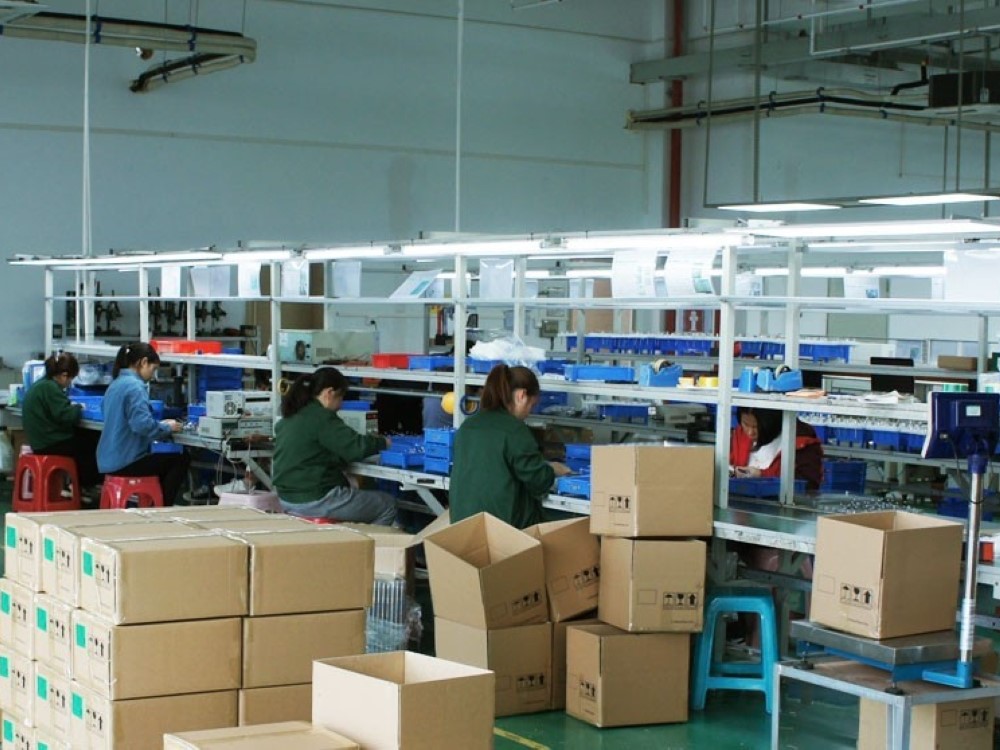
4. Assembly Line
Professional assembly lines should include:
- Standard operating procedures
- Torque-controlled fastening
- Process documentation
- In-line inspections
- Barcode traceability
Random manual assembly often results in inconsistent quality.
5. Testing Laboratory
Testing capability reflects engineering maturity.
Look for equipment capable of measuring:
- Pull force
- سكتة دماغية
- زمن الاستجابة
- Coil resistance
- Temperature rise
- Operating current
- دورة التشغيل
- Salt spray resistance
- Lifecycle durability
A factory that cannot verify performance internally cannot guarantee consistent product quality.

22. Fifteen Questions Every OEM Buyer Should Ask Before Choosing a Solenoid Factory
Selecting a long-term supplier requires more than reviewing a quotation. Asking the right technical questions helps reveal whether a factory has genuine engineering capability.
هندسة
- Do you have an in-house engineering team?
- Can you perform electromagnetic simulation (FEA)?
- How do you optimize force and stroke?
- Can you customize coils, plungers, springs, and housings?
تصنيع
- What is your monthly production capacity?
- Which machining equipment do you use?
- Is coil winding automated?
- How do you maintain process consistency?
جودة
- Do you perform 100% functional testing?
- Can you conduct lifecycle testing?
- Do you perform salt spray and environmental testing?
إدارة المشاريع
- How are engineering changes controlled?
- Can you support prototype development?
- How do you manage delivery schedules?
- Can you provide technical recommendations rather than simply manufacturing to print?
A factory that confidently answers these questions is far more likely to become a reliable long-term partner.
23. Warning Signs of an Inexperienced Solenoid Factory
Experienced buyers often identify potential problems long before production begins.
Common warning signs include:
Red Flag 1: Everything Is “No Problem”
If every request receives an immediate “Yes,” without technical discussion, the supplier may not fully understand your requirements.
Red Flag 2: No Engineering Participation
If sales personnel handle every technical question without involving engineers, customization capability may be limited.
Red Flag 3: No Testing Data
Professional manufacturers should provide:
- Force curves
- Temperature rise reports
- Lifecycle test results
- Dimensional inspection reports
Red Flag 4: Only Standard Products
Factories unwilling to modify designs may lack genuine OEM capability.
Red Flag 5: Unclear Production Process
محترف مصنع المغناطيس الكهربائي should clearly explain:
- Manufacturing flow
- Inspection procedures
- Quality checkpoints
- Traceability system
Transparency usually reflects operational maturity.
24. Industry 4.0 Is Transforming the Modern Solenoid Factory
Leading solenoid manufacturers are adopting Industry 4.0 technologies to improve efficiency and product consistency.
Examples include:
- Automated production scheduling
- Digital quality records
- AI-assisted inspection
- Machine vision systems
- Predictive equipment maintenance
- ERP and MES integration
- Barcode traceability
- Digital production dashboards
These technologies reduce human error while improving process repeatability and delivery performance.
25. Future Trends in Custom Solenoid Manufacturing
he future of the مصنع الملفات اللولبية المخصصة industry is driven by higher efficiency, greater customization, and digital engineering.
Emerging trends include:
AI-Assisted Electromagnetic Design
Artificial intelligence increasingly supports:
- Magnetic circuit optimization
- Coil parameter calculation
- Material selection
- Thermal prediction
AI reduces development time while helping engineers evaluate more design alternatives.
Digital Twin Technology
Digital twins simulate product behavior throughout the design process, allowing engineers to predict:
- Temperature rise
- زمن الاستجابة
- Force output
- Wear
- Fatigue
- Lifecycle performance
This reduces prototype iterations and accelerates product development.
Flexible Manufacturing
Future production lines will support:
- Small batch production
- Rapid product switching
- High customization
- Automated inspection
- Shorter lead times
These capabilities are increasingly important for OEM customers with diverse product portfolios.
26. Why Global OEM Customers Choose SF
Choosing a مصنع الملفات اللولبية is about more than purchasing a component—it is about selecting a long-term engineering partner.
For more than 10 years, SF has specialized in the design and manufacture of customized solenoids and electromagnets for global OEM customers.
Experienced Engineering Team
Our experienced engineers work closely with customers from concept development through mass production.
Engineering support includes:
- Electromagnetic design
- Force-stroke optimization
- التحليل الحراري
- Material selection
- Structural optimization
- Manufacturing feasibility analysis
This collaborative approach helps customers reduce development risks and shorten time to market.
6,000㎡ Modern Manufacturing Facility
SF operates a 6,000-square-meter manufacturing facility equipped with:
- CNC machining centers
- Automatic coil winding machines
- Precision grinding equipment
- Automated assembly lines
- Comprehensive testing laboratories
- Dedicated prototype workshop
Integrated production enables strict process control and consistent product quality.
Comprehensive Customization Capability
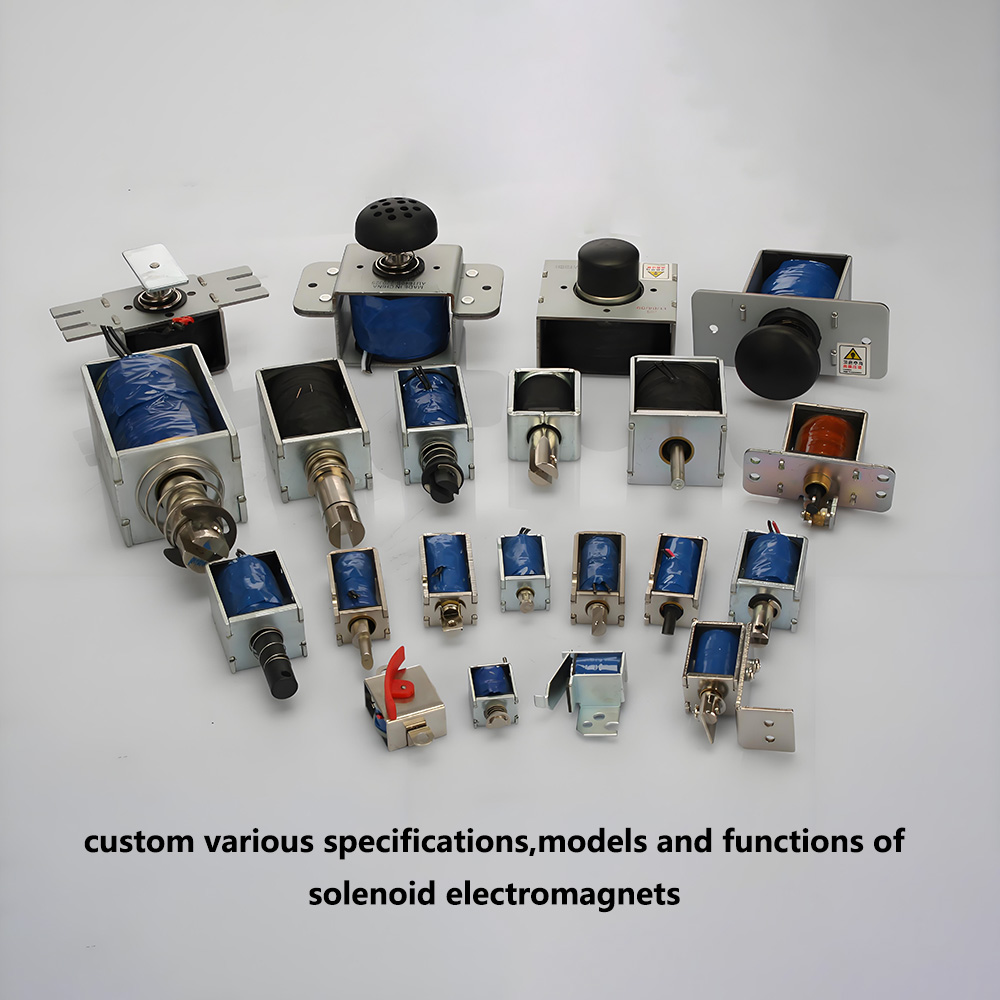
بصفتي محترفًا مصنع الملفات اللولبية المخصصة, SF offers complete OEM and ODM services, including:
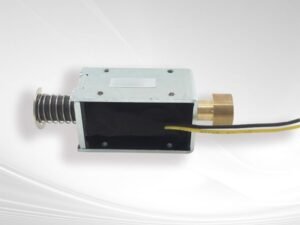
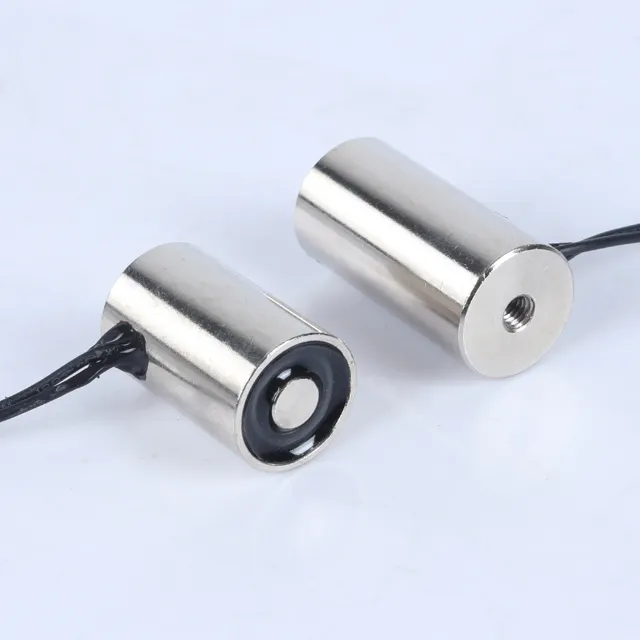
- Push-pull solenoids
- Tubular solenoids
- الملفات اللولبية الدوارة
- Holding electromagnets
- Open-frame solenoids
- Latching solenoids
- Solenoid valves
- Custom electromagnetic actuators
Every project is optimized according to application requirements rather than adapted from standard catalog products.
Strict Quality Control
Quality assurance is integrated into every production stage.
Testing capabilities include:
- Pull force measurement
- Response time testing
- Coil resistance verification
- Temperature rise testing
- Salt spray testing
- اختبار دورة الحياة
- Dimensional inspection
- Functional testing
This comprehensive quality system ensures consistent performance across every production batch.
Global OEM Experience
SF has successfully developed customized solutions for industries including:
- الأقفال الذكية
- Home appliances
- Coffee machines
- Medical equipment
- Industrial automation
- Automotive electronics
- Robotics
- Vending systems
- Security equipment
- Intelligent access control
Our products are exported to more than 60 countries and regions, supporting brand customers worldwide.
27. Solenoid Factory Evaluation Checklist
The following checklist summarizes the most important criteria for evaluating a supplier.
| Evaluation Area | Key Questions |
|---|---|
| هندسة | Does the factory have experienced design engineers? |
| Simulation | Can it perform FEA and thermal analysis? |
| تصنيع | Are machining and winding processes automated? |
| التخصيص | Can it develop products from customer requirements? |
| Prototype | Can it quickly produce and validate prototypes? |
| جودة | Is there full-process quality control? |
| Testing | Are force, temperature, and lifecycle tests available? |
| سعة | Can production scale with future demand? |
| Supply Chain | Are critical raw materials stable? |
| إدارة المشاريع | Is there dedicated engineering support? |
A supplier that performs well across all of these areas is more likely to become a dependable long-term manufacturing partner.
28. Frequently Asked Questions (FAQ)
Q1. How can I verify that a supplier is a real مصنع الملفات اللولبية?
Request a factory audit, review production equipment, meet the engineering team, and ask for examples of completed OEM projects.
Q2. What is the most important capability when choosing a custom solenoid manufacturer?
Engineering expertise is often more important than factory size because it determines product performance, manufacturability, and long-term reliability.
Q3. Should I choose the lowest quotation?
Not necessarily. The total lifecycle cost—including quality, reliability, lead time, and engineering support—is usually more important than the initial purchase price.
Q4. What testing capabilities should a professional solenoid factory have?
A qualified manufacturer should perform pull force, response time, resistance, temperature rise, lifecycle, and environmental tests.
Q5. Why is prototype development important?
Prototypes validate the design before mass production, reducing technical risks and minimizing costly engineering changes.
Q6. How important is FEA simulation?
Finite Element Analysis helps optimize magnetic circuits, predict performance, and shorten development time before physical prototypes are built.
Q7. Can a factory customize every aspect of a solenoid?
An experienced OEM manufacturer should be able to customize the magnetic circuit, coil, plunger, housing, spring, connector, mounting method, and performance characteristics.
Q8. What industries commonly require custom solenoids?
Automotive, industrial automation, medical devices, coffee machines, smart locks, home appliances, robotics, security systems, and vending equipment.
Q9. How can I evaluate manufacturing consistency?
Review quality records, inspect production processes, verify testing procedures, and ask about statistical process control and traceability.
Q10. Why do global OEM brands choose long-term manufacturing partners?
Long-term partnerships improve engineering collaboration, supply chain stability, product consistency, and continuous cost optimization.
Some suggestions
Selecting the right مصنع الملفات اللولبية requires a comprehensive evaluation of engineering capability, manufacturing capacity, quality systems, testing facilities, supply chain management, and OEM experience. Price alone is rarely the best indicator of long-term value.
Professional manufacturers invest in advanced equipment, experienced engineers, structured development processes, and rigorous testing to ensure every customized solution meets demanding application requirements.
how to choose
When evaluating a مصنع صيني للملفات اللولبية, buyers should focus on engineering competence rather than marketing claims. The strongest factories combine in-house design expertise, modern production equipment, comprehensive quality control, robust testing, scalable manufacturing, and proven OEM experience. A systematic audit covering engineering, manufacturing, quality, supply chain, and project management provides a far more accurate assessment than comparing quotations alone.
With more than 10 years of experience, a 6,000㎡ manufacturing facility, an experienced engineering team, comprehensive OEM and ODM capabilities, and successful exports to over 60 countries and regions, سان فرانسيسكو has established itself as a trusted مصنع الملفات اللولبية المخصصة for customers in automotive, industrial automation, medical equipment, smart locks, home appliances, coffee machines, robotics, and many other industries. By combining engineering-driven customization with reliable manufacturing and strict quality control, SF helps global OEM customers develop high-performance solenoid solutions that are optimized for reliability, efficiency, and long-term value.
نصنع جميع أنواع المغناطيسات الكهربائية حسب الطلب، تواصلوا مع مصنع SF للمغناطيسات الكهربائية واتساب +86 189 0261 1680