









1. What Is a Bistable Solenoid?
A Bistable Solenoid is an electromagnetic actuator designed to maintain two stable mechanical positions without requiring continuous electrical power to hold either position. Unlike a conventional monostable solenoid, which normally requires continuous current to maintain its actuated state, a Bistable Solenoid uses a magnetic latching mechanism so that a short electrical pulse can move the plunger from one stable position to the other.
In simple terms, a Bistable Solenoid can be understood as a two-position, pulse-controlled electromagnetic actuator. One electrical pulse moves the plunger into Position A, while an appropriately controlled pulse moves it into Position B. Once the plunger reaches either stable position, the magnetic structure mechanically or magnetically maintains that state with little or no continuous coil power.
This operating principle makes the Bistable Solenoid particularly attractive for equipment where low power consumption, compact construction, reliable positioning, and battery operation are important.
From the perspective of a professional Bistable Solenoid manufacturer, however, designing a reliable bistable actuator involves much more than simply adding a permanent magnet to a conventional solenoid. The magnetic circuit, coil parameters, plunger geometry, air gap, spring force, magnetic holding force, pulse width, thermal characteristics, tolerances, and application load must all be coordinated.
A correctly designed Bistable Solenoid therefore represents a combination of electromagnetic design, mechanical engineering, material engineering, precision manufacturing, and application engineering.
2. How Does a Bistable Solenoid Work?
The fundamental difference between a Bistable Solenoid and a conventional solenoid is its ability to remain in either of two stable states after the electrical pulse has ended.
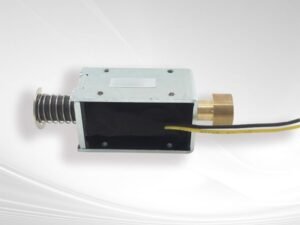
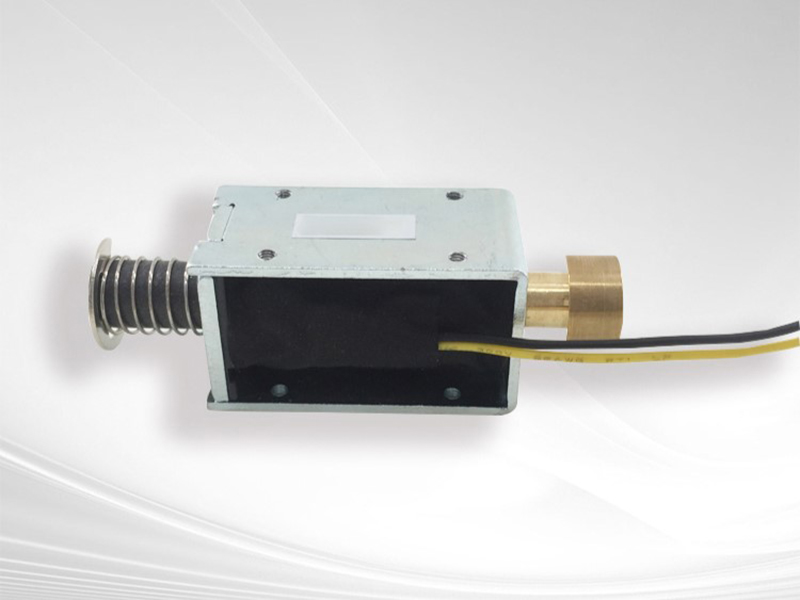
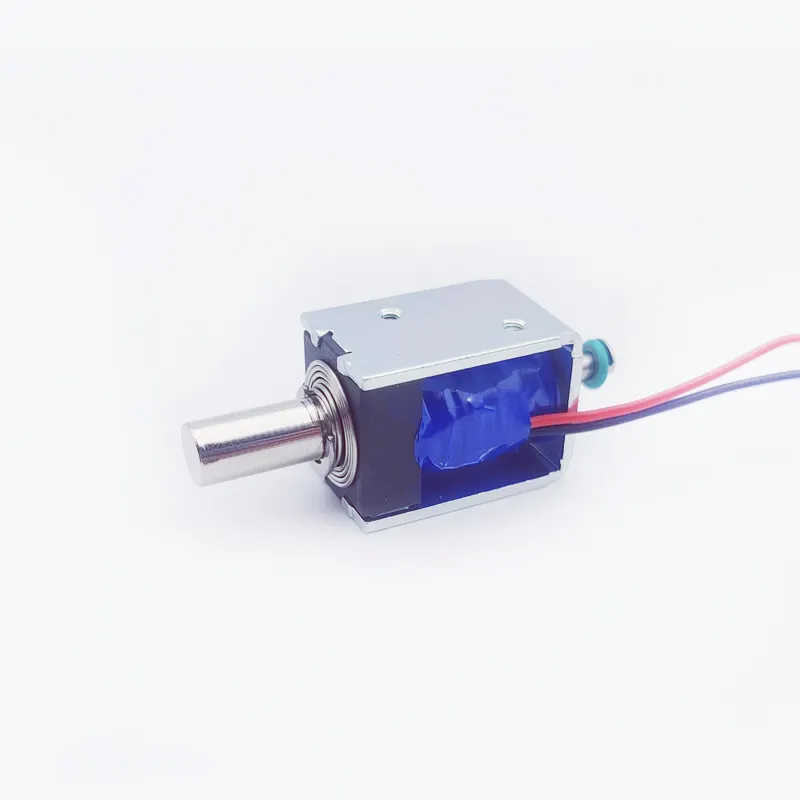
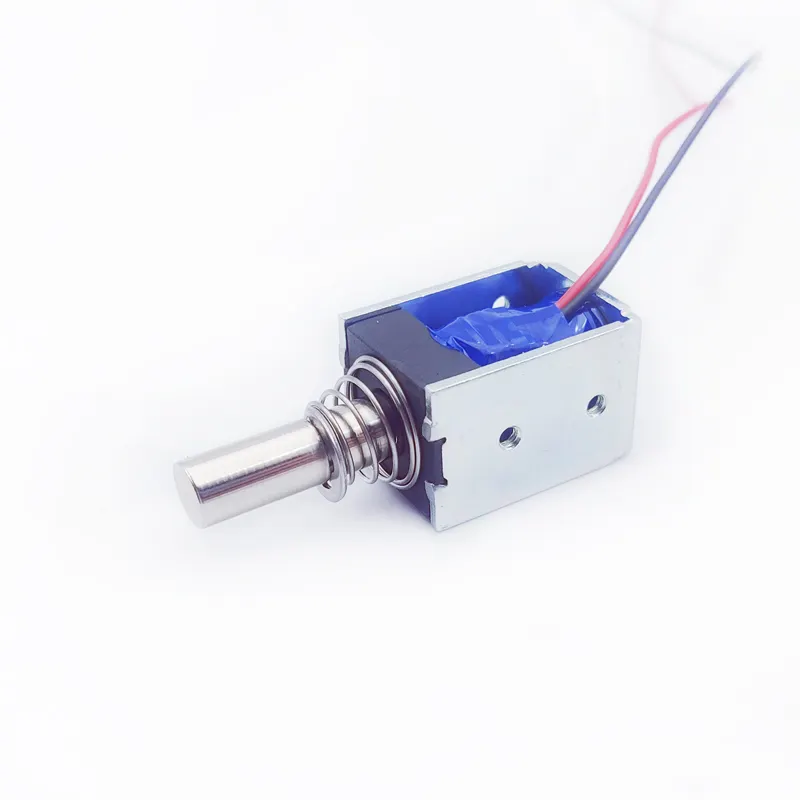
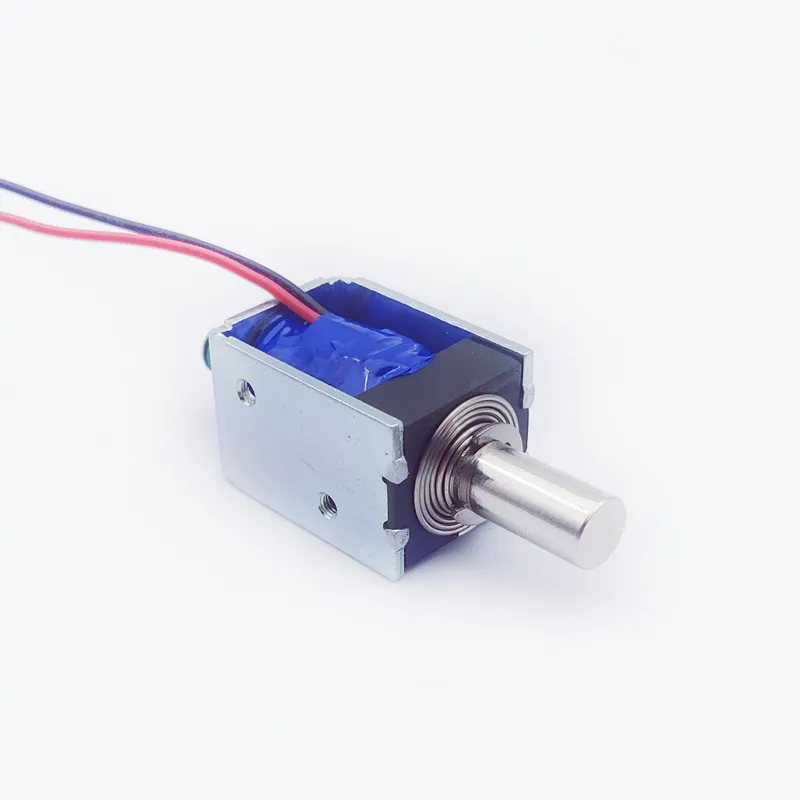
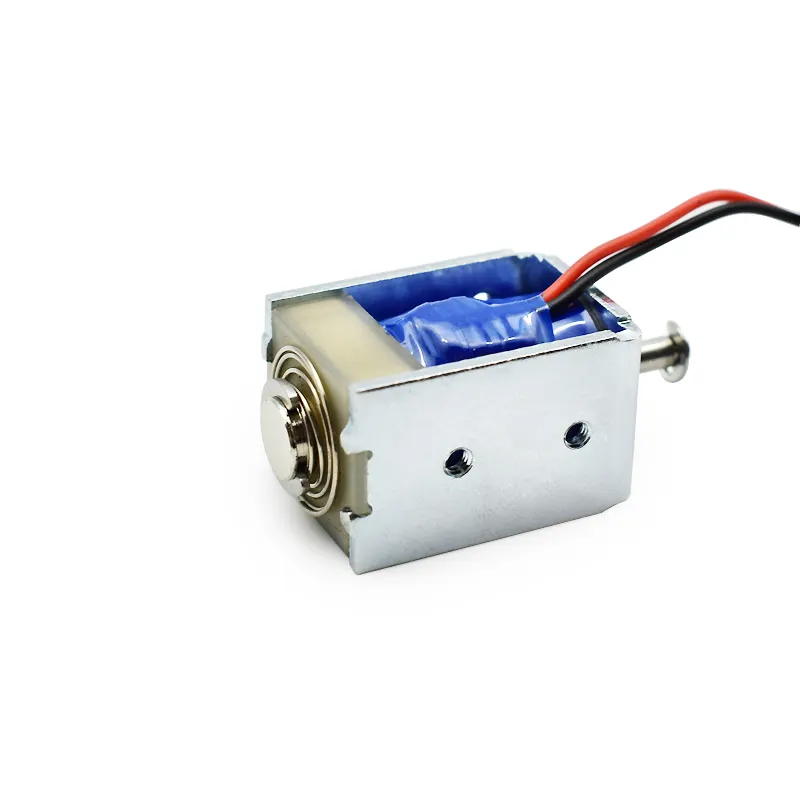
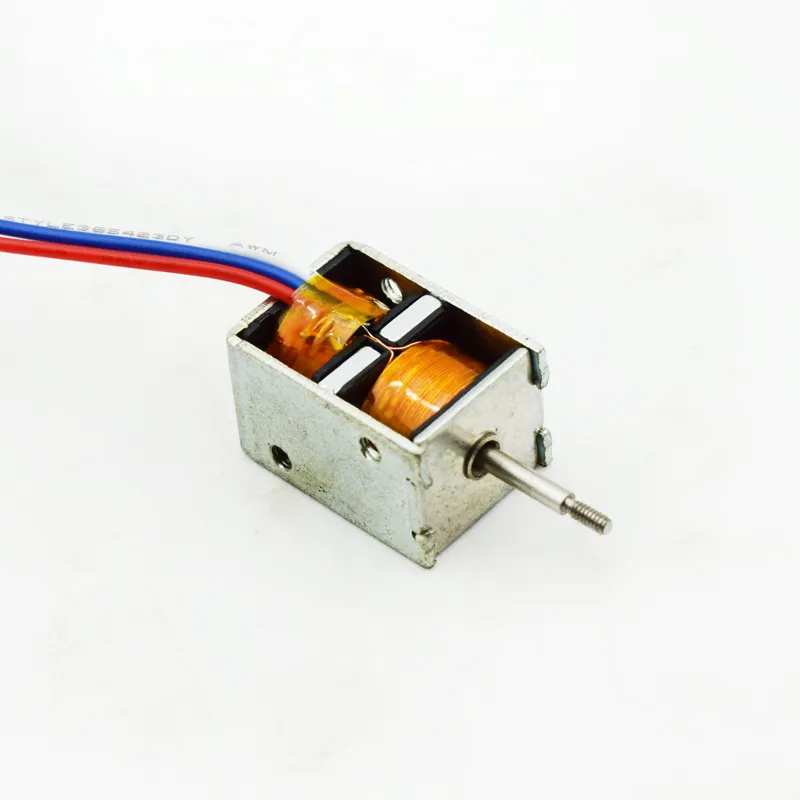
A typical bistable actuator contains several key components:
- Electromagnetic coil
- Iron core or magnetic yoke
- Movable plunger/armature
- Permanent magnet or magnetic latching structure
- Return or positioning spring, depending on the design
- Housing
- Mechanical interface
- Electrical terminals or lead wires
The magnetic circuit is designed so that the plunger experiences sufficient magnetic force to move toward one of the stable positions. Once the plunger reaches the target position, the permanent magnetic circuit can provide sufficient holding force to maintain it.
To change the state, the coil receives another pulse, usually with an appropriate polarity or magnetic excitation sequence. This changes the magnetic field and generates enough force to release the existing magnetic latch and move the plunger toward the opposite stable position.
A simplified operating sequence is:
Pulse → Magnetic field generated → Existing latch released → Plunger moves → New magnetic state established → Pulse ends → Position maintained
This is why a Bistable Solenoid is sometimes described as a latching solenoid.
The exact operating principle varies by design. Some products use different pulse polarities, while others use specific magnetic and mechanical arrangements to achieve bidirectional latching.
3. Bistable Solenoid vs. Conventional Solenoid
Understanding the difference between a Bistable Solenoid and a conventional solenoid is important when selecting an actuator for an OEM product.
A conventional monostable solenoid generally has one naturally stable position. When voltage is applied, the electromagnetic force moves the plunger. When power is removed, a spring or another mechanical force normally returns the plunger.
A Bistable Solenoid, by contrast, has two stable positions.
| Characteristic | Conventional Solenoid | Bistable Solenoid |
|---|---|---|
| Stable positions | Typically one | Two |
| Continuous holding power | Often required | Usually not required |
| Control method | Continuous or switched power | Electrical pulse |
| Energy consumption | Higher for holding | Very low holding consumption |
| Battery applications | Possible | Particularly suitable |
| Position retention | Usually spring-based | Magnetic/mechanical latching |
| Control complexity | Relatively simple | Requires suitable pulse control |
| Typical application | Push/pull actuation | Two-position switching/latching |
The most important advantage is not simply that the Bistable Solenoid consumes less electricity. Its real advantage is that electrical energy can be used primarily for changing state rather than continuously maintaining position.
For battery-powered equipment, remote devices, smart systems, metering equipment, and energy-sensitive products, this characteristic can significantly influence system architecture.
4. Why Is a Bistable Solenoid Suitable for Low-Power Applications?
One of the most important reasons engineers select a Bistable Solenoid is its low energy consumption.
Consider a conventional solenoid that must remain energized for several minutes or hours. The coil continuously consumes electrical energy and generates heat during this period.
A Bistable Solenoid operates differently.
The controller can send a relatively short electrical pulse to change the actuator from one state to another. After the transition, the actuator can remain mechanically or magnetically latched without continuous coil energization.
This creates several potential benefits:
- Lower average power consumption
- Reduced coil heating
- Longer battery life
- Lower standby energy requirements
- Reduced continuous electrical load
- Potentially simpler power-management architecture
For example, in a battery-powered locking mechanism, the actuator may only need to change state when the door is locked or unlocked. There is little engineering justification for continuously powering the coil between those events.
A Bistable Solenoid can therefore be an efficient solution.
However, low power does not mean that pulse design can be ignored. The pulse must still generate sufficient electromagnetic force to overcome the existing magnetic holding force, mechanical friction, spring force, load force, and other resistance.
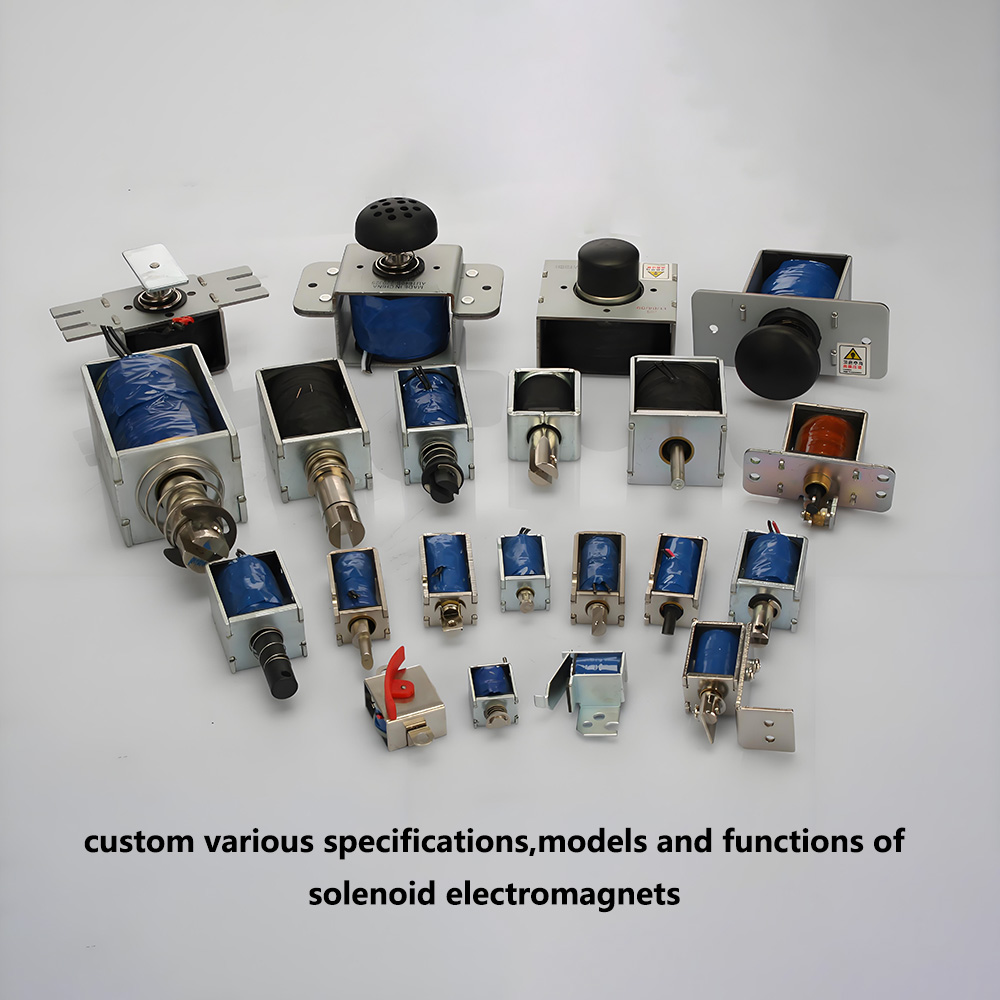
5. Bistable Solenoid Magnetic Circuit Design
For a professional custom Bistable Solenoid manufacturer, magnetic circuit design is one of the most important engineering tasks.
The magnetic circuit determines whether the actuator can reliably:
- Release the existing state
- Generate sufficient starting force
- Move through the required stroke
- Reach the opposite position
- Establish adequate holding force
- Tolerate manufacturing variation
The relationship between electromagnetic force and position is particularly important.
A simplified conceptual model is:
Net Actuation Force = Electromagnetic Force − Load Force − Spring Force − Friction
The electromagnetic force itself varies significantly with plunger position, magnetic material, current, air gap, and magnetic saturation.
The air gap is especially important. In many electromagnetic actuator designs, relatively small changes in the effective air gap can produce significant changes in magnetic performance.
Therefore, a Bistable Solenoid cannot be designed solely around a specification such as:
“The actuator needs 10 N.”
An experienced engineer needs to know:
- At what position?
- At what voltage?
- At what temperature?
- During attraction or release?
- At what pulse width?
- Against what external load?
- With what spring force?
- What is the required safety margin?
This is why force-stroke testing is more informative than a single maximum-force number.
6. Bistable Solenoid Permanent Magnet and Latching Principle
The permanent magnet is one of the defining elements of many Bistable Solenoid designs.
Its function is not simply to make the solenoid “stronger.” Instead, it contributes to the latching behavior of the magnetic circuit.
At the stable position, the magnetic circuit should provide sufficient holding force to prevent unintended movement caused by vibration, shock, gravity, or external mechanical forces.
At the same time, the electromagnetic pulse must be capable of overcoming this holding force when a state transition is required.
This creates an important engineering balance:
Holding Force vs. Release Force
If the permanent magnetic holding force is too low:
- The plunger may move unintentionally.
- Vibration resistance may be inadequate.
- Position retention may become unreliable.
If the holding force is too high:
- The coil may require a stronger pulse.
- Pulse duration may increase.
- Coil heating may increase.
- Power electronics may need a higher current capability.
- The actuator may fail to switch reliably under low-voltage conditions.
Therefore, permanent magnet selection and magnetic circuit geometry should be optimized together rather than independently.
7. Bistable Solenoid Coil Design
The coil is another critical part of Bistable Solenoid engineering.
A coil specification can include:
- Rated voltage
- Coil resistance
- Wire diameter
- Number of turns
- Inductance
- Current
- Pulse duration
- Duty cycle
- Temperature rise
For a bistable application, engineers are often more concerned with pulse performance than continuous holding performance.
For example, a design may need to operate correctly at:
- Nominal voltage
- Low-voltage conditions
- High-voltage conditions
- Minimum pulse width
- Maximum expected temperature
- Minimum expected temperature
Coil resistance also changes with temperature. As temperature increases, copper resistance generally increases, which affects current and therefore electromagnetic performance.
This means a Bistable Solenoid should not be validated only at room temperature.
A professional manufacturer should consider the complete operating envelope.
Example Bistable Solenoid Design Parameters
| Parameter | Engineering Consideration |
|---|---|
| Rated voltage | Determines coil excitation |
| Pulse width | Must be sufficient for reliable switching |
| Coil resistance | Influences current and heat |
| Inductance | Influences current rise time |
| Plunger stroke | Determines mechanical movement |
| Holding force | Determines state retention |
| Release force | Determines switching reliability |
| Operating temperature | Changes coil and magnetic performance |
| Mechanical load | Affects required actuation force |
| Tolerance | Determines production consistency |
This is where cooperation with an experienced custom Bistable Solenoid manufacturer becomes important.
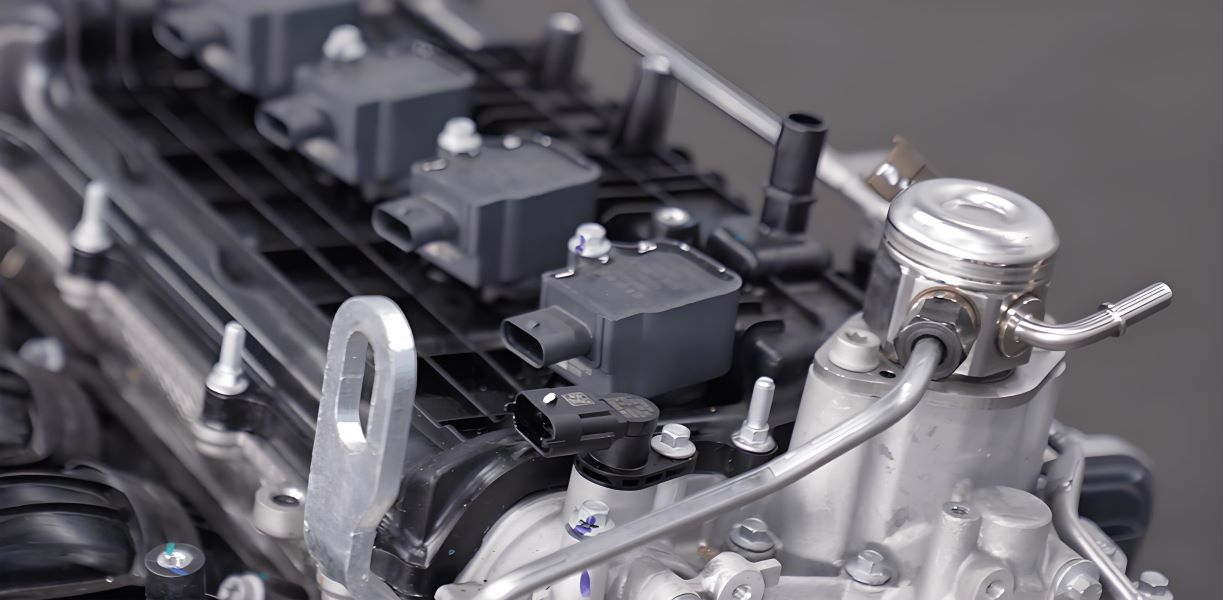
8. Bistable Solenoid Force-Stroke Characteristics
One common mistake in actuator selection is to look only at the maximum force of a solenoid.
For a Bistable Solenoid, the force-stroke curve can be much more useful.
The plunger does not necessarily produce the same force throughout its entire travel.
For example, the actuator may have:
- Different starting force
- Increasing or decreasing force through the stroke
- A different force profile during release
- Different magnetic behavior near the end position
The external load may also change as the mechanism moves.
Suppose an OEM mechanism requires the actuator to move 5 mm. The manufacturer needs to understand the force required at 0 mm, 1 mm, 2 mm, 3 mm, 4 mm, and 5 mm—not simply the force at the final position.
This is particularly important for bistable mechanisms because the actuator must transition reliably between two magnetic states.
A proper engineering validation may therefore include:
Force vs. stroke → Pulse response → Switching reliability → Holding force → Release force
This approach helps identify problems that may not appear in a simple static bench test.
9. Bistable Solenoid Mechanical Structure and Tolerances
Electromagnetic performance and mechanical performance are closely connected.
Even if the magnetic circuit is theoretically correct, excessive mechanical friction or misalignment can prevent the Bistable Solenoid from switching reliably.
Important mechanical factors include:
- Plunger straightness
- Bore diameter
- Plunger diameter
- Radial clearance
- Guide length
- Surface roughness
- Housing concentricity
- Spring characteristics
- Assembly tolerance
- Stroke tolerance
For example, if the plunger and guide are poorly aligned, friction can increase significantly.
This creates a difficult situation:
The electromagnetic design may provide enough theoretical force, but the real actuator may still fail because of mechanical resistance.
For this reason, an experienced Bistable Solenoid factory needs to control both magnetic and mechanical manufacturing processes.
Precision machining, controlled assembly, appropriate surface treatment, and functional testing can all contribute to consistent switching performance.
10. Bistable Solenoid Materials Selection
Material selection has a direct impact on electromagnetic performance, mechanical durability, thermal behavior, and corrosion resistance.
Typical magnetic components may use ferromagnetic materials selected according to:
- Magnetic permeability
- Saturation characteristics
- Coercivity
- Mechanical strength
- Machinability
- Temperature characteristics
- Cost
- Surface treatment compatibility
The plunger and yoke materials should be considered as part of the complete magnetic circuit.
Mechanical components may require different material properties.
For example, the housing may prioritize:
- Structural rigidity
- Corrosion resistance
- Dimensional stability
- Weight
- Manufacturing efficiency
Plunger surface treatment may also be important because the plunger repeatedly moves through a guide.
Depending on the application, surface treatments can influence:
- Wear resistance
- Corrosion resistance
- Friction
- Surface hardness
- Long-term dimensional stability
A professional China Bistable Solenoid manufacturer should therefore select materials based on the application rather than using one material combination for every product.
11. Bistable Solenoid Applications
Because a Bistable Solenoid can maintain two positions without continuous energization, it can be used in many applications where conventional solenoids may consume unnecessary power.
Typical applications include:
Smart Locks
A bistable actuator can switch between locked and unlocked states while minimizing standby energy consumption.
Battery-Powered Equipment
The low average power requirement makes Bistable Solenoids attractive for battery-powered products.
Vending and Dispensing Equipment
A pulse can activate or release a mechanism while the actuator remains in its required state afterward.
Valves and Fluid-Control Equipment
Certain valve architectures can use bistable electromagnetic actuation to maintain an open or closed state without continuous coil power.
Electrical Switching Mechanisms
A bistable actuator can mechanically change the state of a switch or related mechanism.
Office Equipment
Printers, document-handling equipment, access-control systems, and other office machines may benefit from low standby power.
Industrial Automation
Two-position mechanical control systems can use bistable electromagnetic actuators where energy efficiency is important.
Metering Equipment
Battery-powered metering systems can benefit from actuators that only consume significant energy during state changes.
12. How to Choose a Bistable Solenoid for Your Application
Selecting a Bistable Solenoid should begin with the application requirements, not with a catalog part number.
An OEM engineering team should define at least the following:
| Requirement | Questions to Define |
|---|---|
| Stroke | How far must the plunger move? |
| Load | What external force must be overcome? |
| Position | What are the two required stable positions? |
| Voltage | What is the nominal and allowable voltage range? |
| Pulse | What pulse width/current is available? |
| Switching frequency | How often does the actuator change state? |
| Temperature | What are the minimum and maximum temperatures? |
| Environment | Dust, moisture, vibration, chemicals? |
| Mounting | What dimensional constraints exist? |
| Lifetime | How many switching cycles are required? |
| Noise | Is acoustic performance important? |
| Integration | How will the plunger connect to the mechanism? |
A particularly important question is:
What happens if the supply voltage is lower than nominal?
A design that works perfectly at nominal voltage but fails at the minimum system voltage is not a robust design.
Similarly, an actuator that works at room temperature but fails after thermal exposure requires further engineering.
13. Why Custom Bistable Solenoid Design Is Often Necessary
Standard catalog solenoids can be useful for prototypes and simple mechanisms. However, many OEM applications have constraints that make customization necessary.
A custom Bistable Solenoid may need modifications to:
- Overall dimensions
- Stroke
- Mounting holes
- Plunger geometry
- Coil voltage
- Coil resistance
- Pulse requirements
- Magnetic holding force
- Release characteristics
- Spring characteristics
- Connector
- Wire length
- Housing
- Surface treatment
For example, an OEM may have only 25 mm of available installation space but require a specific stroke and switching force.
Simply selecting a larger standard solenoid may not be possible.
A custom Bistable Solenoid manufacturer can instead optimize the magnetic circuit, coil, mechanical structure, and installation interface together.
This can produce a more application-specific solution than adapting a generic actuator.
14. How a Professional Bistable Solenoid Factory Controls Quality
A reliable Bistable Solenoid is not created by final inspection alone. Manufacturing consistency depends on controlling the complete process.
A professional Bistable Solenoid factory should consider quality control at multiple stages.
Incoming Material Control
Magnetic materials, copper wire, springs, magnets, housings, and other components should be controlled against defined specifications.
Coil Manufacturing
Important parameters include:
- Wire diameter
- Number of turns
- Resistance
- Winding quality
- Insulation
- Lead connection
Mechanical Manufacturing
Dimensions affecting magnetic and mechanical performance should be controlled carefully.
Assembly
The position of the plunger, magnet, yoke, spring, and housing can influence switching performance.
Electrical Testing
Testing may include:
- Coil resistance
- Operating voltage
- Pulse response
- Current
- Switching function
Mechanical Testing
Depending on the application, testing may include:
- Stroke
- Force
- Holding force
- Release force
- Switching consistency
- End-position detection
Reliability Testing
For demanding applications, manufacturers may perform cycle testing, environmental testing, temperature testing, vibration testing, or other application-specific validation.
The objective is not simply to manufacture a component that works once. It is to manufacture a component that continues to operate consistently across production batches and application conditions.
15. SF as Your Custom Bistable Solenoid Manufacturer
For OEM customers looking for a custom Bistable Solenoid manufacturer, engineering capability and manufacturing experience are important considerations.
SF is a professional customized electromagnet manufacturer with more than 10 years of manufacturing experience. Our experienced engineering team works with customers to develop customized electromagnetic solutions according to application requirements.
SF operates a 6,000 m² manufacturing facility, providing the production environment and manufacturing capability required for customized electromagnet and solenoid projects.
We have helped many brand customers customize different types of electromagnets and solenoids, covering different mechanical structures, electrical specifications, installation requirements, and application conditions. Our products are exported to more than 60 countries and regions.
For a Bistable Solenoid project, the engineering process can focus on the relationship between:
Application → Magnetic Circuit → Coil → Plunger → Latching Structure → Mechanical Load → Pulse Control → Reliability
Rather than simply supplying a standard component, the objective of a custom solution is to achieve the required performance within the customer’s dimensional, electrical, mechanical, and environmental constraints.
Typical Customization Areas
| Custom Area | Possible Engineering Focus |
|---|---|
| Coil | Voltage, resistance, pulse characteristics |
| Stroke | Customized travel according to mechanism |
| Plunger | Diameter, length, interface, material |
| Magnetic circuit | Force and magnetic holding characteristics |
| Permanent magnet | Magnetic latching requirements |
| Housing | Size and mounting structure |
| Spring | Force and return characteristics |
| Connector | Wire, terminal, connector configuration |
| Surface treatment | Corrosion, wear and friction requirements |
| Testing | Electrical, mechanical and application validation |
For customers searching for a China Bistable Solenoid manufacturer, the key consideration should not be geographical location alone. The more important questions are whether the manufacturer understands electromagnetic engineering, can customize the product, controls manufacturing quality, and can communicate effectively with the OEM engineering team.
16. Bistable Solenoid FAQ: Common Engineering Questions
What is a Bistable Solenoid?
A Bistable Solenoid is an electromagnetic actuator with two stable positions. It typically uses a short electrical pulse to switch between the two states and does not require continuous coil power to maintain the selected state.
Does a Bistable Solenoid need continuous power?
Normally, no. Its primary advantage is that it can maintain its state through magnetic or mechanical latching after the switching pulse has ended.
What is the difference between a latching solenoid and a Bistable Solenoid?
The terms are often used interchangeably in actuator applications. A Bistable Solenoid specifically emphasizes that the actuator has two stable states and can switch between them.
Are Bistable Solenoids suitable for battery-powered products?
Yes. Their low average energy consumption can make them particularly suitable for battery-powered applications where the actuator changes state relatively infrequently.
Can a Bistable Solenoid be customized?
Yes. A custom Bistable Solenoid manufacturer can customize dimensions, stroke, coil parameters, magnetic circuit, plunger configuration, mounting structure, connectors, and other specifications according to the application.
How should Bistable Solenoid performance be tested?
Testing should be based on the application. Typical parameters include operating voltage, pulse width, switching reliability, force-stroke behavior, holding force, release force, temperature, lifetime, and environmental conditions.
What Is a Bistable Solenoid?
A Bistable Solenoid is more than a conventional solenoid with a permanent magnet. It is a specialized electromagnetic actuator engineered to provide two stable mechanical states while minimizing continuous power consumption.
Its fundamental operating concept is straightforward:
Electrical pulse → Electromagnetic switching → Plunger movement → Magnetic/mechanical latching → Stable position without continuous power
However, creating a reliable industrial Bistable Solenoid requires careful coordination of the magnetic circuit, permanent magnet, coil, plunger, air gap, spring, mechanical tolerances, materials, pulse control, thermal conditions, and application load.
For OEM applications, the most important selection criteria are therefore not simply rated voltage or maximum force. Engineers should evaluate the complete force-stroke behavior, switching conditions, holding force, release force, operating temperature, mechanical integration, lifetime, and manufacturing consistency.
For customers looking for a custom Bistable Solenoid manufacturer, Bistable Solenoid factory, or China Bistable Solenoid manufacturer, working directly with an experienced electromagnet manufacturer can help transform the application requirements into a practical electromagnetic actuator design.
With more than 10 years of customized electromagnet manufacturing experience, an experienced engineering team, a 6,000 m² factory, customized production capabilities, and products exported to more than 60 countries and regions, SF provides customized electromagnetic solutions for OEM and brand customers seeking reliable Bistable Solenoid designs.
The right Bistable Solenoid is ultimately not defined by one specification. It is defined by how effectively the magnetic design, mechanical design, electrical design, manufacturing process, and application requirements work together as one system.
Custom all kinds of electromagnet, contact SF electromagnet factory whatsapp +86 189 0261 1680