









When an application requires reliable electromagnetic actuation but cannot afford continuous power consumption, a bistable solenoid can be a highly effective solution. Unlike a conventional solenoid that normally requires continuous electrical power to maintain one operating state, a bistable solenoid is designed to maintain one of two stable positions after a short electrical pulse.
For equipment designers, automation engineers, OEM purchasing teams, and product developers, choosing the right bistable solenoid factory is therefore not simply a matter of comparing unit prices. The manufacturer must understand magnetic circuit design, coil parameters, permanent-magnet behavior, mechanical tolerances, spring characteristics, thermal requirements, response time, lifetime, and the actual operating environment.
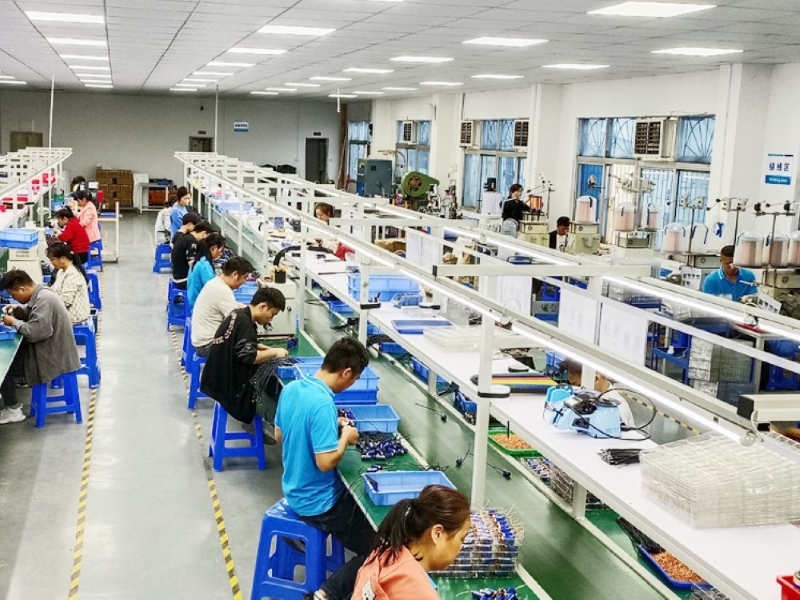
SF is a professional customized electromagnet and solenoid manufacturer with more than 10 years of manufacturing experience. With an experienced engineering team and a 6,000 m² manufacturing facility, SF provides customized electromagnetic actuator solutions for brand customers in different industries and exports products to more than 60 countries and regions.
This article explains bistable solenoids from an engineering and manufacturing perspective, including their operating principle, construction, advantages, applications, customization requirements, quality considerations, and how to select a reliable custom bistable solenoid manufacturer.

1. What Is a Bistable Solenoid Factory and What Does a Bistable Solenoid Do?
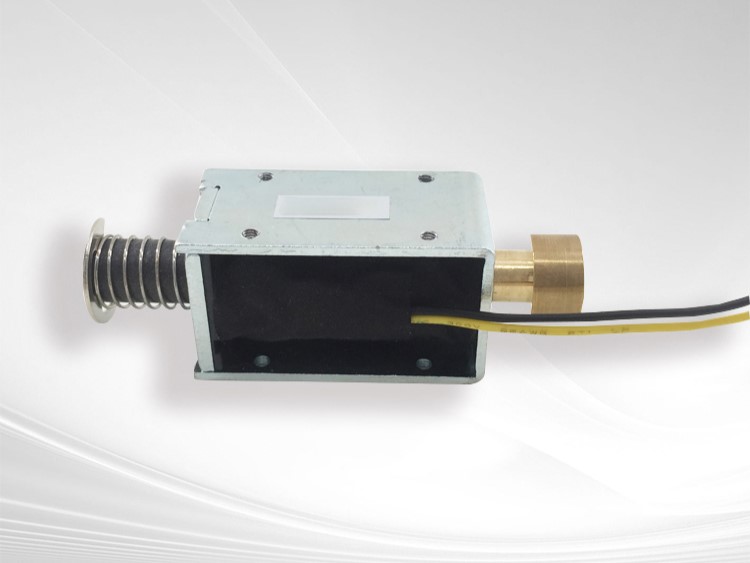
A bistable solenoid is an electromagnetic actuator designed to have two stable mechanical positions. A short electrical pulse moves the plunger or armature from one stable position to the other, after which the actuator can remain in that position without continuously energizing the coil.
This is the fundamental difference between a conventional non-latching solenoid and a bistable or latching solenoid.
A conventional solenoid typically works according to this sequence:
Power ON → electromagnetic force → plunger moves → power maintained → position held
A bistable solenoid is different:
Pulse A → move to Position 1
Pulse B → move to Position 2
Once the movement has been completed, electrical power can normally be removed while the mechanical system remains in its selected state.
The bistable principle is particularly valuable in battery-powered products, low-power equipment, smart devices, locking systems, meters, valves, and automation equipment where reducing standby power consumption is important.
From a manufacturing perspective, a bistable solenoid is more than simply a standard solenoid with a magnet added. The magnetic circuit must be carefully engineered so that the actuator provides sufficient force for switching while still allowing reliable movement between its two stable states.
2. How Does a Bistable Solenoid Work?
The working principle of a bistable solenoid is based on the interaction between an electromagnetic field and a magnetic holding mechanism, commonly involving a permanent magnet or a specially designed magnetic circuit.
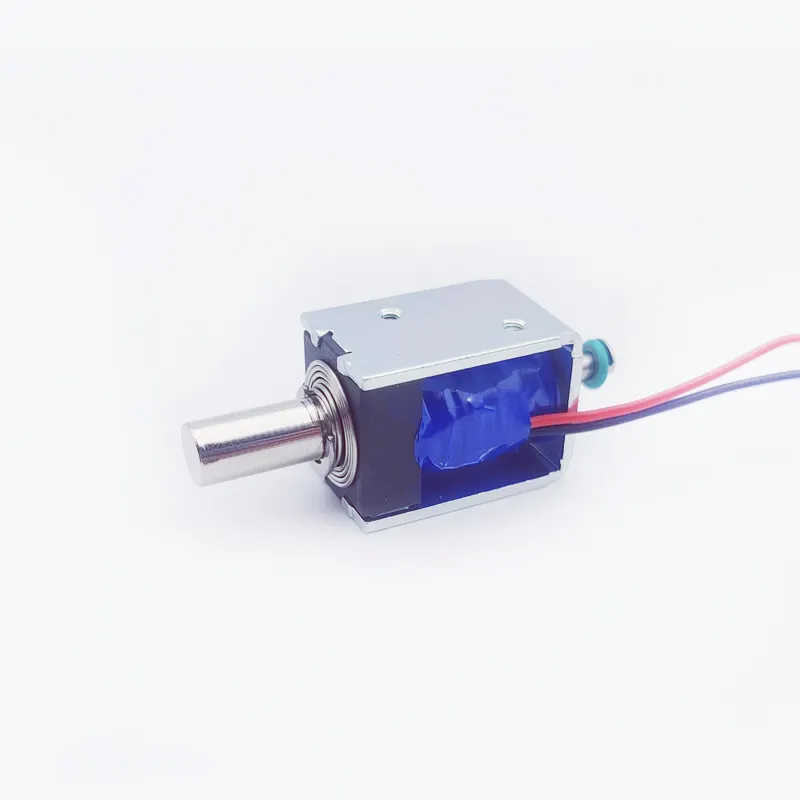
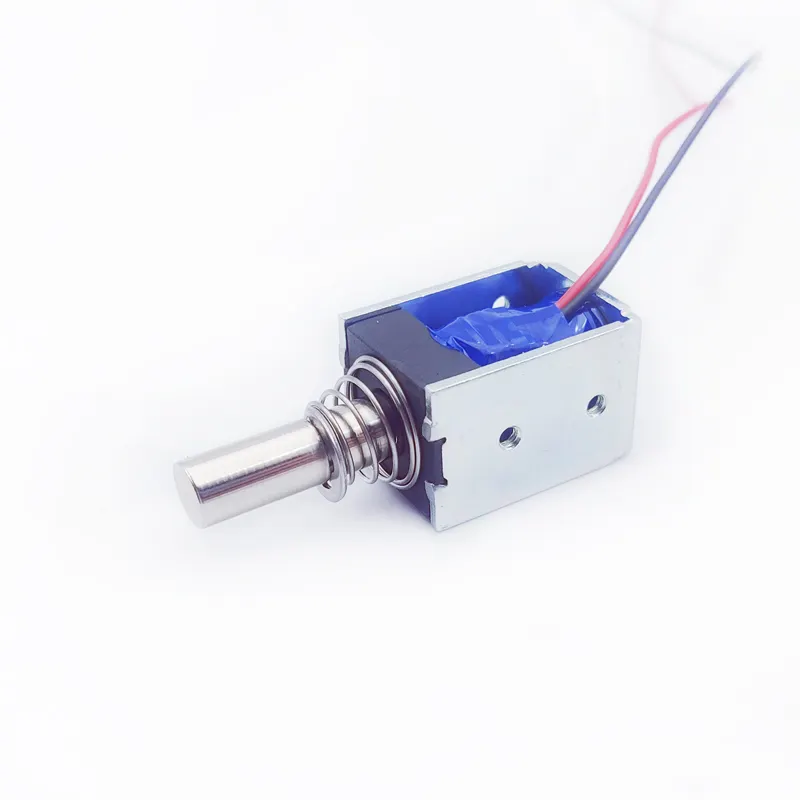
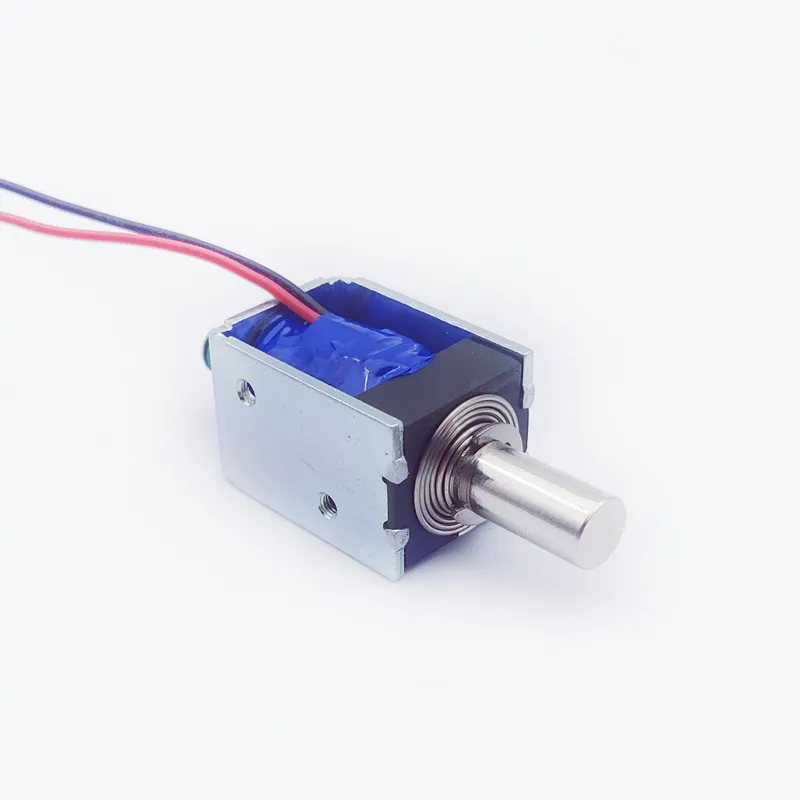
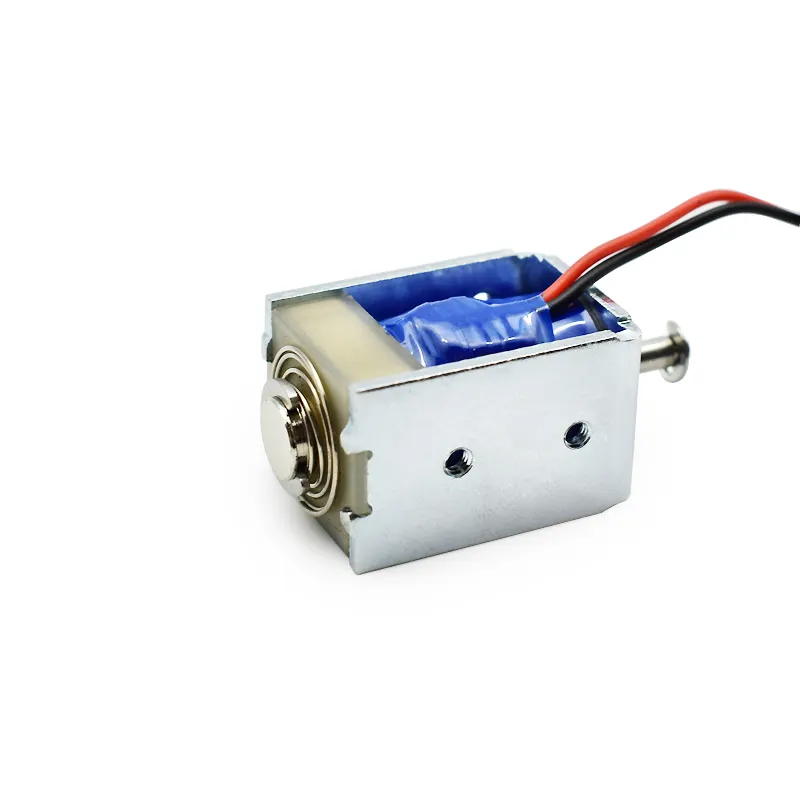
The actuator generally includes:
- Coil
- Plunger or armature
- Magnetic yoke/core
- Permanent magnet or magnetic latching structure
- Return or positioning mechanism where required
- Housing
- Mechanical interface
When a suitable electrical pulse is applied to the coil, the resulting magnetic field changes the magnetic force distribution inside the actuator.
Depending on the design, one pulse can reinforce the magnetic field in one direction and overcome the existing holding force. A pulse of opposite polarity can then create the magnetic condition necessary to release or move the plunger toward the other stable position.
A simplified force relationship can be expressed conceptually as:
Net Actuation Force = Electromagnetic Force + Magnetic Latching Force − Spring Force − Friction − External Load
For a successful design, the available electromagnetic force must exceed the mechanical resistance at the critical point of the stroke.
This is why a professional bistable solenoid factory should evaluate the complete force-stroke relationship instead of looking only at a single nominal force value.
3. Bistable Solenoid vs. Conventional Solenoid
The biggest advantage of a bistable solenoid is its ability to maintain a mechanical state without continuous coil energization.
| Feature | Conventional Solenoid | Bistable Solenoid |
|---|---|---|
| Stable positions | Usually one primary position | Two stable positions |
| Holding power | Often requires continuous power | Normally no continuous power after switching |
| Energy consumption | Higher for long holding periods | Very low standby consumption |
| Control | Continuous or switched voltage | Pulse-based control is common |
| Battery suitability | Moderate | Excellent for suitable applications |
| Thermal load | Can increase during continuous energization | Lower if operated by short pulses |
| Control circuit | Relatively simple | Requires appropriate pulse/polarity control |
| Design complexity | Lower | Higher magnetic/mechanical optimization |
| Typical application | Actuation, valves, locks | Latching, switching, locks, battery devices |
The selection depends on the application.
If the actuator must continuously produce force, a conventional solenoid may be appropriate. If the application needs to switch between two states and remain there with minimal energy consumption, a bistable solenoid can provide a significant system-level advantage.
4. Why Choose a Bistable Solenoid Factory Instead of a Standard Solenoid Supplier?
Bistable solenoids require more detailed engineering than many standard electromagnetic actuators.
A standard catalog solenoid can often be selected according to voltage, stroke, force, and dimensions. A custom bistable design requires consideration of the entire magnetic and mechanical system.
A capable bistable solenoid factory should be able to analyze:
- Required switching force
- Stroke length
- Initial and final plunger positions
- Magnetic holding force
- Pulse voltage
- Pulse duration
- Coil resistance
- Coil inductance
- Duty cycle
- Permanent magnet characteristics
- Air gap
- Plunger material
- Spring force
- Mechanical friction
- Installation orientation
- External load
- Temperature
- Required operating life
The goal is not simply to manufacture a coil and plunger. The goal is to produce an integrated electromagnet solenoid that performs consistently inside the customer’s actual product.
This distinction is especially important for OEM projects.
5. Bistable Solenoid Magnetic Circuit Design
Magnetic circuit design is one of the most important technical aspects of a bistable solenoid.
The magnetic circuit determines how efficiently magnetic flux travels through the core, plunger, yoke, air gap, and permanent magnet. Poor magnetic circuit design can result in insufficient switching force, excessive residual force, slow response, inconsistent operation, or difficulty releasing the plunger.
Important variables include:
Magnetic flux path
The magnetic circuit should provide an efficient path for magnetic flux while minimizing unnecessary leakage.
Air gap
Air gaps have a major influence on magnetic reluctance and actuator force. Small dimensional changes can significantly affect performance when the design operates near a critical magnetic condition.
Core and plunger material
The magnetic material should provide appropriate permeability, saturation characteristics, mechanical strength, and manufacturability.
Permanent magnet
The magnet must provide the required holding force without making electromagnetic release unnecessarily difficult.
Magnetic saturation
If part of the magnetic circuit becomes saturated, increasing coil current may provide less additional force than expected.
For this reason, experienced engineering analysis is essential when developing a custom bistable actuator.
6. Bistable Solenoid Coil Design and Pulse Control
The coil in a bistable solenoid is fundamentally different from a coil intended for continuous-duty operation.
Because the actuator can often switch with a short pulse, the coil can be designed around pulse energy rather than continuous holding power.
Important parameters include:
- Rated voltage
- Pulse voltage
- Pulse duration
- Coil resistance
- Coil inductance
- Number of turns
- Wire diameter
- Current
- Temperature rise
- Insulation system
- Available installation space
The relationship between voltage, resistance, and current can be simplified as:
I = V / R
However, during a real switching event, inductance means the current does not instantly reach its steady-state value. Therefore, pulse duration and coil inductance must be evaluated together.
A professional custom bistable solenoid manufacturer should therefore define the electrical operating conditions with the customer rather than specifying the coil based only on nominal voltage.
For example, a “12 V bistable solenoid” does not provide enough engineering information by itself. The manufacturer also needs to know how the 12 V signal is applied, for how long, how frequently, and under what temperature conditions.
7. Bistable Solenoid Force, Stroke, and Holding Performance
One of the most common mistakes when selecting a solenoid is focusing only on maximum force.
For a bistable solenoid, engineers should consider at least three different performance conditions:
- Switching force
- Holding force
- Release force
The actuator must generate enough electromagnetic force to overcome the magnetic holding force of the opposite state and the mechanical load.
At the same time, the final position must have sufficient holding force to resist vibration, shock, external load, or mechanical disturbance.
A simplified engineering condition is:
Switching Force > Load Force + Friction + Opposing Spring Force + Required Safety Margin
And:
Holding Force > External Disturbance Force
The exact safety margin should be determined according to the application.
This is why force-stroke testing is more informative than quoting a single maximum force number.
A professional bistable solenoid factory should be able to validate the actuator at defined positions throughout its stroke.
8. Bistable Solenoid Applications Across Different Industries
Bistable solenoids are suitable for applications where a mechanical state needs to be changed efficiently and maintained without continuous electrical power.
Typical applications include:
Smart locks and access control
A bistable electromagnetic actuator can switch a locking mechanism between two states while minimizing standby power consumption.
Battery-powered equipment
Low standby power makes bistable designs attractive for portable and battery-operated devices.
Industrial automation
Bistable electromagnetic actuators can be used for mechanical switching, positioning, and control mechanisms.
Valves
Certain valve architectures can use latching electromagnetic actuation to reduce continuous energy consumption.
Meters and instruments
Devices requiring reliable state switching can benefit from a low-power latching actuator.
Medical and laboratory equipment
Where power consumption, heat generation, and reliable mechanical switching matter, bistable solenoid technology can be useful.
Vending and dispensing equipment
The actuator can switch a mechanism between defined positions without continuous energization.
Automotive and transportation equipment
Customized electromagnetic actuators can be developed for specific switching and locking functions when their environmental and reliability requirements are properly defined.
9. Bistable Solenoid Customization: What Should OEM Buyers Specify?
A custom bistable solenoid manufacturer should receive more information than simply a drawing and voltage requirement.
For an OEM project, the following specification checklist is recommended:
| Parameter | Typical Requirement |
|---|---|
| Actuator type | Bistable / latching |
| Voltage | 5 V, 12 V, 24 V, etc. |
| Pulse duration | Customer-defined |
| Stroke | Required travel |
| Switching force | Force required during movement |
| Holding force | Minimum force at stable position |
| Load | External mechanical load |
| Dimensions | Maximum installation envelope |
| Mounting | Hole pattern / bracket / thread |
| Plunger | Shape, diameter, material |
| Return mechanism | Spring / gravity / external mechanism |
| Operating temperature | Application-specific |
| Duty cycle | Switching frequency |
| Lifetime | Required cycles |
| Noise | Maximum acceptable level |
| Connector | Wire / terminal / custom interface |
The more accurately the application is defined, the more efficiently the solenoid factory can optimize the design.
10. Bistable Solenoid Materials and Surface Treatment
Material selection directly affects both electromagnetic performance and mechanical durability.
Magnetic components
Common magnetic materials may include different grades of iron and low-carbon magnetic steels depending on the application.
The material must balance:
- Magnetic permeability
- Saturation characteristics
- Mechanical strength
- Machinability
- Corrosion resistance
- Cost
Plunger surface
The plunger is a moving component, so surface finish and treatment influence friction, wear, corrosion resistance, and service life.
Depending on the application, different surface treatments may be considered.
Housing
The housing provides mechanical protection and contributes to magnetic flux management depending on the architecture.
A professional electromagnet factory should evaluate material selection as part of the complete system rather than treating each component independently.
11. Bistable Solenoid Reliability: Friction, Tolerance, and Alignment
A bistable solenoid can have excellent magnetic performance and still fail in the customer’s equipment if mechanical tolerances are poorly controlled.
Three factors are particularly important:
Friction
Excessive friction increases the force required to move the plunger and can create inconsistent switching.
Alignment
Plunger misalignment can create uneven contact, increased friction, abnormal wear, and unstable performance.
Dimensional tolerance
Small changes in air gap, plunger diameter, sleeve dimensions, spring characteristics, and magnetic components can influence actuator performance.
Therefore, a high-quality China solenoid manufacturer should control not only final assembly but also upstream machining, material selection, coil winding, magnet installation, and critical dimensional processes.
For high-volume production, process control and traceability are often more important than simply performing final inspection.

12. Bistable Solenoid Testing and Quality Control
A professional bistable solenoid factory should establish testing around the customer’s actual requirements.
Typical tests may include:
- Coil resistance
- Current consumption
- Pulse response
- Switching reliability
- Stroke
- Switching force
- Holding force
- Release behavior
- Dimensional inspection
- Plunger movement
- Noise
- Temperature rise
- Environmental testing
- Life-cycle testing
For mass production, the measurement conditions must remain consistent.
For example, force measurements can change with:
- Test position
- Temperature
- Power supply
- Measurement speed
- Fixture design
- Plunger alignment
Therefore, a meaningful test specification should define the test method rather than simply stating “force test.”
For an OEM project, SF can work with customers to establish the technical requirements for prototype validation and production inspection.
13. How to Choose the Right Bistable Solenoid Factory for Your Project
Choosing the right bistable solenoid factory requires evaluating engineering capability, manufacturing capability, communication, and quality management together.
Consider the following questions:
Does the manufacturer have real solenoid engineering experience?
A supplier should understand magnetic circuits, coils, plungers, springs, force-stroke characteristics, and thermal behavior.
Can the manufacturer customize the magnetic circuit?
A custom project often cannot be solved by simply modifying an existing catalog product.
Can the factory manufacture prototypes and move into mass production?
Prototype capability alone is insufficient for an OEM program.
Can the manufacturer control critical dimensions?
The factory should have an appropriate process for controlling plunger, sleeve, magnetic circuit, spring, coil, and assembly tolerances.
Can the manufacturer test the product?
The supplier should understand what performance needs to be validated and under which conditions.
Can the supplier communicate engineering issues clearly?
A good custom solenoid manufacturer should identify potential problems before mass production rather than waiting until the customer discovers them during assembly.
14. Why SF Is a Preferred Custom Bistable Solenoid Manufacturer
SF is an experienced custom bistable solenoid manufacturer focused on customized electromagnetic and solenoid solutions.
With more than 10 years of manufacturing experience, SF has developed practical expertise in designing and producing customized electromagnets and solenoids for different applications.
Experienced engineering team
Bistable solenoids require coordination between electromagnetic design and mechanical engineering. SF’s experienced engineering team can evaluate the relationship between the coil, magnetic circuit, plunger, spring, housing, stroke, force, and installation requirements.
6,000 m² manufacturing facility
A 6,000 m² factory provides SF with a substantial manufacturing environment for customized electromagnetic products and supports the transition from engineering development to production.
Customized OEM capability
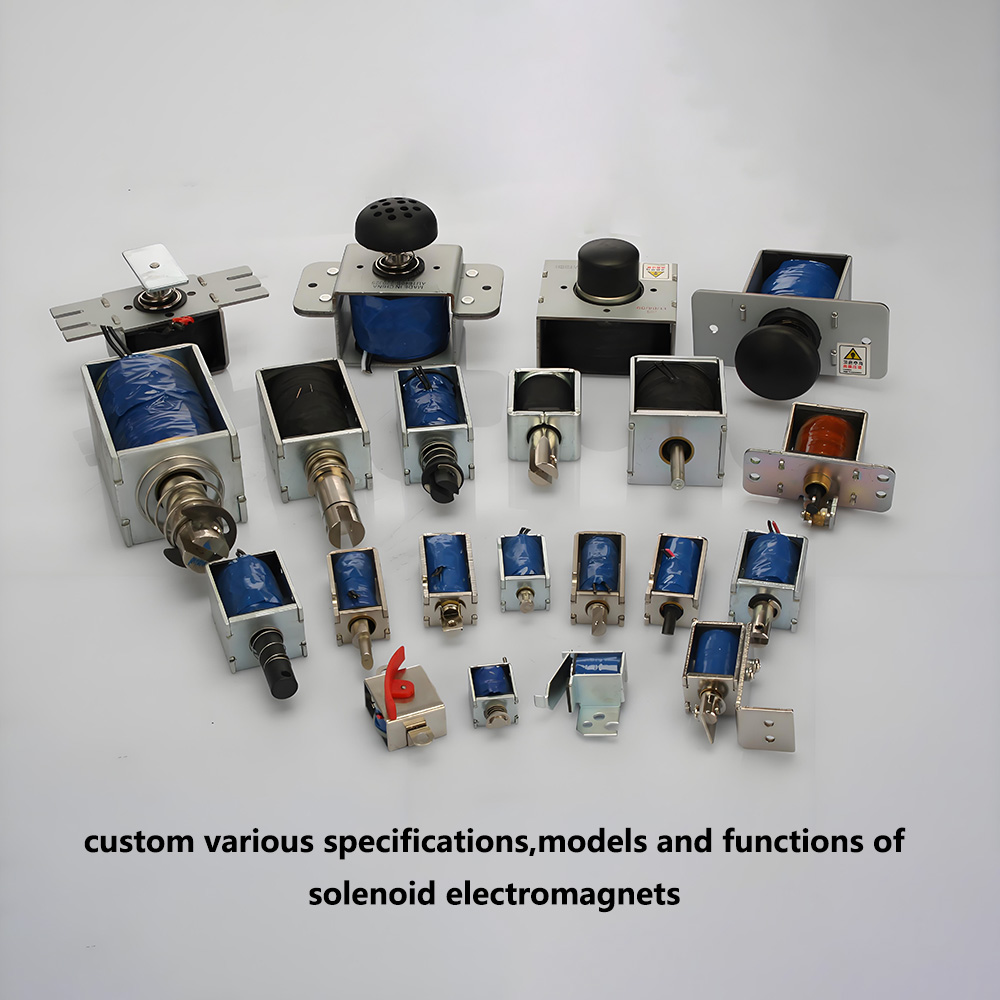
Different customers may require different dimensions, voltages, strokes, forces, mounting structures, connectors, materials, and surface treatments. SF works with brand customers to develop customized solutions rather than relying exclusively on standard catalog products.
Experience with international customers
SF has helped many brand customers customize different electromagnets and solenoids, with products exported to more than 60 countries and regions.
This international project experience is valuable when the customer’s requirements involve customized drawings, application-specific testing, production consistency, and long-term supply.
Broader electromagnet and solenoid expertise
A bistable solenoid is part of a broader electromagnetic actuator family. Experience with different solenoid and electromagnet structures can help engineers identify alternative design approaches when a particular configuration does not achieve the required performance.
For companies looking for a bistable solenoid factory, electromagnet factory, or China solenoid manufacturer, SF can be considered as a reliable OEM development and manufacturing partner.
15. Bistable Solenoid Factory: From Prototype to Mass Production
The most successful bistable solenoid projects are developed as complete engineering programs rather than simple purchasing transactions.
A typical development process can follow this structure:
Application Requirement
↓
Mechanical & Electrical Specification
↓
Magnetic Circuit Design
↓
Coil & Plunger Design
↓
Prototype Manufacturing
↓
Force / Stroke / Pulse Testing
↓
Application Integration
↓
Design Optimization
↓
Reliability & Life Validation
↓
Production Process Development
↓
Mass Production
The key advantage of working with an experienced bistable solenoid factory is that engineering considerations can be incorporated from the beginning.
For example, if a prototype switches correctly on a laboratory bench but fails when installed in the customer’s equipment, the problem may not be the basic electromagnetic principle. It could be caused by mechanical alignment, external load, fixture tolerance, temperature, friction, insufficient pulse energy, or changes in the actual power supply.
A professional manufacturer therefore needs to understand the application rather than simply reproduce the drawing.
Bistable Solenoid Factory: Key Takeaways for OEM Buyers
A bistable solenoid provides two stable mechanical states and is designed to switch between them using controlled electrical pulses. Its ability to remain in a stable position without continuous coil energization makes it particularly useful for low-power, battery-operated, locking, switching, valve, instrumentation, and automation applications.
However, the performance of a bistable solenoid depends on much more than voltage and dimensions. Magnetic circuit design, permanent-magnet characteristics, air gap, coil parameters, plunger geometry, spring force, friction, alignment, tolerances, temperature, and control-pulse conditions all interact.
For OEM buyers, the right bistable solenoid factory should therefore provide more than manufacturing capacity. It should provide electromagnetic engineering, mechanical design support, prototype development, testing, process control, and mass-production capability.
SF combines more than 10 years of customized electromagnet and solenoid manufacturing experience with an experienced engineering team and a 6,000 m² factory. Having supported many brand customers with customized electromagnetic products and exported products to more than 60 countries and regions, SF is well positioned to support OEM projects requiring customized bistable solenoids, electromagnet solenoids, and other electromagnetic actuators.
If your project requires a customized bistable actuator, the most effective starting point is to provide the required stroke, load, stable positions, switching voltage, pulse duration, installation dimensions, operating temperature, duty cycle, and target lifetime. These parameters allow a professional custom bistable solenoid manufacturer to evaluate the magnetic and mechanical design and develop a solution suited to the actual application.
SF — Your Professional Bistable Solenoid Factory and Custom Electromagnet Manufacturing Partner.
Custom all kinds of electromagnet, contact SF electromagnet factory whatsapp +86 189 0261 1680