









Ultimo aggiornamento il 04/09/2025 da Fabbrica di Solenoidi
Aircraft doors are among the most safety-critical components in aviation. They must withstand extreme environmental conditions, rapid pressure changes, and rigorous operational demands—all while ensuring the security of passengers and crew. Traditional hydraulic and mechanical door systems have long dominated this space, but advancements in electromagnetic technology are revolutionizing how aircraft doors operate. From lightweight, energy-efficient locking mechanisms to intelligent emergency release systems, elettromagneti are setting new standards in aviation safety and reliability.
As a professional electromagnet manufacturer, we explore the transformative applications of electromagnetic systems in aircraft door control, the technical challenges they address, and their role in shaping the future of aviation engineering.
1. The Science of Electromagnetic Door Control
1.1 How Electromagnets Enhance Aircraft Door Systems
Elettromagneti convert electrical energy into precise mechanical force through controlled magnetic fields. In aircraft doors, they enable:
- Instant Actuation: Millisecond response times for locking/unlocking.
- Fail-Safe Operation: Spring-assisted or redundant mechanisms to ensure functionality during power loss.
- Adaptive Control: Integration with flight control systems to adjust door behavior based on altitude, pressure, or emergency scenarios.
1.2 Key Components in Electromagnetic Door Systems
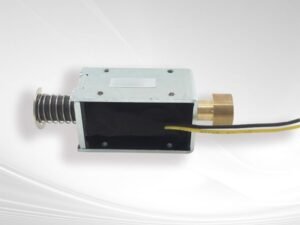
- Solenoid Actuators: Generate linear or rotational motion to engage door locks.
- Latching Magnets: Hold doors securely during flight using permanent or electro-permanent designs.
- Sensors and Controllers: Monitor door status and synchronize with the aircraft’s avionics.
2. Core Applications in Aircraft Door Control
2.1 Cabin Door Locking Mechanisms
Aircraft cabin doors require robust locking systems to maintain cabin pressure and prevent accidental openings. Electromagnetic locks provide:
- Pressure-Sealing: Electromagnets apply uniform force to door seals, ensuring airtight closure even at 40,000 feet.
- Lightweight Design: Replacing hydraulic systems with electromagnets reduces door weight by up to 30%, improving fuel efficiency.
Case Study: For a next-gen narrow-body aircraft, we developed a titanium-core solenoid lock that withstands 10,000 psi differential pressure while weighing 50% less than traditional locks. The system achieved FAA certification and is now deployed in over 500 aircraft globally.
2.2 Emergency Exit Door Systems
Electromagnets enable rapid, automated deployment of emergency exits during evacuations:
- Instant Release: A single electrical pulse disengages locks, allowing doors to deploy inflatable slides in <3 seconds.
- Redundancy: Dual-coil solenoids ensure operation even if one coil fails.
Esempio: During testing, an electromagnetic exit door system achieved a 100% success rate in simulated emergency scenarios, outperforming mechanical systems prone to jamming.
2.3 Cargo Door Automation
Freighter aircraft rely on electromagnets for heavy cargo door operations:
- Motorized Control: Electromagnetic actuators adjust door angles for loading/unloading, reducing manual labor.
- Load Sensing: Integrated Hall-effect sensors detect obstructions and halt movement to prevent damage.
2.4 Flight Deck Door Security
Reinforced electromagnetic locks protect flight decks from unauthorized access:
- Biometric Integration: Locks engage/disengage via fingerprint or retinal scans.
- Anti-Tamper Alerts: Magnetic field sensors trigger cockpit alarms if tampering is detected.
3. electromagnets Technical Challenges and Solutions
3.1 Extreme Environmental Conditions
Sfida: Aircraft doors face temperatures from -65°C (at altitude) to +70°C (on tarmac), humidity, and vibration.
Solutions:
- Cryogenic-Grade Materials: Austenitic stainless steel coils and armatures resist thermal contraction.
- Vibration Damping: Silicone-encapsulated solenoids absorb shocks from turbulence or landing impacts.
3.2 Power Reliability
Sfida: Power fluctuations or failures during flight could compromise door security.
Solutions:
- Energy Storage Modules: Supercapacitors provide backup power to locks for 30+ minutes.
- Latching Electromagnets: Use permanent magnets to maintain locked states without continuous power.
3.3 Electromagnetic Interference (EMI)
Sfida: EMI from onboard electronics disrupts solenoid operation.
Solutions:
- Shielded Enclosures: Mu-metal housings block external EMI.
- Frequency Modulation: Controllers operate solenoids at non-conflicting frequencies.
3.4 Certification and Compliance
Sfida: Meeting aviation standards like FAA Part 25, EASA CS-25, and DO-160 (Environmental Testing).
Solutions:
- Redundant Systems: Dual-coil actuators and fault-tolerant controllers meet SIL 3 (Safety Integrity Level) requirements.
- Accelerated Life Testing: Simulate 50,000 flight cycles to validate durability.
4. Innovations in Electromagnetic Door Technology
4.1 Smart Doors with IoT Integration
Next-gen aircraft doors use embedded IoT sensors to:
- Predict Maintenance Needs: Monitor coil resistance and armature wear, alerting crews before failures occur.
- Sync with Flight Phases: Automatically lock doors during takeoff/landing and adjust seals during pressurization.
Case Study: An airline reduced door-related delays by 70% after adopting IoT-enabled cargo doors that self-diagnosed seal degradation.
4.2 Shape-Memory Alloy (SMA) Actuators
SMAs combined with electromagnets enable self-adjusting locks:
- Thermal Compensation: SMAs counteract thermal expansion/contraction, maintaining seal integrity across temperatures.
4.3 Additive Manufacturing
3D-printed solenoid cores and lightweight frames optimize strength-to-weight ratios:
- Topology Optimization: AI-designed structures reduce weight by 40% while maintaining load capacity.
4.4 Hydrogen-Powered Aircraft Adaptations
For hydrogen-fueled aircraft, electromagnets are being redesigned with:
- Explosion-Proof Housings: Prevent sparks in hydrogen-rich environments.
- Non-Magnetic Alloys: Titanium or aluminum bodies to avoid interference with cryogenic fuel systems.
5. Case Studies: Electromagnets in Action
5.1 Case Study 1: Wide-Body Aircraft Emergency Exits
A manufacturer sought to replace hydraulic emergency door systems with electromagnetic solutions. Our design featured:
- Dual Redundant Coils: Ensured 100% reliability in failure-mode tests.
- Low-Power Actuation: Operated on 28V DC, compatible with aircraft electrical systems.
The system reduced evacuation time by 25% and cut maintenance costs by 60%.
5.2 Case Study 2: Military Transport Cargo Doors
A military contractor needed cargo doors resistant to sand, dust, and EMP (electromagnetic pulse) attacks. We delivered:
- IP69K-Rated Actuators: Withstood high-pressure washdowns and desert conditions.
- EMP-Hardened Controllers: Shielded circuits survived 50 kV/m pulse tests.
5.3 Case Study 3: Regional Jet Cabin Doors
A regional jet manufacturer prioritized weight reduction. Our carbon-fiber solenoid housings and aluminum cores cut door system weight by 120 kg per aircraft, saving 1.2 tons of fuel annually per plane.
6. Future Trends in Aircraft Door Electromagnets
6.1 Autonomous Door Systems
AI-powered doors will:
- Auto-Adjust to Passenger Flow: Use cameras and sensors to optimize boarding/deboarding.
- Predict Turbulence Responses: Pre-lock doors before severe turbulence events.
6.2 Energy-Harvesting Locks
Kinetic energy from door movements will recharge backup batteries, enhancing sustainability.
6.3 Quantum Magnetic Sensors
Quantum-based sensors will detect microscopic door seal leaks, improving pressurization efficiency.
7. Selecting Electromagnetic Solutions for Aviation
7.1 Key Selection Criteria
- Compliance: FAA/EASA certifications and DO-160 testing.
- Weight: Target <1.5 kg per actuator for narrow-body doors.
- Cycle Life: Minimum 50,000 operations without performance degradation.
7.2 Customization for OEM Needs
As a manufacturer, we offer:
- Material Customization: Titanium, Inconel, or composites for specific environments.
- Compatibilità di tensione: 28V DC, 115V AC, or hybrid systems.
- Rapid Prototyping: 3D-printed models for wind tunnel and pressure testing.
Electromagnets—Elevating Aviation Safety and Efficiency
Electromagnetic technology is redefining aircraft door control, merging unparalleled precision with the rigorous demands of aviation safety. From ensuring cabin pressure integrity to enabling split-second emergency responses, these systems are proving indispensable in modern aircraft design.
As the aviation industry advances toward greener, smarter, and more autonomous operations, elettromagneti will play a pivotal role. For OEMs and airlines, partnering with an experienced produttore di elettromagneti is not just a technical decision—it’s a strategic investment in the future of flight.
In an industry where every gram and every millisecond counts, electromagnets are soaring to new heights—proving that even the smallest magnetic force can have a monumental impact on global aviation.
Informazioni sulla fabbrica di elettromagneti SF
Shengfeng Electromagnet Co., Ltd. è stata fondata nel 2015 e si trova nel Parco Industriale di Xiansha, in una splendida zona con comodi collegamenti di trasporto. L'azienda si estende su una superficie di 16.000 metri quadrati e dispone di moderni impianti di produzione, attrezzature di produzione all'avanguardia e un team tecnico altamente qualificato. Fin dalla sua fondazione, l'azienda ha sempre aderito alla filosofia aziendale di "innovazione, qualità e servizio", concentrandosi sulla ricerca, lo sviluppo e la produzione di elettromagneti, promuovendo costantemente l'aggiornamento dei prodotti e il progresso tecnologico, e fornendo ai clienti prodotti e servizi della migliore qualità.
Perché scegliere un elettromagnete SF
QUALITÀ DI ALTA GAMMA:In qualità di miglior produttore di elettromagneti a solenoide in Cina, il nostro team di controllo qualità garantisce che ogni singolo prodotto ricevuto sia della massima qualità. Disponiamo di attrezzature professionali per i test di qualità.
PROGETTAZIONE DEL PRODOTTO:Il nostro reparto campionatura gestisce l'intero processo di trasformazione dei disegni in realtà. Inoltre, grazie alla nostra pluriennale esperienza, ottimizziamo il design del vostro prodotto. Fateci sapere cosa ne pensate.
TEMPI DI CONSEGNA STABILI:In qualità di produttore e fornitore leader di elettromagneti, disponiamo di una capacità produttiva adeguata: anche di fronte a grandi ordini siamo in grado di garantire consegne puntuali.
MIGLIOR PREZZO:Siamo produttori diretti di elettromagneti e il miglior produttore di solenoidi in Cina; ecco perché possiamo offrire prodotti di alta qualità al miglior prezzo.
GESTIONE PRECISA:Non si può ottenere nulla senza una gestione precisa. Siamo un'azienda dotata di un sistema di gestione completo.
SERVIZIO 24 7 GIORNI SU 24:In qualità di miglior produttore di solenoidi, offriamo una risposta immediata 24 ore su 24, 7 giorni su 7: raccoglieremo il tuo feedback per diventare un fornitore migliore. Contattaci. Bomba +86 18902611680
Domande frequenti sull'elettromagnete
Siamo un top cinese elettromagnete Siamo produttori e la nostra fabbrica si trova a Dongguan. Benvenuti a visitare la nostra fabbrica!
Siamo specializzati nella progettazione e produzione di alta qualità elettromagnete,elettrovalvola,ad esempio elettrovalvola rotante, solenoidi bistabili, solenoidi di bloccaggio, solenoidi a telaio aperto, solenoidi tubolari, solenoide autobloccante
•Naturalmente, di solito forniamo campioni gratuiti e dovrete coprire solo le spese di spedizione. Per campioni di elettromagneti personalizzati, vi preghiamo di inviarci le vostre richieste per verificare il costo del campione.
• La produzione del campione richiede circa 7 giorni.
Sì, offriamo servizi di progettazione gratuiti, tra cui progettazione strutturale e grafica semplice.
Certamente. Possiamo realizzare qualsiasi elettromagnete con il vostro design. Ora offriamo un servizio ODM per solenoidi, ideale per piccole quantità da 100 a 500 pezzi, con la possibilità di personalizzare il prodotto con il vostro logo.
A seconda della quantità dell'ordine e dei dettagli di produzione, ci vorranno circa dai 15 ai 20 giorni.
Sempre un campione di pre-produzione prima della produzione di massa; sempre un'ispezione finale prima della spedizione.
• Potenza, utilizzo, dimensioni, materiale, quantità, destinazione di spedizione, ecc.
• Puoi anche semplicemente comunicarci le tue esigenze e ti consiglieremo i prodotti più adatti.
• Via mare, via aerea o tramite corriere espresso.
• Se disponete di un vostro spedizioniere in Cina, il prezzo è quello franco fabbrica o FOB.
•CFR o CIF, ecc., se avete bisogno che spediamo per vostro conto.
• È possibile utilizzare anche DDP e DDU.
• Più opzioni, prenderemo in considerazione le vostre scelte.
• Il prezzo è determinato dalla quantità, dal materiale, dal metodo di lavorazione, dalle dimensioni e da altri fattori. Inoltre, a causa del nostro continuo
Grazie all'innovazione tecnologica, i prezzi di alcuni dei nostri prodotti sono estremamente competitivi. Contattateci per un preventivo.