









Dernière mise à jour le 03/09/2025 par Usine de solénoïdes
In the vast landscape of electromagnetic technology, electromagnets play a pivotal role across diverse industries, from healthcare and automotive to aerospace and manufacturing. Their ability to generate strong magnetic fields makes them indispensable for a wide range of applications, from precision machinery to medical imaging systems. However, the cost of electromagnets can vary widely, depending on factors such as design complexity, material quality, production volume, and customization level. This comprehensive guide serves as an in-depth analysis of electromagnet price, providing valuable insights for those seeking to purchase custom electromagnets. By understanding the various factors that influence pricing, buyers can make informed decisions and secure the best value for their investment.
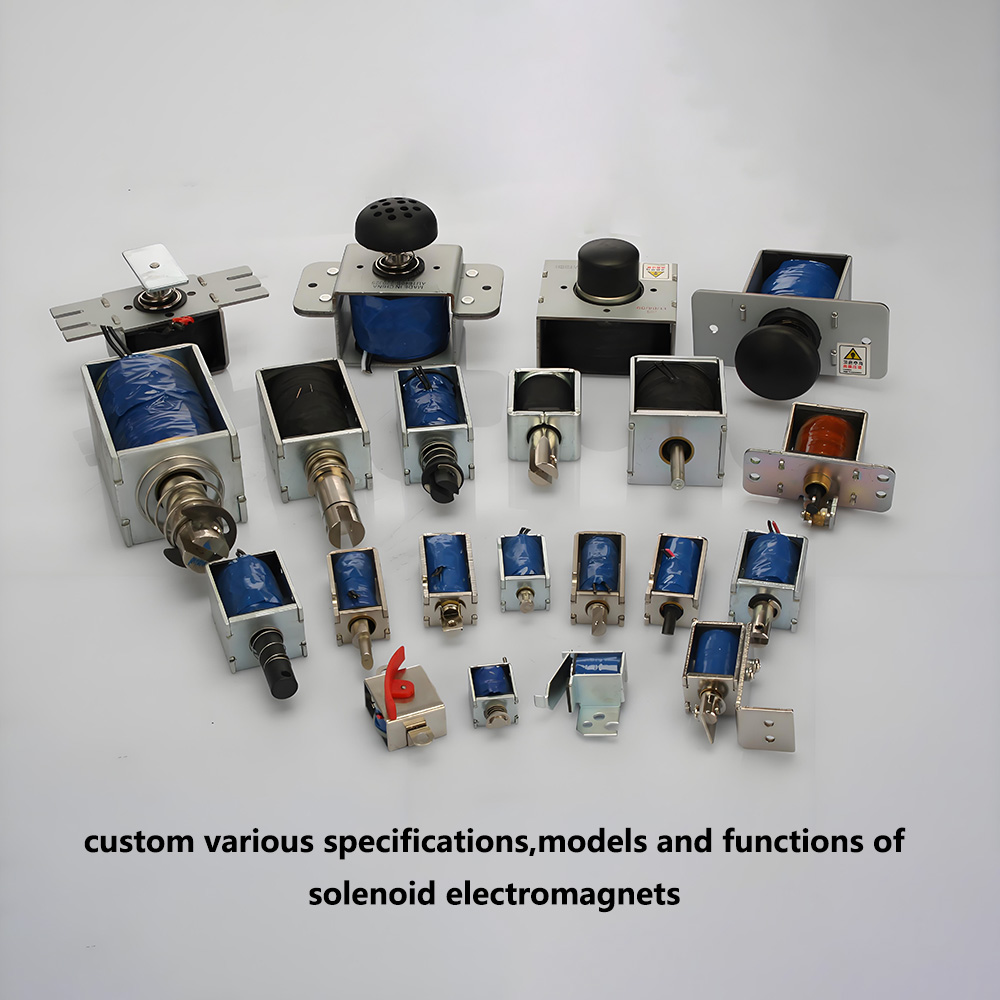
Factors Influencing Electromagnet Price
Design Complexity:
- Magnetic Field Strength: Electromagnets designed to generate stronger magnetic fields typically require more material and more sophisticated engineering, leading to higher costs.
- Geometry and Dimensions: Complex geometries and larger dimensions can increase production time and material usage, driving up electromagnet price.
- Operating Conditions: Electromagnets intended for extreme operating conditions, such as high temperatures or corrosive environments, may require specialized materials and coatings, adding to the cost.
Material Quality:
- Core Material: The choice of core material (e.g., soft iron, neodymium, samarium-cobalt) significantly impacts the cost. High-performance materials, such as rare-earth magnets, tend to be more expensive.
- Coil Material: The type of wire used in the coil (e.g., copper, aluminum) and its gauge (thickness) also affect pricing. High-conductivity wires and thicker gauges can improve performance but increase costs.
- Insulation and Coatings: Insulation materials and protective coatings add to the overall cost but are essential for ensuring safety and reliability.
Production Volume:
- Custom vs. Off-the-Shelf: Custom electromagnets, which are designed and built to meet specific requirements, tend to be more expensive than off-the-shelf models due to the additional engineering and production time required.
- Quantity Discounts: Manufacturers often offer quantity discounts for larger orders, reducing the per-unit cost. This can be particularly beneficial for buyers with significant demand.
Customization Level:
- Special Features: Adding special features, such as integrated sensors, cooling systems, or adjustable magnetic field strengths, can significantly increase the electromagnet price.
- Certification and Compliance: Compliance with international standards and certifications (e.g., CE, UL, RoHS) may require additional testing and documentation, adding to the cost.
Geographical Factors:
- Labor Costs: Labor costs vary significantly across different regions, influencing the production cost of electromagnets.
- Supply Chain: The availability and cost of raw materials, as well as the efficiency of the supply chain, can affect pricing.
Electromagnet Price Analysis of Different Types
Electromagnetic Lifters:
- Application: Used for lifting and transporting ferromagnetic materials in industries such as manufacturing and recycling.
- Pricing Factors: Size, lifting capacity, and duty cycle (continuous or intermittent use) significantly impact pricing. Larger lifters with higher capacities and continuous duty cycles tend to be more expensive.
- Range: Prices for electromagnetic lifters can range from a few hundred dollars for small, lightweight models to several thousand dollars for large, industrial-grade lifters.
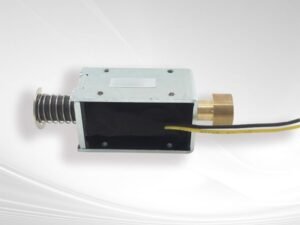
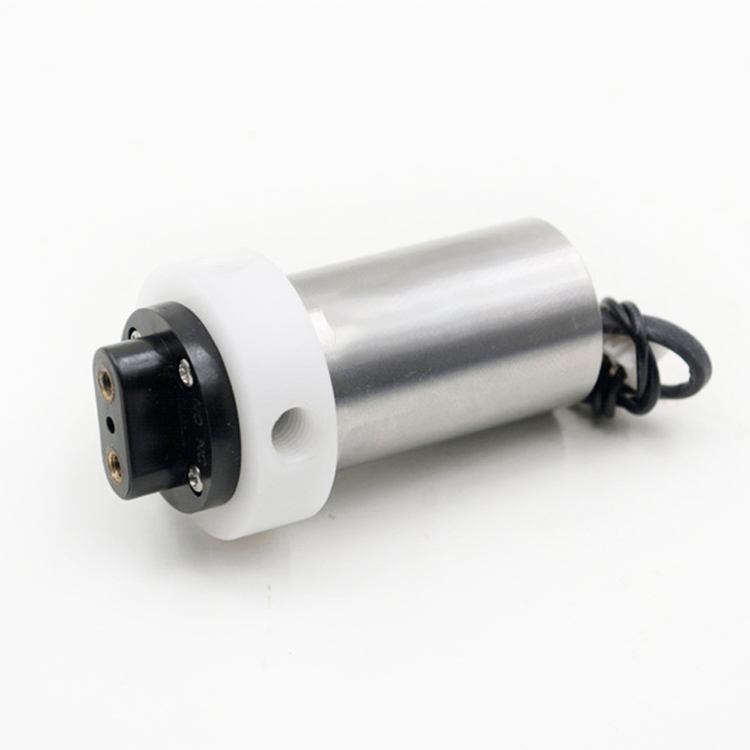
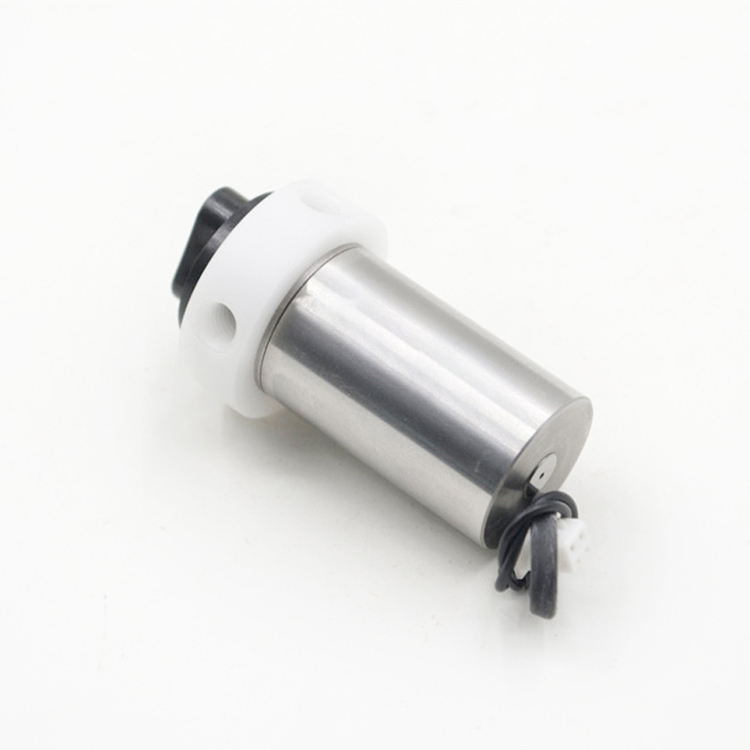
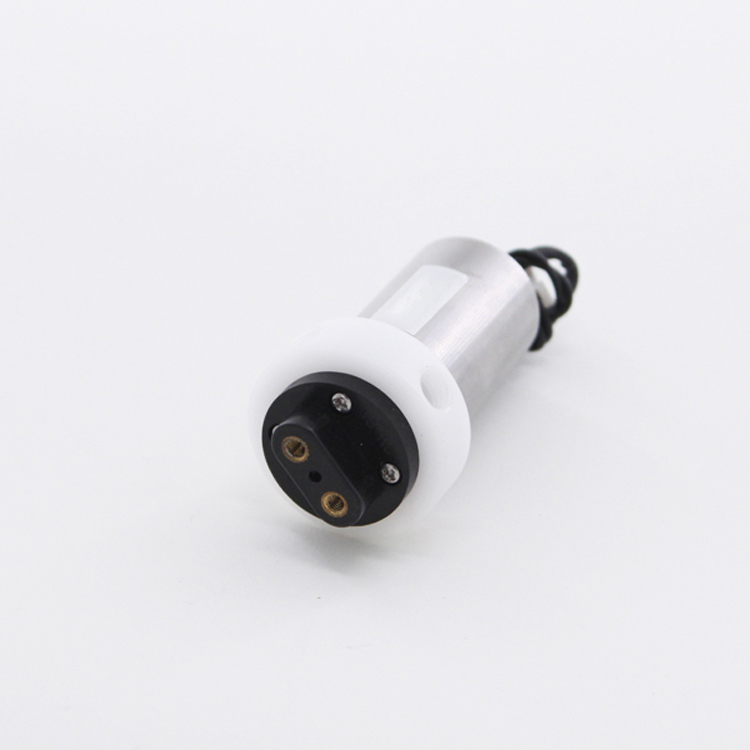
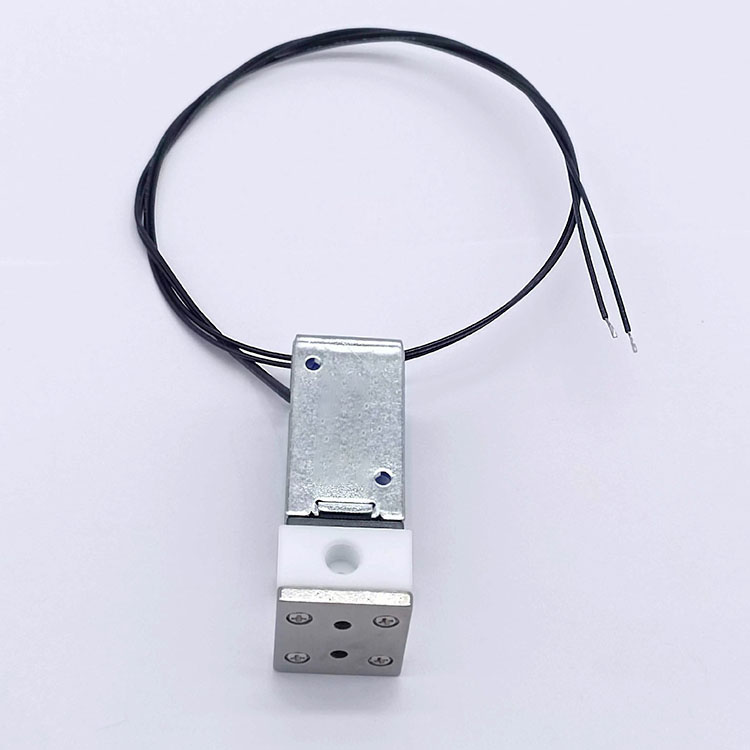
Electromagnetic Solenoids:
- Application: Commonly used in valves, relays, and actuators for controlling fluid flow, electrical circuits, and mechanical motion.
- Pricing Factors: The size, force output, and stroke length of solenoids are primary pricing factors. High-force, long-stroke solenoids require more material and complex engineering, driving up costs.
- Range: electromagnet prices can vary from tens of dollars for small, low-force models to several hundred dollars for large, high-force solenoids.
Electromagnetic Clutches and Brakes:
- Application: Used in machinery to engage or disengage shafts, control torque, and stop motion.
- Pricing Factors: The torque capacity, engagement speed, and environmental conditions (e.g., temperature, humidity) in which the clutch or brake will operate influence pricing.
- Range: Prices for electromagnetic clutches and brakes can range from a few hundred dollars for small, low-torque models to several thousand dollars for large, high-torque units.
Electromagnetic Coils:
- Application: Used in a variety of applications, including magnetic separators, generators, and MRI machines, to create magnetic fields.
- Pricing Factors: The size, wire gauge, number of turns, and insulation material of the coil are primary pricing factors. Larger coils with thicker wires and higher insulation ratings tend to be more expensive.
- Range: Prices for electromagnetic coils can vary widely, from tens of dollars for small, simple coils to several thousand dollars for large, complex coils.
Custom Electromagnets:
- Application: Designed to meet specific requirements for unique applications, such as precision machinery, research equipment, and medical imaging systems.
- Pricing Factors: Customization level, design complexity, material quality, and production volume all play a role in pricing. Highly customized, high-performance electromagnets tend to be the most expensive.
- Range: Prices for custom electromagnets can range from several hundred dollars for simple, low-complexity models to tens of thousands of dollars for complex, high-performance units.
- Note 0 sur 5
Strategies for Cost-Effective Purchasing
Define Requirements Clearly:
- Clearly defining your electromagnet requirements, including magnetic field strength, geometry, operating conditions, and any special features, will help you obtain accurate quotes and compare options more effectively.
Compare Multiple Vendors:
- Reach out to multiple manufacturers and suppliers to compare pricing, quality, and delivery times. Don’t hesitate to request samples or references to assess the quality of their products.
Negotiate:
- Don’t be afraid to negotiate electromagnet price, especially if you have a significant demand or are willing to commit to a long-term partnership. Many manufacturers offer discounts for large orders or repeat customers.
Consider Lifecycle Costs:
- When evaluating electromagnet price, consider the lifecycle costs of the electromagnet, including maintenance, repairs, and energy consumption. Choosing a higher-quality, more expensive electromagnet may result in lower long-term costs.
Stay Informed:
- Keep up-to-date with industry trends, new technologies, and changes in raw material prices. This will help you identify opportunities for cost savings and negotiate better prices.
Case Study: Purchasing a Custom Electromagnet for a Medical Imaging System
To illustrate the process of purchasing a custom electromagnet, let’s consider a case study involving a medical imaging system.
Scenario:
A medical device manufacturer is developing a new MRI machine and requires a custom electromagnet with specific magnetic field strength, geometry, and operational requirements.
Steps Taken:
Defined Requirements:
- Magnetic field strength: 1.5 Tesla
- Geometry: Cylindrical shape with a diameter of 60 cm and a length of 120 cm
- Operating conditions: Continuous use, must withstand high temperatures and vibrations
- Special features: Integrated cooling system, precise field uniformity
Reached Out to Vendors:
- Contacted multiple manufacturers specializing in custom electromagnets
- Provided detailed specifications and requirements
- Received quotes and technical proposals
Evaluated Options:
- Compared electromagnet price, delivery times, and quality of proposals
- Requested samples and references from top vendors
- Conducted site visits to assess production capabilities and quality control measures
Negotiated and Finalized:
- Negotiated prices and delivery times with the selected vendor
- Signed a contract outlining the scope of work, delivery schedule, and warranty terms
- Arranged for regular progress updates and quality checks during production
Received and Installed:
- Received the custom electromagnet on schedule
- Conducted thorough testing and validation to ensure compliance with specifications
- Installed the electromagnet in the MRI machine and initiated production
Résultat:
The custom electromagnet met all specified requirements and performed reliably in the MRI machine. The manufacturer was able to secure a competitive price through careful evaluation and negotiation, ensuring the project stayed within budget and timeline.
A variety of factors influence electromagnet price
Purchasing custom electromagnets can be a complex and costly process, but by understanding the various factors that influence electromagnet price and employing effective purchasing strategies, buyers can secure the best value for their investment. From defining requirements clearly to comparing multiple vendors and negotiating prices, each step plays a crucial role in ensuring a successful purchase. By staying informed and making informed decisions, buyers can obtain high-quality, reliable electromagnets that meet their specific needs, driving innovation and success in their respective industries. As technology continues to evolve and new applications emerge, these principles will remain essential in navigating the market for custom electromagnets and securing the best possible outcomes.
À propos de l'usine d'électroaimants SF
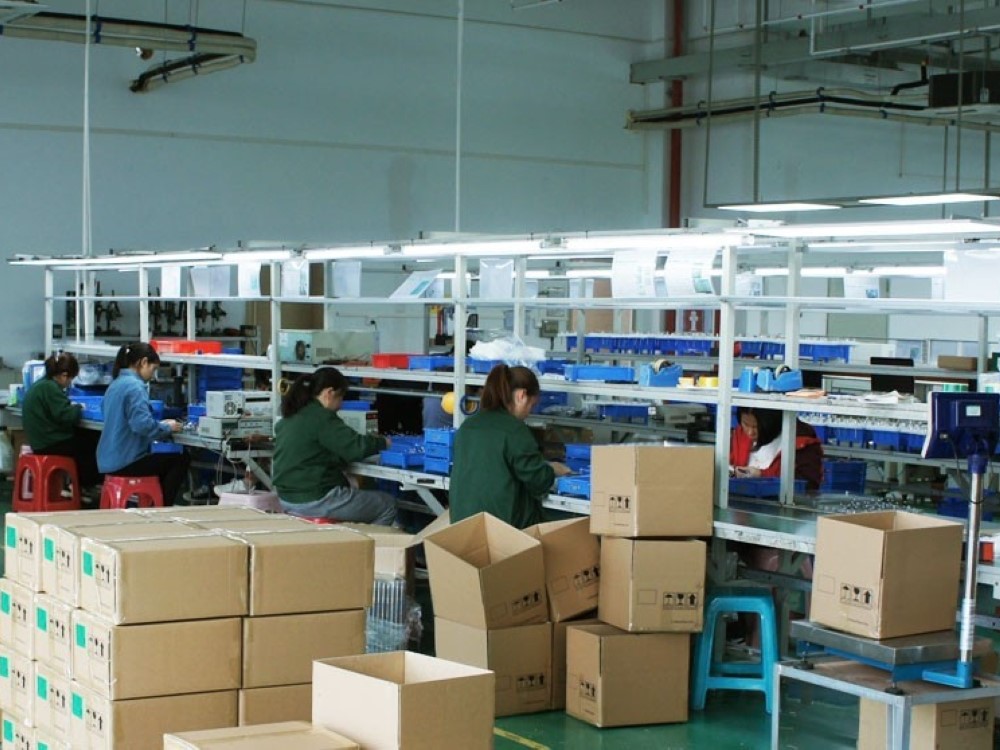
Shengfeng Electromagnet Co., Ltd., fondée en 2015, est située dans le parc industriel de Xiansha, bénéficiant d'un cadre agréable et d'une excellente desserte. L'entreprise s'étend sur 16 000 mètres carrés et dispose d'usines de production modernes, d'équipements de pointe et d'une équipe technique hautement qualifiée. Depuis sa création, elle s'est toujours attachée à sa philosophie d'entreprise axée sur l'innovation, la qualité et le service, en se concentrant sur la recherche, le développement et la production de… électroaimants, en promouvant constamment les mises à jour de produits et les progrès technologiques, et en fournissant aux clients des produits et services de la meilleure qualité.
Pourquoi choisir un électroaimant SF ?
HAUTE QUALITÉ :En tant que premier fabricant d'électroaimants à solénoïde en Chine, notre équipe de contrôle qualité veille à ce que chaque produit que vous recevez soit d'une qualité irréprochable. Nous disposons d'équipements professionnels pour les tests de qualité.
CONCEPTION DU PRODUIT :Notre service d'échantillonnage maîtrise l'ensemble du processus de concrétisation de vos plans. Nous optimisons également la conception de vos produits en nous appuyant sur nos années d'expérience. Faites-nous part de vos avis.
DÉLAI DE LIVRAISON STABLE :En tant que fabricant et fournisseur d'électroaimants de premier plan, nous disposons d'une capacité de production suffisante ; les commandes importantes ne nous effraient pas et nous sommes en mesure de les livrer dans les délais.
MEILLEUR PRIX :Nous sommes une usine d'origine spécialisée dans les électroaimants et le meilleur fabricant de solénoïdes en Chine ; c'est pourquoi nous pouvons proposer des produits de haute qualité au meilleur prix.
GESTION PRÉCISE :Rien ne peut être accompli sans une gestion rigoureuse. Nous sommes une entreprise dotée d'un système de gestion complet.
SERVICE 7-24 :En tant que fabricant de solénoïdes de premier plan, nous assurons une réponse immédiate 24h/24 et 7j/7 : nous prenons en compte vos retours pour devenir un meilleur fournisseur.
FAQ sur les électroaimants
Nous sommes un leader chinois électro-aimant Notre usine de fabrication est située à Dongguan. Nous serions ravis de vous accueillir !
Nous sommes spécialisés dans la conception et la production de produits de haute qualité. électro-aimant,électrovanne,tel que solénoïde rotatif, solénoïdes bistables, solénoïdes de verrouillage, solénoïdes à cadre ouvert, solénoïdes tubulaires, solénoïde auto-maintenu
Bien entendu, nous fournissons généralement des échantillons gratuits ; vous n’avez qu’à prendre en charge les frais de port. Pour les échantillons d’électroaimants sur mesure, veuillez nous communiquer vos exigences afin que nous puissions vous indiquer le coût de l’échantillon.
• La production d'un échantillon prend environ 7 jours.
Oui, nous proposons des services de conception gratuits, incluant la conception structurelle et la conception graphique simple.
Bien sûr. Nous pouvons fabriquer n'importe quel électroaimant selon votre conception. Nous proposons désormais un service ODM de solénoïdes pour les petites séries (de 100 à 500 pièces), avec la possibilité d'y apposer votre logo.
En fonction de la quantité commandée et des détails de production, cela prendra environ 15 à 20 jours.
Toujours un échantillon de préproduction avant la production en série ; toujours une inspection finale avant l'expédition
• Puissance, consommation, dimensions, matériau, quantité, destination de livraison, etc.
• Vous pouvez aussi simplement nous faire part de vos besoins et nous vous recommanderons des produits.
• Par mer, par air ou par transport express.
• Si vous avez votre propre transitaire en Chine, il s'agit du prix départ usine ou FOB.
•CFR ou CIF, etc., si vous avez besoin que nous expédiions en votre nom.
• Le DDP et le DDU peuvent également être utilisés.
• Plus de choix, nous prendrons en compte vos choix.
Le prix est déterminé par la quantité, le matériau, le procédé de fabrication, la taille et d'autres facteurs. De plus, grâce à notre croissance continue, nous proposons des tarifs compétitifs.
Grâce à l'innovation technologique, les prix de certains de nos produits sont extrêmement compétitifs ; veuillez nous contacter pour obtenir un devis.