









Zuletzt aktualisiert am 04.09.2025 von Magnetspulenfabrik
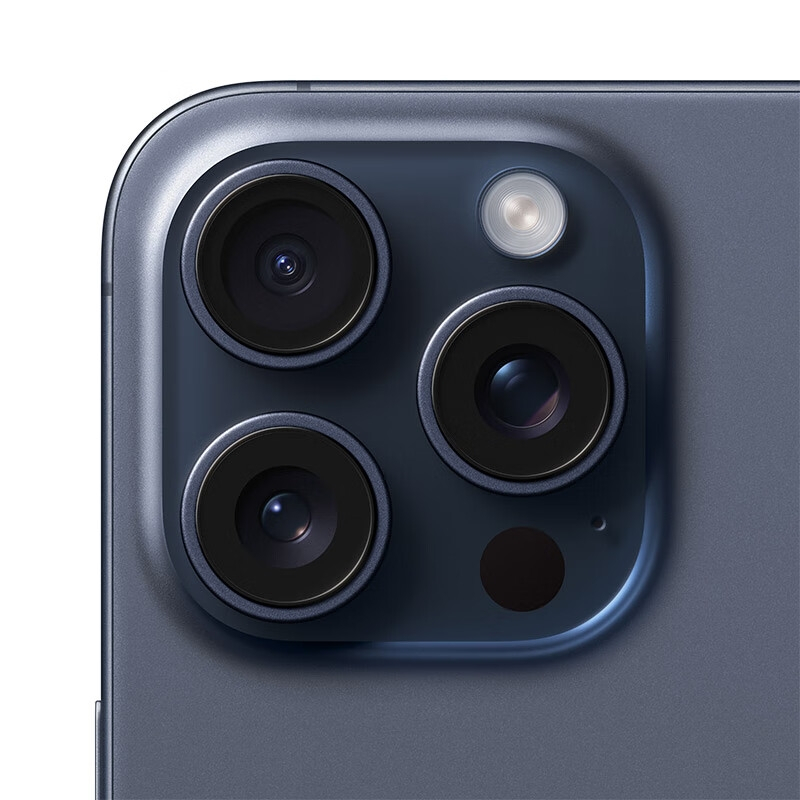
The evolution of smartphone cameras from rudimentary sensors to sophisticated imaging systems has redefined photography for billions of users. Central to this transformation are Elektromagnete —tiny yet powerful components that enable autofocus (AF), optical image stabilization (OIS), and advanced features like variable apertures. As a professional electromagnet manufacturer, we delve into the critical role of electromagnetic technology in smartphone camera modules, exploring its applications, customization challenges, and the innovations driving the future of mobile photography.
1. The Science of Electromagnetic Control in Camera Modules
1.1 How Electromagnets Enable Precision Movement
Electromagnets convert electrical energy into controlled mechanical motion through magnetic fields. In camera modules, they adjust lens positions, stabilize images, and enable multifunctional features. Key components include:
- Voice Coil Motors (VCMs): The most common electromagnetic actuators for autofocus and OIS.
- Magnetic Levitation Systems: Contactless lens control for ultra-smooth motion.
- Hybrid Actuators: Combine electromagnets with piezoelectric or shape-memory alloys for multi-axis adjustments.
1.2 Key Requirements for Smartphone Electromagnets
- Miniaturization: Actuators must fit within modules as thin as 5mm.
- Low Power Consumption: Critical for battery life in always-on camera systems.
- High Precision: Sub-micron positioning accuracy for sharp focus.
- Durability: Resistance to shock, temperature swings, and electromagnetic interference (EMI).
2. Core Applications of Electromagnets in Camera Modules
2.1 Autofocus (AF) Systems
Voice Coil Motors (VCMs) dominate smartphone AF systems. When current flows through the coil, it generates a magnetic field that moves a lens carrier along the optical axis. Modern VCMs achieve focus locks in <200ms, even in low light.
Case Study: A flagship smartphone brand partnered with us to develop a dual-coil VCM for its 108MP main camera. The design reduced focus latency by 30% while consuming 20% less power than conventional single-coil systems.
2.2 Optical Image Stabilization (OIS)
OIS counters handshake by shifting lenses or sensors electromagnetically. Closed-loop VCMs use Hall sensors to provide real-time feedback, enabling precise compensation for angular and translational motion.
Example: A leading OEM integrated our 4-axis OIS actuator (pitch, yaw, X, Y shifts) into its ultra-wide camera, achieving 5° of shake correction—2x better than traditional 2-axis systems.
2.3 Variable Aperture Mechanisms
High-end smartphones use electromagnets to adjust aperture blades, mimicking DSLR-like depth-of-field control. A stepper motor-VCM hybrid moves blades in 1/1000th-second increments, enabling transitions from f/1.6 to f/2.4 for optimal exposure.
2.4 Periscope Zoom Modules
Periscope lenses rely on 90° folded optics to achieve 10x optical zoom. Electromagnets position the prism and lenses with nanometer precision, compensating for alignment errors caused by thermal expansion.
Case Study: For a 10x periscope module, we designed a dual-stage VCM with a 2mm stroke length, enabling seamless switching between optical and hybrid zoom modes.
2.5 Multi-Camera Switching
Electromagnets align lenses in pop-up or sliding camera arrays. For example, a magnetic latching system locks the front-facing camera in place when retracted, preventing dust ingress.
3. Customization Challenges and Solutions
3.1 Space Constraints
Challenge: Shrinking module heights (<4mm in 2024) demand ultra-thin actuators.
Solution:
- Flat Wire Coils: Replace round wires with rectangular cross-sections, reducing coil thickness by 40%.
- Stacked Magnets: Arrange neodymium magnets in Halbach arrays to maximize field strength in minimal space.
3.2 Power Efficiency
Challenge: Always-ready cameras drain batteries.
Solution:
- Latching Mechanisms: Use permanent magnets to hold lens positions without power.
- Energy Recovery Circuits: Capture back-EMF during coil deactivation to recharge auxiliary capacitors.
3.3 Thermal Management
Challenge: Heat from processors and wireless charging degrades magnetic performance.
Solution:
- High-Temperature Alloys: Cores made of samarium-cobalt (SmCo) retain magnetism at 150°C.
- Phase-Change Materials (PCMs): Absorb and dissipate heat around coils.
3.4 Durability in Harsh Conditions
Challenge: Sand, dust, and humidity in rugged smartphones.
Solution:
- Hermetic Sealing: Laser-welded stainless steel housings with IP68-rated seals.
- Self-Cleaning Coatings: Hydrophobic films prevent debris adhesion on lens carriers.
- Bewertet mit 0 von 5
- Bewertet mit 0 von 5


4. Cutting-Edge Innovations in Camera Electromagnets
4.1 AI-Driven Autofocus
Machine learning algorithms predict focus trajectories based on scene content. AI-optimized VCMs pre-position lenses before the shutter button is pressed, reducing focus latency to near zero.
Example: A smartphone’s AI recognizes a pet’s movement pattern, adjusting the VCM to track its eyes continuously.
4.2 Magnetic Levitation for Ultra-Smooth OIS
MagLev OIS suspends lenses using opposing electromagnets, eliminating mechanical friction. This enables 10x finer stabilization than spring-based systems, ideal for 8K video recording.
4.3 Tunable Liquid Lenses
Emerging liquid lenses use electromagnets to deform ferrofluid droplets, enabling focus without moving parts. A magnetic field gradient shapes the droplet’s curvature, achieving focus shifts in <1ms.
4.4 Foldable Phone Cameras
Flexible Electromagnetic Actuators: Thin-film coils printed on polyimide substrates allow cameras to bend with foldable screens.
5. Real-World Customization Case Studies
5.1 Case Study 1: Ultra-Low-Light Camera for Night Photography
A manufacturer sought to improve low-light performance for its flagship model. We developed a high-torque VCM with a 50% stronger magnetic circuit, enabling longer exposure shots without motion blur. The actuator’s 0.5µm step resolution allowed precise focus stacking, merging 10 images in real time for noise-free night shots.
5.2 Case Study 2: Under-Display Camera (UDC) Module
For a UDC system, we designed a transparent electromagnetic actuator using indium tin oxide (ITO) coils. The invisible coils allowed 85% light transmittance through the display while providing 0.1g·cm torque for focus adjustments.
5.3 Case Study 3: Action Camera with 360° Stabilization
A rugged action phone required stabilization beyond traditional OIS. Our 3D MagLev system used six electromagnets to float the entire sensor assembly, compensating for 360° motion during extreme sports.
6. Future Trends in Camera Electromagnets
6.1 Quantum Dot-Assisted Actuators
Quantum dots embedded in coils enable self-sensing actuators. Magnetic field changes alter dot luminescence, providing contactless position feedback without Hall sensors.
6.2 Graphene-Coated Coils
Graphene’s high conductivity and flexibility allow coils to handle 3x higher currents, boosting actuator speed without overheating.
6.3 Biometric Imaging
Hyperspectral cameras for health monitoring (e.g., blood oxygen, glucose) will require electromagnets to tune filters across IR and visible spectra.
Electromagnets—Focusing on the Future of Mobile Imaging
Elektromagnete are the unsung heroes of smartphone photography, enabling the precision and versatility that users now demand. From AI-driven autofocus to MagLev stabilization, their role in pushing the boundaries of mobile imaging is undeniable.
For smartphone manufacturers, partnering with an electromagnet specialist is key to overcoming customization hurdles and unlocking next-gen camera capabilities. As AI, materials science, and quantum technologies converge, electromagnetic actuators will remain at the forefront—ensuring that every shot, from macro to moon, is nothing short of perfect.
In a world where every smartphone doubles as a professional camera, electromagnets prove that even the smallest magnetic force can capture the grandest moments.
Über die SF-Elektromagnetfabrik
Shengfeng Electromagnet Co., Ltd. wurde 2015 gegründet und befindet sich im Industriepark Xiansha, der durch seine landschaftliche Schönheit und die hervorragende Verkehrsanbindung besticht. Das Unternehmen erstreckt sich über eine Fläche von 16.000 Quadratmetern und verfügt über moderne Produktionsanlagen, fortschrittliche Fertigungstechnik und ein hochqualifiziertes technisches Team. Seit unserer Gründung verfolgen wir konsequent die Unternehmensphilosophie “Innovation, Qualität und Service” und konzentrieren uns auf Forschung, Entwicklung und Produktion. Elektromagnete, Wir fördern ständig Produktverbesserungen und technologischen Fortschritt und bieten unseren Kunden Produkte und Dienstleistungen von höchster Qualität.
Warum sollte man sich für einen SF-Elektromagneten entscheiden?
HOHE QUALITÄT:Als führender Hersteller von Elektromagneten in China stellt unser Qualitätssicherungsteam sicher, dass jedes einzelne Produkt, das Sie erhalten, von höchster Qualität ist. Wir verfügen über professionelle Prüfgeräte für die Qualitätskontrolle.
PRODUKTDESIGN:Unsere Musterabteilung deckt den gesamten Prozess von der Zeichnung bis zur Realisierung ab. Zudem optimieren wir Ihr Produktdesign auf der Grundlage unserer langjährigen Erfahrung. Teilen Sie uns Ihre Meinung mit.
STABILE LIEFERZEIT:Als führender Hersteller und Lieferant von Elektromagneten verfügen wir über ausreichende Fertigungskapazitäten; auch Großaufträge stellen für uns kein Problem dar – wir liefern Ihre Bestellung pünktlich.
BESTER PREIS:Wir sind ein direkt produzierendes Werk für Elektromagnete und der führende Hersteller von Solenoiden in China; deshalb können wir hochwertige Produkte zu besten Preisen anbieten.
PRÄZISES MANAGEMENT:Ohne eine präzise Steuerung lässt sich nichts erreichen. Wir sind ein Unternehmen mit einem umfassenden Managementsystem.
24-Stunden-Service:Als führender Hersteller von Magnetventilen bieten wir Ihnen rund um die Uhr sofortige Hilfe: Wir freuen uns über Ihr Feedback, um uns stetig zu verbessern. Kontaktieren Sie uns. WhatsApp +86 18902611680
Häufig gestellte Fragen zu Elektromagneten
Wir sind ein chinesisches Top-Unternehmen Elektromagnet Der Hersteller und unser Werk befinden sich in Dongguan. Besuchen Sie uns gerne!
Wir sind spezialisiert auf die Entwicklung und Produktion von hochwertigen Produkten. Elektromagnet,Magnetventil,wie zum Beispiel Drehmagnet, bistabile Magnetspulen, Verriegelungsmagnete, offene Rahmenmagnete, Rohrmagnete, selbsthaltender Magnet
• Selbstverständlich stellen wir Ihnen in der Regel kostenlose Muster zur Verfügung; Sie müssen lediglich die Versandkosten übernehmen. Für kundenspezifische Elektromagnetmuster senden Sie uns bitte Ihre Anforderungen, damit wir die Musterkosten prüfen können.
• Die Anfertigung von Mustern dauert etwa 7 Tage.
Ja, wir bieten kostenlose Designleistungen, Strukturplanung und einfache Grafikgestaltung an.
Selbstverständlich. Wir können jeden Elektromagneten nach Ihren Vorgaben fertigen. Neu im Angebot ist die ODM-Solenoidproduktion für Kleinserien von 100 bis 500 Stück. Auch hier können Sie Ihr eigenes Logo verwenden.
Je nach Bestellmenge und Produktionsdetails dauert es etwa 15 bis 20 Tage.
Vor der Serienproduktion wird stets ein Vorserienmuster gefertigt; vor dem Versand erfolgt stets eine Endkontrolle.
• Leistung, Verwendungszweck, Größe, Material, Menge, Lieferort usw.
• Sie können uns auch einfach Ihre Anforderungen mitteilen, und wir werden Ihnen Produkte empfehlen.
• Auf dem Seeweg, auf dem Luftweg oder per Express.
• Wenn Sie einen eigenen Spediteur in China haben, gilt der Preis ab Werk (FOB).
•CFR oder CIF usw., falls Sie den Versand durch uns in Ihrem Namen wünschen.
• DDP und DDU können ebenfalls verwendet werden.
• Mehr Auswahlmöglichkeiten, wir werden Ihre Wünsche berücksichtigen.
Der Preis richtet sich nach Menge, Material, Verarbeitungsmethode, Größe und weiteren Faktoren. Darüber hinaus trägt unsere kontinuierliche
Aufgrund technologischer Innovationen sind die Preise einiger unserer Produkte äußerst wettbewerbsfähig. Bitte kontaktieren Sie uns für ein Angebot.