









Why a Custom Solenoid Needs More Than a Visual Inspection
When an OEM customer receives the first batch of a newly developed custom solenoid, the receiving inspection is one of the most important stages before mass production is approved. A complex solenoid is not simply a metal component with a coil. Its performance depends on the interaction of electromagnetic force, mechanical dimensions, materials, spring characteristics, electrical parameters, assembly tolerances, and environmental conditions.
A component may look perfect but still fail electrically, mechanically, or magnetically. Conversely, a solenoid may meet a dimensional drawing but fail to deliver the required force at the customer’s actual operating voltage. This is why a proper First Article Inspection (FAI) should verify not only appearance and dimensions, but also the functional characteristics that determine whether the product can reliably operate inside the customer’s final equipment.
For OEM buyers working with a custom solenoid factory, the FAI should establish one fundamental fact: Does the delivered first article conform to the approved design, specification, drawing, and functional requirements? A well-structured FAI also creates a baseline against which future production batches can be compared.
The following checklist provides a practical framework for inspecting a complex custom solenoid, covering more than eight critical dimensions, including documentation, appearance, dimensions, materials, coil characteristics, force-stroke performance, response time, temperature, assembly, durability, and supplier process capability.
1. Custom Solenoid FAI: Start With the Approved Documentation
Before physically testing the product, the first step is document verification.
The inspector should confirm that the received product corresponds to the latest approved engineering documentation.
The FAI package should ideally include:
- Approved 2D engineering drawing
- 3D CAD model where applicable
- Product specification
- Bill of Materials (BOM)
- Coil specification
- Material requirements
- Surface treatment requirements
- Spring specification
- Electrical requirements
- Performance requirements
- Approved sample or golden sample
- Engineering change records
- Inspection report from the supplier
This step is frequently underestimated.
A custom solenoid manufacturer may have several versions of a similar product. If the customer inspects the received product against an outdated drawing, the entire FAI can become invalid.
Recommended Document Check
| Item | What to Verify |
|---|---|
| Part Number | Matches PO and drawing |
| Revision | Latest approved revision |
| BOM | Materials and components match |
| Voltage | Correct rated voltage |
| Stroke | Correct nominal stroke |
| Force | Correct test condition |
| Coil | Correct resistance/wire specification |
| Spring | Correct force and dimensions |
| Surface Treatment | Correct plating/coating |
| Drawing | Current revision |
Best practice: Freeze the engineering revision before FAI and clearly identify which revision governs the inspection.
2. Custom Solenoid FAI: Visual and Workmanship Inspection
The second stage is a complete visual inspection.
Although appearance does not prove electromagnetic performance, poor workmanship can indicate underlying manufacturing problems.
Inspect the custom solenoid for:
- Scratches
- Dents
- Burrs
- Corrosion
- Plating defects
- Contamination
- Loose components
- Deformed terminals
- Damaged wires
- Incorrect labels
- Poor crimping
- Incomplete assembly
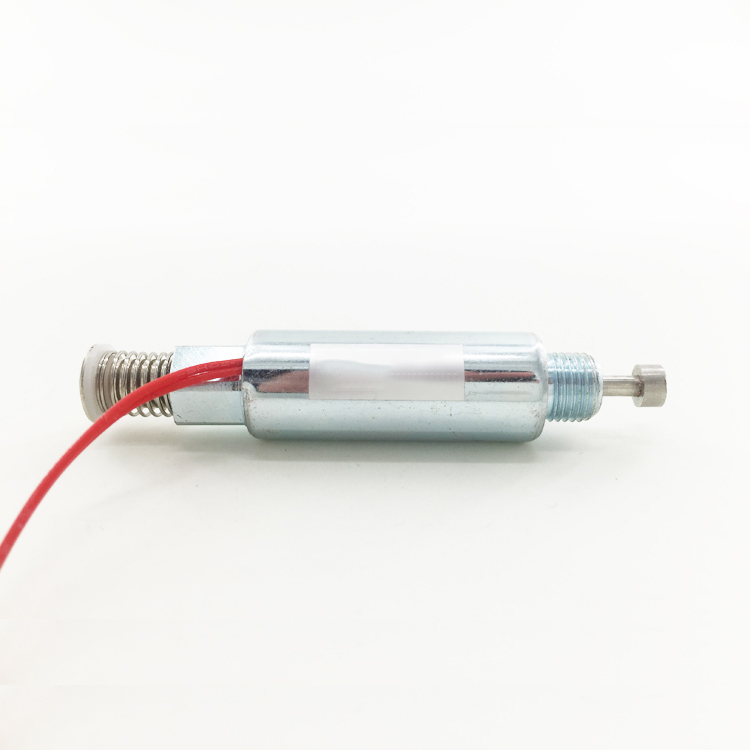
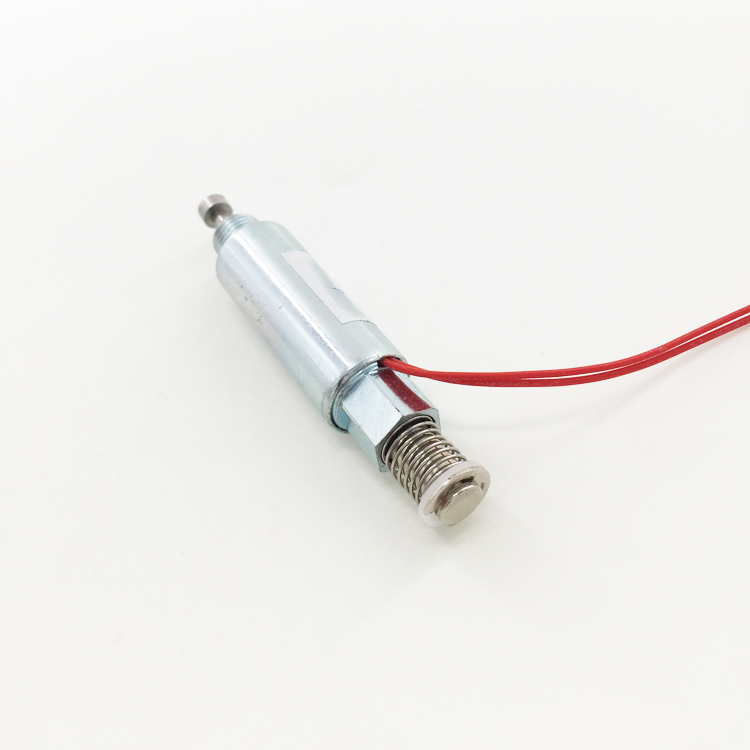
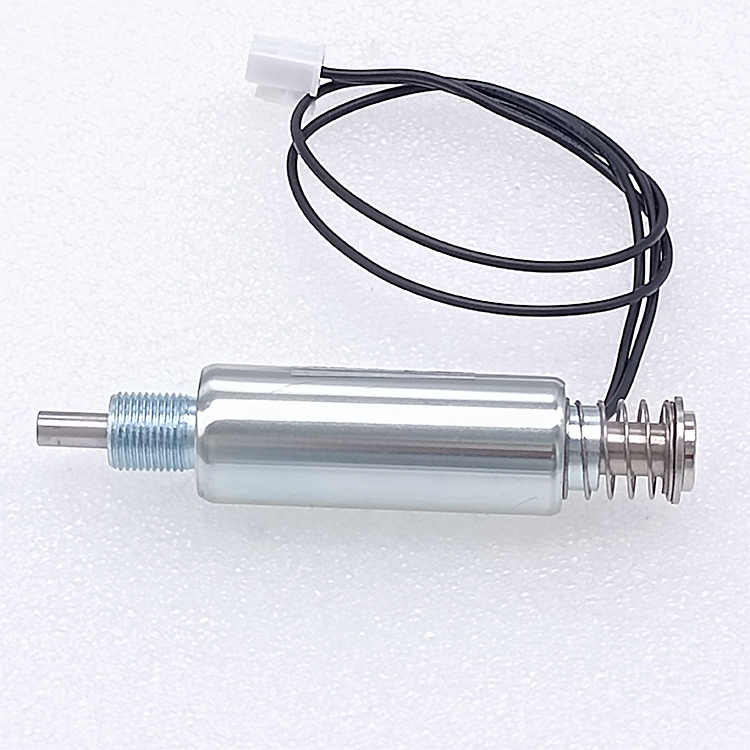
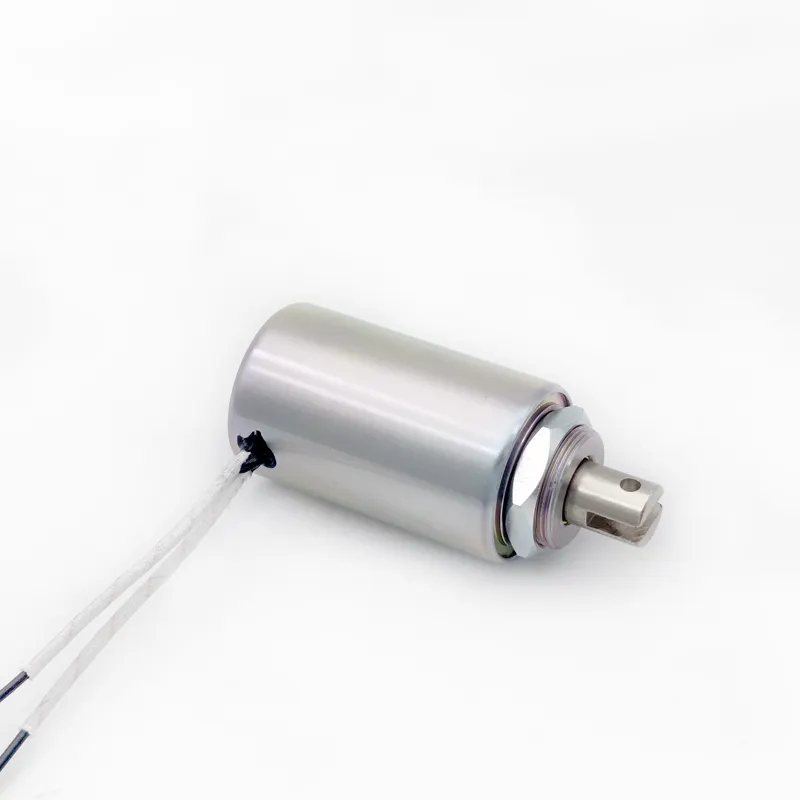
Pay particular attention to the plunger.
The plunger should normally move smoothly without obvious mechanical interference when the design permits manual movement.
Inspect the housing and mounting features for damage that could affect installation.
Why This Matters
A small burr inside the guide area may increase friction. A damaged plating layer can eventually accelerate wear. A bent terminal can create electrical reliability problems.
Therefore, visual inspection should not be treated as cosmetic inspection only.
It is the first opportunity to identify potential functional risks.
3. Custom Solenoid FAI: Dimensional Inspection
Dimensional inspection is one of the core elements of an FAI.
A complex custom solenoid may contain dozens of critical dimensions, but not every dimension has equal functional importance.
The inspection should prioritize Critical-to-Function (CTF) characteristics.
Typical measurements include:
- Overall length
- Housing diameter
- Mounting-hole position
- Mounting-hole diameter
- Plunger diameter
- Plunger stroke
- Guide bore
- Coil dimensions
- Terminal position
- Shaft dimensions
- Spring length
- Spring diameter
- End-stop dimensions
Precision measuring equipment may include:
- Digital calipers
- Micrometers
- Height gauges
- CMM
- Optical measurement systems
- Pin gauges
- Go/no-go gauges
A Practical Rule
Do not simply ask:
“Does this dimension fall within tolerance?”
Also ask:
“What happens to solenoid performance if this dimension moves toward its tolerance limit?”
This functional approach is particularly important when working with a sophisticated electromagnet factory.
4. Custom Solenoid FAI: Material Verification
The materials used in a solenoid directly influence magnetic performance, durability, friction, corrosion resistance, and thermal behavior.
Important materials may include:
- Magnetic core material
- Plunger material
- Housing material
- Spring steel
- Copper wire
- Insulation materials
- Damping materials
- Plating materials
For magnetic components, the material grade can be especially important.
Two steels may look identical but have significantly different magnetic characteristics.
The customer should therefore verify material certification where required.
For critical projects, material verification may involve:
- Supplier material certificates
- PMI testing
- Hardness testing
- Coating thickness measurement
- Chemical composition verification
- Magnetic property verification
A professional custom solenoid factory should be able to provide appropriate traceability for critical materials.
5. Custom Solenoid FAI: Coil Resistance and Electrical Inspection
The coil is the electromagnetic engine of the custom solenoid.
Electrical inspection should therefore be performed carefully.
Typical checks include:
- Coil resistance
- Rated voltage
- Operating current
- Insulation resistance
- Dielectric withstand
- Polarity where applicable
- Connector continuity
- Wire specification
Resistance should normally be measured at a defined temperature because copper resistance changes with temperature.
For example, if the specification states a resistance value at 20°C, an inspection performed at a substantially different temperature should be corrected or interpreted appropriately.
Why Resistance Matters
If coil resistance is too high:
Current decreases → magnetic force may decrease → response may deteriorate
If resistance is too low:
Current increases → heating increases → coil stress increases
This is why resistance is not merely an electrical specification—it is directly related to electromagnetic performance and thermal reliability.
6. Custom Solenoid FAI: Force-Stroke Curve Inspection
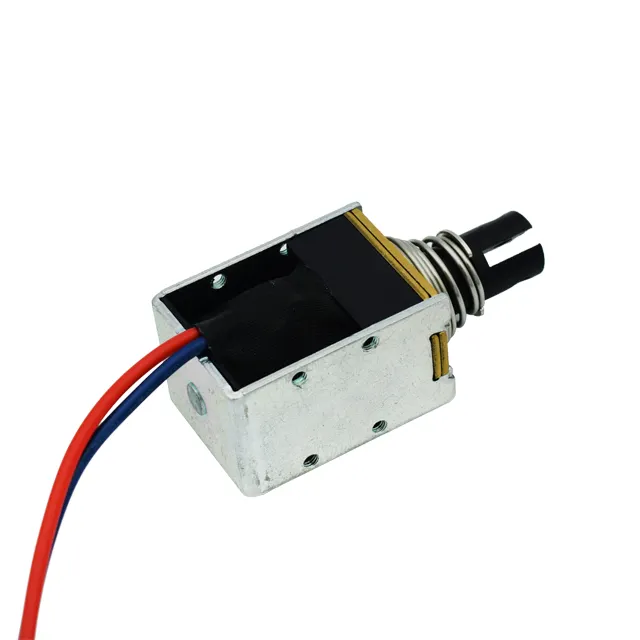
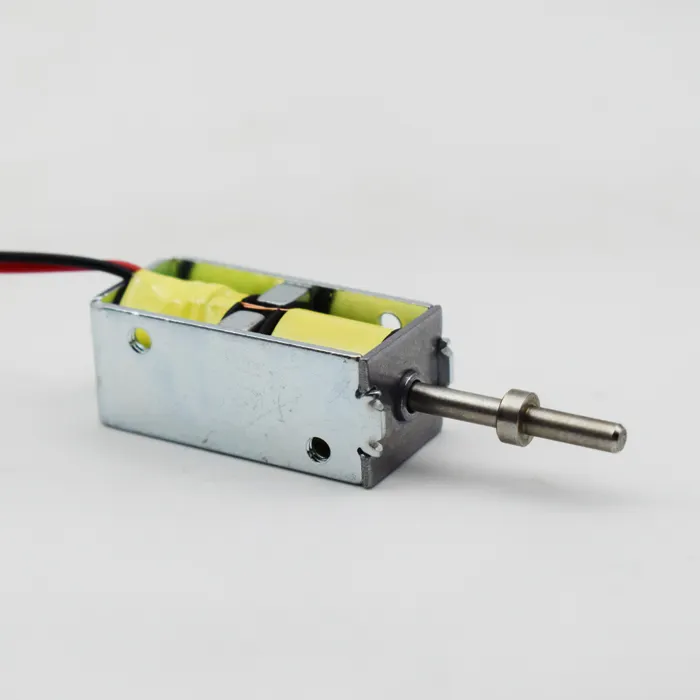
For many complex solenoids, this is one of the most important FAI tests.
A solenoid does not produce one constant force throughout its entire stroke.
Magnetic force generally changes as the plunger moves relative to the magnetic circuit.
Therefore, instead of recording only “force = X N,” the inspector should establish the relationship between:
Force + Stroke + Voltage + Position
A force-stroke test should define:
- Starting position
- Stroke
- Rated voltage
- Minimum voltage
- Maximum voltage where relevant
- Pull direction
- Measurement speed
- Temperature
- Load configuration
Example
| Stroke Position | Required Force |
|---|---|
| 0 mm | ≥ X N |
| 1 mm | ≥ X N |
| 2 mm | ≥ X N |
| 3 mm | ≥ X N |
| End position | ≥ X N |
The exact requirements must come from the application specification.
This test is especially important when a customer has previously experienced force-stroke mismatch problems.
A professional custom solenoid manufacturer should be able to provide the actual force curve rather than relying on a single maximum-force number.


7. Custom Solenoid FAI: Response Time and Operating Speed
For automated equipment, response time can be just as important as force.
A custom solenoid may need to activate within a specific time window.
Important parameters include:
- Pull-in time
- Release time
- Total actuation time
- Plunger velocity
- Bounce time
- Switching frequency
Response time can be affected by:
- Coil resistance
- Inductance
- Voltage
- Magnetic circuit
- Load
- Spring force
- Friction
- Air gap
- Driver circuit
Therefore, response time should be measured under realistic operating conditions.
Important Inspection Tip
Do not test only at nominal voltage.
If the equipment can experience voltage variation, test at the minimum specified operating voltage as well.
A solenoid that operates perfectly at 24 V may become significantly slower at a lower system voltage.
8. Custom Solenoid FAI: Plunger Movement, Friction, and Mechanical Alignment
The plunger is the moving heart of the actuator.
Inspectors should check:
- Smooth movement
- Initial friction
- Side play
- Axial movement
- Return movement
- Sticking
- Abnormal noise
- Mechanical interference
For precision applications, friction testing may be useful.
The key variables include:
Plunger diameter + guide diameter + surface finish + plating + alignment + lubrication
A small dimensional change can alter friction.
For example, excessive clearance can cause rattling, while insufficient clearance can cause sticking.
This is particularly important for medical devices, office equipment, locks, valves, and other applications where consistent movement is required.
9. Custom Solenoid FAI: Spring Force and Return Performance
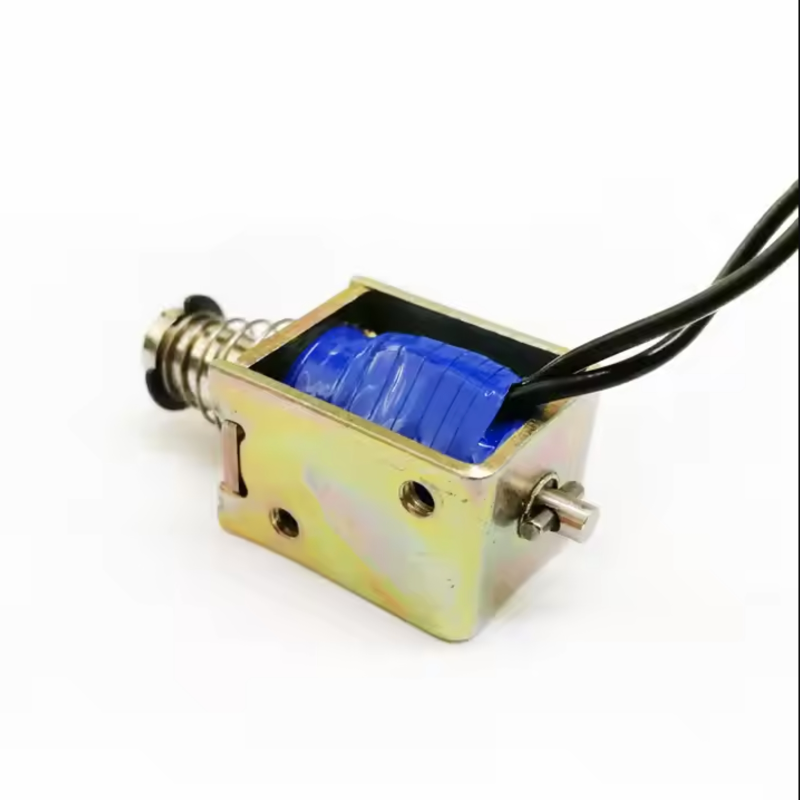
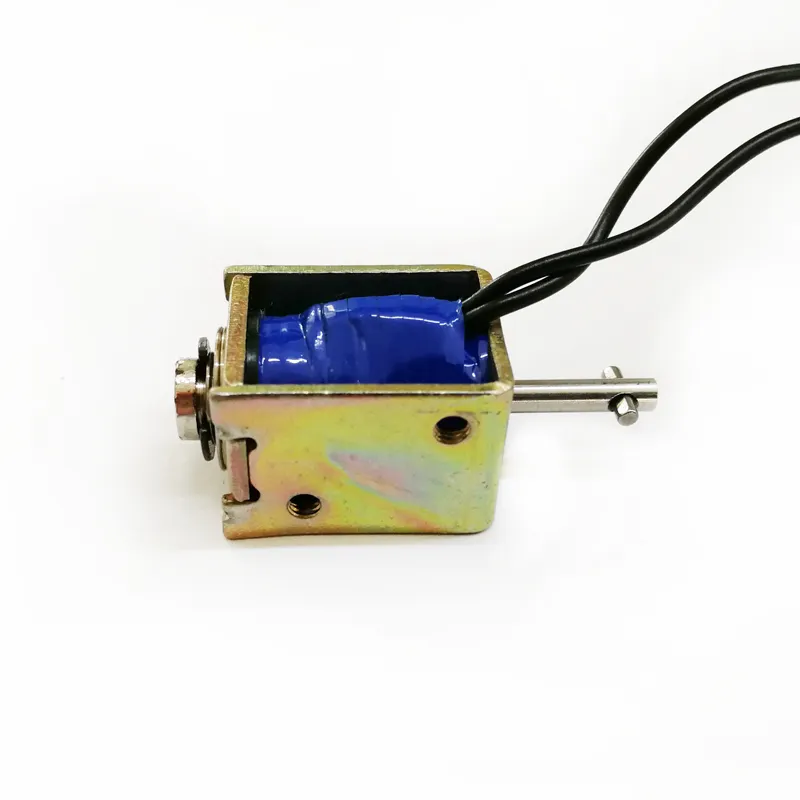
The spring is another critical component that should be inspected independently.
The spring controls:
- Return force
- Initial preload
- Release behavior
- Dynamic response
- Plunger position
- Holding requirements
Inspection may include:
- Free length
- Outer diameter
- Wire diameter
- Spring rate
- Preload
- Force at specified compression
- Return force
Why Spring Inspection Matters
Suppose a solenoid meets its electromagnetic force specification but the return spring is significantly stronger than intended.
The available net force becomes:
Electromagnetic Force − Spring Force − Friction
Therefore, an incorrect spring can cause a solenoid to fail even when the coil and magnetic circuit are correct.
This is one reason an experienced solenoid factory should control the complete assembly rather than treating individual components independently.

10. Custom Solenoid FAI: Temperature Rise and Thermal Performance
Electrical performance cannot be separated from thermal behavior.
When energized, a solenoid coil generates heat.
The longer the coil operates, the higher its temperature can become.
The FAI should therefore consider:
- Ambient temperature
- Energization time
- Duty cycle
- Coil temperature
- Surface temperature
- Temperature stabilization
- Maximum acceptable temperature
A simple test may involve operating the custom solenoid continuously or at its specified duty cycle until the temperature approaches a stable condition.
Important Variables
| Parameter | Why It Matters |
|---|---|
| Voltage | Determines current |
| Resistance | Determines electrical load |
| Duty Cycle | Determines heat accumulation |
| Ambient Temperature | Determines thermal margin |
| Housing | Influences heat dissipation |
| Mounting | Changes thermal transfer |
A prototype that works at room temperature may behave differently when installed inside a compact enclosure.
Therefore, thermal validation should reflect the customer’s actual installation environment whenever possible.
11. Custom Solenoid FAI: Noise, Vibration, and Acoustic Performance
Noise is increasingly important for medical equipment, office automation, laboratory equipment, and consumer products.
During FAI, inspectors should listen for:
- Metallic impact
- Buzzing
- Rattling
- Spring noise
- Plunger vibration
- Housing resonance
For applications with formal acoustic requirements, sound pressure should be measured under controlled conditions.
A useful test specification should define:
- Measurement distance
- Background noise
- Operating voltage
- Test orientation
- Number of cycles
- Microphone position
- Maximum permitted dB(A)
This is particularly relevant when purchasing a custom quiet solenoid.
The objective is not simply to label the actuator “quiet,” but to establish a measurable and repeatable acoustic specification.
12. Custom Solenoid FAI: Lifecycle and Reliability Verification
First Article Inspection primarily confirms conformity of the initial article, but complex projects should also include reliability validation.
Potential tests include:
- Repeated actuation
- High-cycle testing
- Thermal cycling
- Humidity exposure
- Vibration testing
- Salt spray
- Corrosion testing
- Voltage variation
- Continuous operation
For example, a solenoid intended for 1 million cycles should not be evaluated only after ten cycles.
A lifecycle test can reveal:
- Plunger wear
- Spring fatigue
- Coil degradation
- Plating wear
- Increased friction
- Damping deterioration
- Electrical connection problems
The exact test duration and acceptance criteria should be agreed upon before production.

13. Custom Solenoid FAI: Final Assembly and Application Simulation
This is one of the most valuable stages—and one of the most frequently skipped.
A supplier may test the solenoid successfully in a laboratory fixture, but the customer’s equipment may introduce:
- Misalignment
- Side loading
- Additional friction
- Different mounting forces
- Voltage drop
- Higher temperature
- Different mechanical loads
Therefore, the best FAI process includes an application-level validation.
If possible, install the first article into the actual customer assembly.
Then verify:
- Installation fit
- Connector compatibility
- Plunger alignment
- Stroke
- Force
- Response time
- Noise
- Temperature
- Actual duty cycle
- Complete machine functionality
This closes the gap between component validation and system validation.
14. Custom Solenoid FAI Report: How to Document the Results
The final FAI report should be structured so that another engineer can understand exactly what was tested and what was accepted.
A useful report should include:
- Part number
- Revision
- Serial number or lot number
- Inspection date
- Inspector
- Measurement equipment
- Calibration status
- Drawing reference
- Specification
- Actual result
- Pass/fail status
- Deviation information
- Corrective action where necessary
Example FAI Record
| Characteristic | Specification | Actual | Result |
|---|---|---|---|
| Coil Resistance | 24 ± X Ω | XX Ω | PASS |
| Stroke | X ± X mm | X.XX mm | PASS |
| Starting Force | ≥ X N | X.X N | PASS |
| End Force | ≥ X N | X.X N | PASS |
| Response Time | ≤ X ms | XX ms | PASS |
| Temperature Rise | ≤ X°C | XX°C | PASS |
| Noise | ≤ XX dB(A) | XX dB(A) | PASS |
The report should also clearly identify any deviation.
A professional custom solenoid manufacturer should not hide a deviation simply because the component remains functional.
Engineering transparency is essential for long-term OEM cooperation.
15. How to Choose a Custom Solenoid Factory for Reliable FAI and Mass Production
A good FAI is only as reliable as the manufacturing organization behind it.
When selecting a custom solenoid factory, OEM buyers should evaluate at least these eight dimensions:
1. Engineering Capability
Does the supplier have experienced engineers who understand electromagnetic, mechanical, thermal, and electrical design?
2. Manufacturing Capability
Does the factory have appropriate machining, coil winding, assembly, and testing equipment?
3. Measurement Capability
Can the supplier accurately measure force, stroke, resistance, response time, temperature, and critical dimensions?
4. Prototype Capability
Can the supplier modify and optimize the design quickly after FAI feedback?
5. Quality Management
Are inspection procedures documented and traceable?
6. Material Traceability
Can critical materials and components be traced back to their sources?
7. Production Consistency
Can the factory reproduce the approved first article during mass production?
8. Application Support
Can the manufacturer investigate problems occurring after the solenoid is installed into the customer’s machine?
These criteria are more meaningful than factory size alone.
Why SF Is a Reliable Partner for Custom Solenoid FAI and OEM Production
SF has more than 10 years of experience in customized electromagnet and solenoid manufacturing, supported by an experienced engineering team and a 6,000㎡ manufacturing facility.
Our capabilities cover the complete development process:
Requirement Analysis → Engineering Design → Prototype → FAI → Application Validation → Mass Production → Quality Control
SF has helped numerous brand customers develop customized electromagnetic solutions for different applications, with products exported to more than 60 countries and regions.
Our engineers can support customers with:
- Magnetic circuit design
- Force-stroke optimization
- Coil customization
- Plunger design
- Spring selection
- Material selection
- Thermal optimization
- Noise reduction
- Prototype development
- Functional testing
- Lifecycle validation
This engineering-driven approach is particularly valuable for complex custom solenoid projects where dimensional conformity alone is not enough.
The objective is to make sure the first article is not merely “within drawing tolerance,” but is actually suitable for the customer’s intended application and provides a reliable baseline for subsequent mass production.
A Good Custom Solenoid FAI Is More Than a Receiving Inspection
A First Article Inspection should answer three fundamental questions:
1. Was the custom solenoid manufactured according to the approved design?
This requires documentation, material, dimensional, and workmanship inspection.
2. Does the custom solenoid perform according to its functional specification?
This requires electrical, force-stroke, response-time, friction, spring, thermal, noise, and lifecycle evaluation.
3. Can the supplier reproduce the same performance in mass production?
This requires process control, measurement capability, traceability, and manufacturing consistency.
For complex electromagnetic products, a professional FAI is therefore much more than checking dimensions with a caliper.
It is a structured engineering process that connects design → materials → manufacturing → electrical performance → magnetic performance → mechanical performance → thermal behavior → application performance → mass-production consistency.
For OEM buyers working with a China solenoid manufacturer, the quality of the FAI process can provide valuable insight into the supplier’s actual engineering maturity.
A supplier that can explain not only whether a measurement passes, but also why that measurement matters to solenoid performance, is far more likely to become a dependable long-term manufacturing partner.
With more than 10 years of custom electromagnet manufacturing experience, an experienced engineering team, a 6,000㎡ production facility, extensive OEM customization capabilities, and products exported to 60+ countries and regions, SF provides a complete engineering and manufacturing solution for customized solenoids and electromagnets.
The purpose of FAI is not simply to prove that the first article is acceptable. Its real purpose is to establish a verified manufacturing baseline that can be reproduced reliably throughout the life of the product.
FAQs
What should be checked during a First Article Inspection of a complex custom solenoid?
A comprehensive FAI should include:
- Engineering documentation verification
- Visual and workmanship inspection
- Critical dimensional inspection
- Material and surface-treatment verification
- Coil resistance and electrical testing
- Force-stroke curve testing
- Response-time testing
- Plunger friction and alignment inspection
- Spring-force verification
- Temperature-rise testing
- Noise and vibration testing
- Lifecycle validation
- Application-level assembly testing
- FAI report and traceability
- Supplier process and mass-production capability evaluation
What is the most important principle?
A custom solenoid should not be accepted based solely on appearance or dimensional conformity. The first article must demonstrate that its electromagnetic, mechanical, electrical, thermal, and application-specific performance meets the approved requirements.
What should OEM buyers look for in a custom solenoid manufacturer?
Look for engineering expertise, precision manufacturing, reliable measurement systems, prototype capability, application testing, documented quality control, material traceability, and the ability to reproduce the approved FAI configuration during mass production.
Why is SF suitable for complex custom solenoid projects?
SF combines more than 10 years of manufacturing experience, an experienced engineering team, a 6,000㎡ factory, customized solenoid and electromagnet development capabilities, and global OEM experience across 60+ countries and regions. This enables SF to support customers from initial engineering design and prototype development through FAI, application validation, and mass production.
Custom all kinds of electromagnet, contact SF electromagnet factory whatsapp +86 189 0261 1680