







An Engineering Guide to Surface Engineering for High-Performance Solenoid Electromagnets
Now we will explore: Part 2 – Engineering Optimization, Wear Mechanisms, and Real-World Design Solutions
Continuing from Part 1
10. Why Clearance Is Equally Important as Plating
Many engineers assume that selecting the correct plating automatically produces smooth operation. In reality, plating is only one component of the tribological system. The clearance between the plunger and the guide sleeve often has an even greater influence on friction than the coating itself.
A plunger never operates independently. It slides inside a guide tube or sleeve, forming a precision sliding pair. If this clearance is poorly designed, even the highest-quality nickel or chrome plating cannot prevent excessive friction or premature wear.
Clearance Too Small
When the clearance is insufficient:
- Boundary friction increases significantly.
- Lubricating films cannot develop properly.
- Minor dimensional variations caused by manufacturing tolerances may lead to sticking.
- Thermal expansion during operation may cause seizure.
- Response time becomes inconsistent.
This problem is particularly common in miniature custom solenoid electromagnet designs, where tolerances are extremely tight.
Clearance Too Large
Excessive clearance introduces another set of problems:
- Plunger tilting
- Side loading
- Uneven contact pressure
- Increased impact wear
- Higher operating noise
- Reduced magnetic efficiency due to misalignment
Large clearance may reduce sliding friction initially, but long-term wear often accelerates because contact occurs unevenly.
Engineering Recommendation
Instead of pursuing the smallest possible clearance, professional solenoid manufacturers optimize the clearance based on:
- Plating thickness
- Surface roughness
- Stroke length
- Operating temperature
- Lubrication type
- Manufacturing capability
Table 4. Typical Clearance Recommendations
| Application | Recommended Clearance |
|---|---|
| Miniature precision solenoid | 5–10 μm |
| Medical equipment | 8–15 μm |
| Smart lock actuator | 10–20 μm |
| Industrial automation | 15–30 μm |
| Heavy-duty industrial actuator | 25–40 μm |
Key Takeaway: Clearance should always be designed together with plating and lubrication. Optimizing one parameter in isolation rarely produces the best performance.
11. Surface Roughness (Ra) and Its Hidden Influence on Response Speed
Surface roughness is frequently underestimated during solenoid development.
Two plungers with identical nickel plating may exhibit completely different response characteristics simply because their surface finishes differ.
Surface roughness determines:
- Actual contact area
- Lubricant retention
- Microscopic adhesion
- Breakaway friction
- Wear rate
Rough Surface
Characteristics include:
- Higher static friction
- Greater mechanical resistance
- Faster coating wear
- Increased operating noise
Extremely Smooth Surface
Although lower roughness generally reduces friction, an excessively polished surface may reduce lubricant retention.
This can lead to:
- Dry sliding
- Adhesive wear
- Stick-slip motion
Chuyên nghiệp solenoid factories therefore target an optimal rather than minimal roughness.
Recommended Surface Finish
| Application | Typical Ra |
|---|---|
| Consumer electronics | 0.8 μm |
| Industrial automation | 0.4 μm |
| Medical equipment | 0.2 μm |
| High-speed actuator | 0.15–0.25 μm |
Engineering Insight
Many engineers focus exclusively on plating material.
In reality:
Surface roughness often has a greater influence on response consistency than plating type itself.
12. Lubrication: The Missing Variable in Solenoid Life
Even premium hard chrome plating cannot eliminate friction without proper lubrication.
Lubrication serves several functions:
- Reduces friction coefficient
- Minimizes wear
- Prevents corrosion
- Reduces operating noise
- Stabilizes response speed
Common Lubrication Methods
PTFE Dry Film
Advantages:
- Clean
- Dust resistant
- Low friction
- Ideal for electronics
Typical applications:
- Smart locks
- Medical equipment
- Consumer products
MoS₂ Coating
Advantages:
- Excellent high-temperature performance
- High load capacity
- Long wear life
Applications:
- Industrial automation
- Automotive actuators
Grease
Advantages:
- Long service intervals
- Excellent wear protection
Limitations:
- Attracts dust
- Unsuitable for clean-room environments
Oil Lubrication
Used in:
- Hydraulic equipment
- Heavy-duty industrial machinery
Table 5. Lubrication Comparison
| Lubricant | Friction | Cleanliness | High Temperature | Typical Application |
|---|---|---|---|---|
| PTFE | Excellent | Excellent | Good | Medical |
| MoS₂ | Excellent | Good | Excellent | Industrial |
| Grease | Very Good | Moderate | Good | General machinery |
| Oil | Good | Moderate | Moderate | Hydraulic systems |
13. How Temperature Changes Friction Performance
Temperature dramatically affects both plating and lubrication.
As temperature increases:
- Lubricant viscosity decreases.
- Thermal expansion reduces clearance.
- Oxidation accelerates.
- Corrosion becomes more likely.
- Wear rate increases.
Zinc Plating
High temperatures may accelerate oxidation, reducing corrosion resistance over time.
Nickel Plating
Nickel maintains relatively stable performance across a broad temperature range.
Its corrosion resistance makes it suitable for humid industrial environments.
Hard Chrome
Chrome exhibits excellent thermal stability.
However, insufficient lubrication at elevated temperatures may increase abrasive wear.
Engineering Recommendation
Always evaluate:
- Ambient temperature
- Coil temperature rise
- Duty cycle
- Lubricant temperature limits
before selecting plating.
14. Corrosion and Wear: The Two Major Causes of Service Life Reduction
Wear and corrosion often occur simultaneously.
Corrosion creates microscopic pits.
These pits:
- Increase friction
- Damage lubrication films
- Accelerate abrasive wear
Eventually:
Small corrosion pits become severe mechanical defects.
Typical Failure Progression
Corrosion
↓
Surface roughening
↓
Higher friction
↓
Wear acceleration
↓
Response delay
↓
Product failure
Chuyên nghiệp solenoid manufacturers evaluate corrosion resistance using salt spray testing and accelerated aging before approving production.

15. SF Plunger Life Prediction Model
After years of custom OEM development, SF engineers summarize plunger service life using a practical engineering model.
Although actual service life depends on many variables, the following relationship illustrates the key factors:
SF Life Prediction Model
Service Life ∝ (Surface Hardness × Surface Finish × Lubrication Quality × Alignment Accuracy × Corrosion Resistance) ÷ (Side Load × Contamination × Operating Temperature × Cycle Frequency)
This model highlights an important engineering principle:
Increasing hardness alone does not guarantee longer life.
If contamination, poor alignment, or excessive side loading exist, even hard chrome plating may wear prematurely.
Engineering Insight
Many competitors simply recommend hard chrome.
Professional engineering requires balancing:
- Hardness
- Friction
- Lubrication
- Manufacturing tolerances
- Operating environment
16. Failure Analysis of Plunger Surface Problems
Many field failures originate from improper surface engineering rather than electromagnetic design.
Table 6. Failure Analysis Guide
| Symptom | Possible Cause | Recommended Solution |
|---|---|---|
| Slow response | High friction | Nickel plating + polishing |
| Sticking | Clearance too small | Increase guide clearance |
| Tiếng ồn | Dry sliding | PTFE lubrication |
| Uneven wear | Side loading | Improve alignment |
| Rust | Zinc degradation | Electroless nickel |
| Surface scratches | Contamination | Add sealing or filtration |
| Galling | Hard chrome against hard sleeve | Optimize material pairing |
| Response variation | Rough surface | Reduce Ra value |
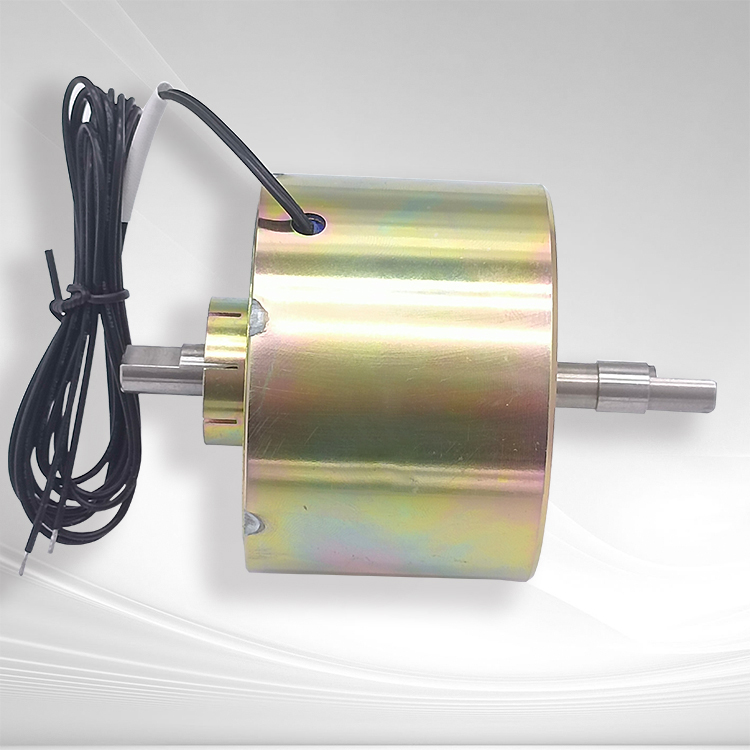

17. Case Study: European Smart Lock Manufacturer
Customer Challenge
A European smart lock manufacturer required:
- Silent operation
- Five million operating cycles
- Compact dimensions
- Outdoor corrosion resistance
The original zinc-plated plunger developed wear marks after approximately 800,000 cycles.
SF Engineering Solution
SF redesigned the actuator using:
- Electroless nickel plating
- Precision polishing (Ra 0.2 μm)
- PTFE dry-film lubrication
- Optimized guide clearance
Results
| Performance | Before | After |
|---|---|---|
| Life Cycle | 0.8 million | 5.3 million |
| Thời gian phản hồi | 19 ms | 14 ms |
| Operating Noise | Moderate | Very Low |
| Corrosion Resistance | Standard | 500-hour salt spray |
The customer adopted the design for mass production.
18. Case Study: Coffee Machine Solenoid Valve
A premium coffee machine manufacturer experienced inconsistent valve operation after prolonged exposure to hot water and steam.
Root Cause
The zinc-plated plunger gradually corroded.
Corrosion increased friction, resulting in delayed valve movement.
SF Solution
Engineers replaced the original design with:
- Electroless nickel plating
- Improved drainage geometry
- Moisture-resistant lubricant
Results
- Faster valve response
- Lower maintenance frequency
- Longer service life
- Improved beverage consistency
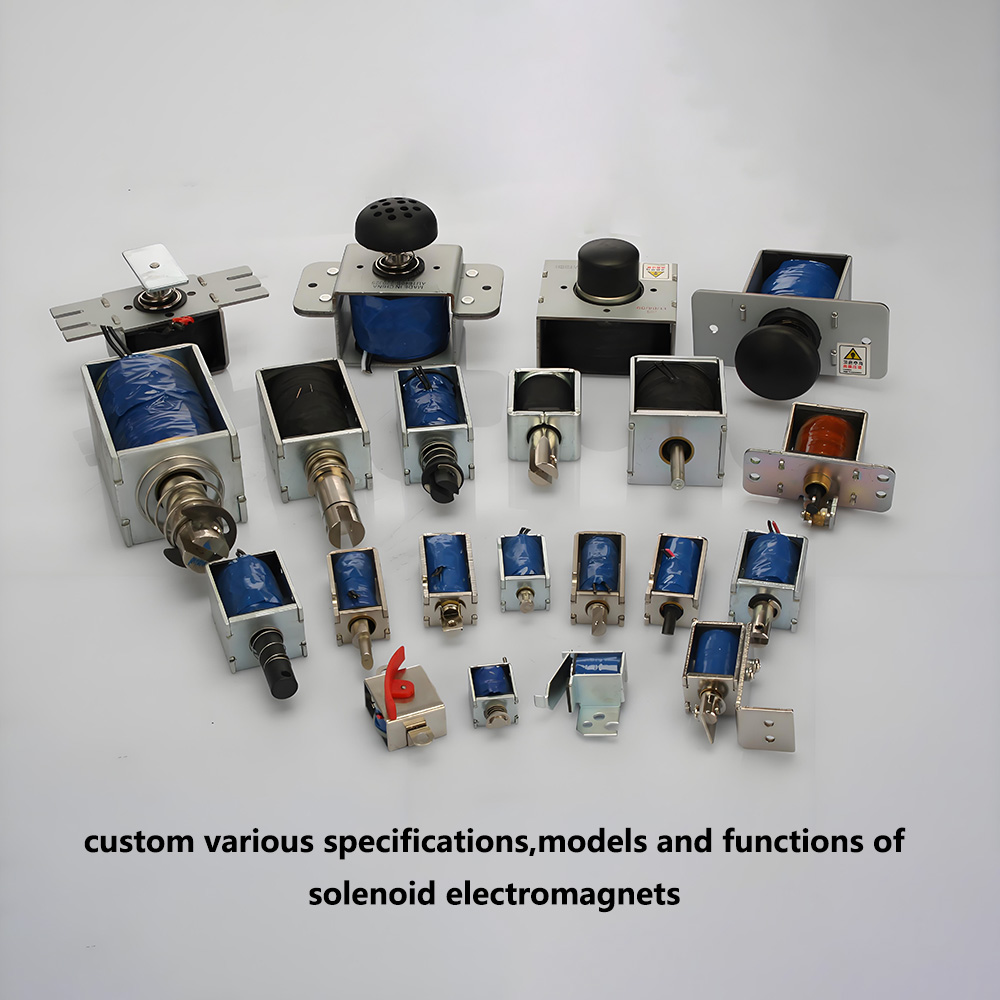
19. Engineering Design Checklist
Before selecting plunger plating, every engineer should confirm the following:
✓ Required service life
✓ Operating temperature
✓ Ambient humidity
✓ Salt spray exposure
✓ Stroke length
✓ Response time requirement
✓ Cycle frequency
✓ Side loading
✓ Lubrication method
✓ Manufacturing tolerance
✓ Surface roughness
✓ Guide material
Key Takeaway: Selecting plating without defining the operating environment often results in overdesign, underdesign, or unnecessary cost.
We will explore
Part 3 will complete the white paper with:
- Hard Chrome vs. Nickel in automotive and heavy-duty applications
- Medical, robotics, and industrial automation case studies
- How to choose the right plunger plating by industry
- A plating selection decision tree
- How to choose the right custom solenoid electromagnet
- How to evaluate a professional nhà máy sản xuất van điện từ
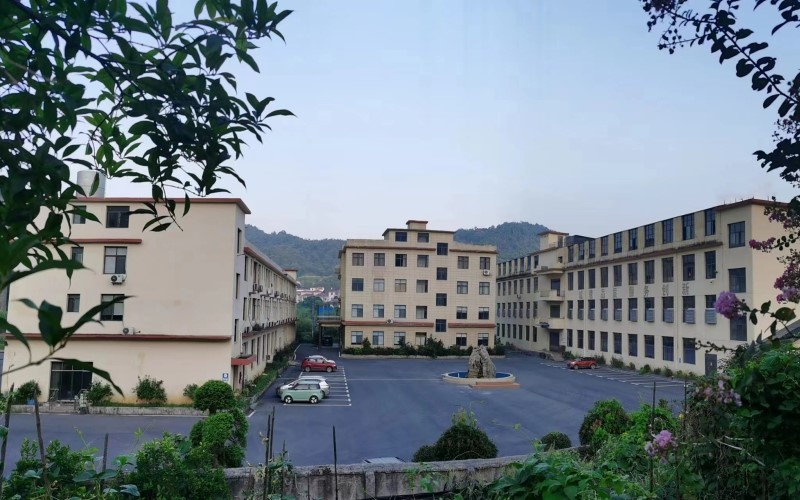
- Why global OEMs choose SF (10+ years, 6,000㎡ factory, exports to 60+ countries)
- Future surface engineering technologies (DLC, PVD, composite coatings)
- 20 engineering FAQs
Nhận đặt làm theo yêu cầu các loại nam châm điện, vui lòng liên hệ nhà máy sản xuất nam châm điện SF. WhatsApp +86 189 0261 1680