









The Core Engineering Contradiction in Miniature Solenoids Design
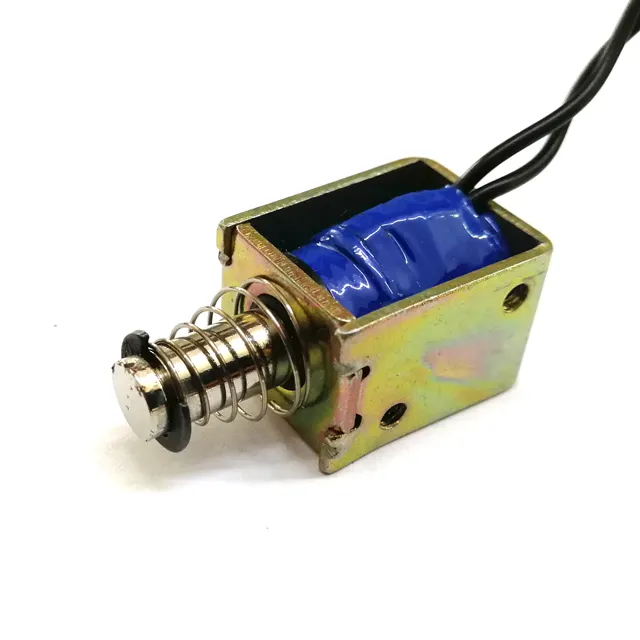
As modern industrial equipment, smart devices, medical systems, and automotive electronics continue to shrink in size, the demand for compact özel elektromıknatıs solutions has increased dramatically. Engineers today are expected to achieve higher force output, longer duty cycles, and greater reliability within increasingly smaller installation spaces.
However, one unavoidable engineering contradiction remains:
Miniaturization and heat dissipation are naturally conflicting objectives.
Customers often request:
- Smaller solenoid dimensions
- Higher force output
- Lower power consumption
- Continuous duty capability
- Stable operation under limited thermal conditions
Yet reducing the size of an elektromıknatıs solenoidi inherently reduces its heat dissipation area. At the same time, higher performance typically requires increased current density, which generates more heat.
This challenge is one of the most technically demanding areas in modern electromagnetic engineering.
Profesyonel olarak solenoid üreticisi with more than 10 years of experience, SF has helped global OEM customers solve these thermal and miniaturization challenges through advanced engineering, custom design optimization, and stable manufacturing capability.
This article explores the principles, engineering trade-offs, optimization strategies, and practical solutions for managing heat dissipation in miniature custom solenoids without increasing product size.
1. Why Heat Becomes a Major Problem in Miniature Solenoids
The primary source of heat in a özel elektromıknatıs comes from electrical resistance inside the coil.
According to Joule’s Law:
Heat = I²R
Where:
- I = current
- R = resistance
As the physical size of a solenoid decreases:
- Coil space becomes smaller
- Heat dissipation surface area decreases
- Current density increases
- Internal temperature rises faster
This creates a thermal bottleneck.
Key Engineering Reality
Miniature solenoids often experience:
- Localized hot spots
- Insulation degradation
- Reduced force stability
- Coil burnout risks
- Reduced service life
Bir profesyonel solenoid fabrikası must therefore treat thermal management as a core design priority rather than a secondary consideration.
2. The Relationship Between Solenoid Size and Heat Dissipation
Heat dissipation depends heavily on external surface area.
Thermal Behavior in Solenoid Miniaturization
| Parametre | Large Solenoid | Miniature Solenoid |
|---|---|---|
| Surface Area | Large | Small |
| Heat Capacity | Yüksek | Low |
| Cooling Efficiency | Better | Limited |
| Thermal Density | Lower | Higher |
Important Insight
When a solenoid becomes smaller:
- Heat generation may remain similar
- But heat dissipation capability decreases dramatically
This is why miniature elektromıknatıs solenoidi systems are much more thermally sensitive.
3. Why Customers Want Smaller Solenoids
Modern industries prioritize compact integration.
Typical Applications Requiring Miniature Solenoids
- Akıllı kilitler
- Tıbbi cihazlar
- Otomotiv elektroniği
- Portable battery systems
- Smart home products
- Precision robotics
- Consumer electronics
- IoT devices
OEM customers often want:
- Reduced weight
- Lower installation space
- Improved portability
- More integrated assemblies
However, shrinking dimensions without thermal optimization can severely affect reliability.
4. Understanding Thermal Resistance in Custom Electromagnets
Thermal resistance determines how effectively heat escapes from the coil to the surrounding environment.
Heat Transfer Path
Heat travels through:
- Copper wire
- Insulation layer
- Bobbin structure
- Housing
- Air environment
Each layer creates thermal resistance.
Engineering Challenge
Miniature designs often have:
- Shorter thermal paths
- Higher thermal concentration
- Poor airflow
Bir profesyonel solenoid üreticisi must optimize every thermal transfer layer.
5. Coil Design Optimization for Better Heat Management
The coil is the primary heat source in any elektromıknatıs solenoidi.
Key Optimization Strategies
5.1 High Copper Fill Rate
A higher copper fill factor reduces resistance.
Benefits
- Lower current loss
- Reduced heat generation
- Improved efficiency
5.2 Optimized Wire Diameter
Choosing the correct wire diameter is critical.
| Wire Size | Effect |
|---|---|
| Too thin | High resistance and overheating |
| Too thick | Insufficient winding space |
Profesyonel solenoid fabrikası engineers balance thermal performance and magnetic requirements carefully.
5.3 Precision Coil Winding
Uniform winding improves:
- Heat distribution
- Coil consistency
- Thermal stability
Poor winding creates localized hot spots.
6. Magnetic Circuit Optimization to Reduce Heat
A poorly designed magnetic circuit wastes energy as heat.
Core Optimization Methods
- Reduce magnetic leakage
- Minimize air gaps
- Improve magnetic permeability
- Optimize plunger geometry
Sonuç
Improved magnetic efficiency allows:
- Lower operating current
- Reduced power consumption
- Less heat generation
This is one of the most effective methods for improving thermal performance without increasing physical size.
7. Material Selection for Thermal Stability
Material selection directly impacts heat dissipation capability.
7.1 Coil Insulation Materials
High-temperature insulation improves reliability.
Common Insulation Classes
| Yalıtım Sınıfı | Maximum Temperature |
|---|---|
| B Sınıfı | 130°C |
| F Sınıfı | 155°C |
| H Sınıfı | 180°C |
SF frequently uses Class F and Class H systems for demanding applications.
7.2 Housing Materials
Housing material strongly affects thermal conductivity.
| Malzeme | Thermal Conductivity |
|---|---|
| Aluminum | Excellent |
| Stainless Steel | Ilıman |
| Plastic | Poor |
Deneyimli solenoid üreticisi chooses materials based on both thermal and structural requirements.
8. Structural Design Strategies for Passive Cooling
Even without increasing size, structural optimization can improve cooling.
Effective Structural Techniques
- Thin-wall metal housing
- Integrated heat conduction paths
- Increased external contact area
- Internal thermal bridges
Engineering Goal
Move heat away from the coil as efficiently as possible.
9. Duty Cycle Optimization in Miniature Solenoids
Continuous operation generates significantly more heat than intermittent operation.
Duty Cycle Categories
| Duty Type | Thermal Impact |
|---|---|
| Continuous Duty | Highest heat accumulation |
| Intermittent Duty | Moderate heat |
| Pulse Duty | Lowest average heat |
Key Strategy
Bir profesyonel özel elektromıknatıs design may use:
- Pulse operation
- Intermittent control
- Smart hold-current reduction
to minimize thermal buildup.
10. Smart Driving Techniques to Reduce Solenoid Heating
Modern electronics can dramatically improve thermal behavior.
10.1 PWM (Pulse Width Modulation)
PWM reduces average power while maintaining force.
Benefits
- Lower coil temperature
- Reduced energy consumption
- Improved efficiency
10.2 Peak-and-Hold Control
This method:
- Uses high current briefly for actuation
- Then reduces current for holding
Sonuç
Substantial heat reduction without sacrificing performance.
11. Airflow and Environmental Considerations
External conditions heavily influence thermal performance.
Important Environmental Factors
- Ambient temperature
- Air circulation
- Enclosure conditions
- Mounting orientation
Örnek
A miniature elektromıknatıs solenoidi operating at:
- 25°C ambient → acceptable temperature rise
- 70°C ambient → potential overheating
Bir profesyonel solenoid üreticisi always considers real-world operating environments.
12. Real Custom Case: Miniature Smart Lock Solenoid
Customer Challenge
A smart lock customer required:
- Smaller dimensions
- Quiet operation
- Long battery life
- Continuous reliability
However, initial prototypes overheated.
SF Engineering Solution
As an experienced solenoid fabrikası, SF implemented:
- High-efficiency magnetic circuit redesign
- Precision winding optimization
- PWM control recommendation
- Improved thermal path structure
Final Result
| Parametre | Before Optimization | After Optimization |
|---|---|---|
| Coil Temperature | 102°C | 74°C |
| Product Size | Same | Same |
| Battery Life | Standard | Improved |
| Güvenilirlik | Ilıman | Excellent |
This project demonstrated how advanced engineering can improve thermal performance without increasing size.
13. Real Custom Case: Medical Device Electromagnet
Meydan okumak
A medical device manufacturer required:
- Extremely compact design
- Low temperature rise
- Sessiz çalışma
- Continuous duty reliability
SF Solution
SF engineers optimized:
- Bobin direnci
- Thermal conduction structure
- Magnetic efficiency
- Drive control strategy
Sonuç
The final özel elektromıknatıs achieved:
- Stable continuous operation
- Reduced thermal accumulation
- Long-term reliability
without increasing external dimensions.
14. Common Mistakes in Miniature Solenoid Thermal Design
Many thermal problems come from incorrect assumptions.
Common Design Errors
- Focusing only on force output
- Ignoring duty cycle
- Using insufficient insulation class
- Poor ventilation consideration
- Selecting standard products instead of customized solutions
Bir profesyonel solenoid üreticisi must analyze both electromagnetic and thermal behavior simultaneously.
15. How to Choose the Right Miniature Custom Electromagnet
Selecting the right miniature solenoid requires multiple considerations.
Key Selection Factors
| Factor | Importance |
|---|---|
| Force requirement | Critical |
| Stroke length | Affects thermal efficiency |
| Görev döngüsü | Directly impacts heating |
| Ambient temperature | Influences cooling |
| Available space | Determines design limits |
| Voltage | Affects power consumption |
Engineering Recommendation
Always request:
- Temperature rise data
- Duty cycle specifications
- Force-stroke curves
from your solenoid fabrikası.
16. How to Choose the Right Solenoid Manufacturer
Not every supplier can solve miniature thermal challenges.
Evaluation Criteria
16.1 Engineering Capability
Bir profesyonel solenoid üreticisi should provide:
- Electromagnetic simulation
- Termal analiz
- Custom optimization support
16.2 Manufacturing Capability
Stable production requires:
- Precision winding equipment
- Advanced testing systems
- Strict quality control
16.3 Customization Experience
Deneyimli solenoid fabrikası understands:
- Industry-specific requirements
- Application constraints
- Long-term reliability expectations

17. Why SF Is a Preferred Solenoid Manufacturer
SF profesyoneldir. özel elektromıknatıs manufacturer with:
- More than 10 years of experience
- Experienced engineering teams
- 6000㎡ manufacturing facility
- Export to 60+ countries and regions
- Extensive OEM customization experience
SF Core Advantages
Advanced Engineering Support
SF provides:
- Electromagnetic simulation
- Thermal optimization
- Structural analysis
Strong Manufacturing Capacity
The 6000㎡ factory ensures:
- Stable delivery
- Scalable production
- Consistent quality
Rich Customization Experience
SF has helped many global brand customers develop:
- Miniature solenoids
- İtme-çekme solenoidleri
- Döner solenoidler
- kilitleme solenoidleri
- Industrial electromagnets
18. Future Trends in Miniature Solenoid Thermal Management
The industry is evolving rapidly.
Key Future Trends
- AI-assisted electromagnetic optimization
- Advanced thermal materials
- Smart integrated drivers
- Ultra-high-efficiency magnetic circuits
- Miniaturized high-force solutions
A forward-looking solenoid üreticisi must continuously innovate to remain competitive.
Solving the Miniaturization vs. Heat Dissipation Challenge
Managing heat dissipation in miniature elektromıknatıs solenoidi systems without increasing size is one of the most difficult challenges in electromagnetic engineering.
Key Takeaways
- Miniaturization increases thermal density
- Coil optimization is critical
- Magnetic efficiency directly impacts heat generation
- Material and structural design matter significantly
- Smart driving methods can dramatically reduce heating
- Customized solutions outperform standard products
Most importantly:
Successful miniature solenoid design requires collaboration with an experienced and technically capable solenoid fabrikası.
With more than a decade of expertise, SF continues to help global customers solve difficult thermal and miniaturization challenges, making it a trusted solenoid üreticisi for advanced custom electromagnet applications worldwide.
Her türlü elektromıknatıs için özel sipariş verebilirsiniz, SF Elektromıknatıs Fabrikası ile iletişime geçin. WhatsApp +86 189 0261 1680