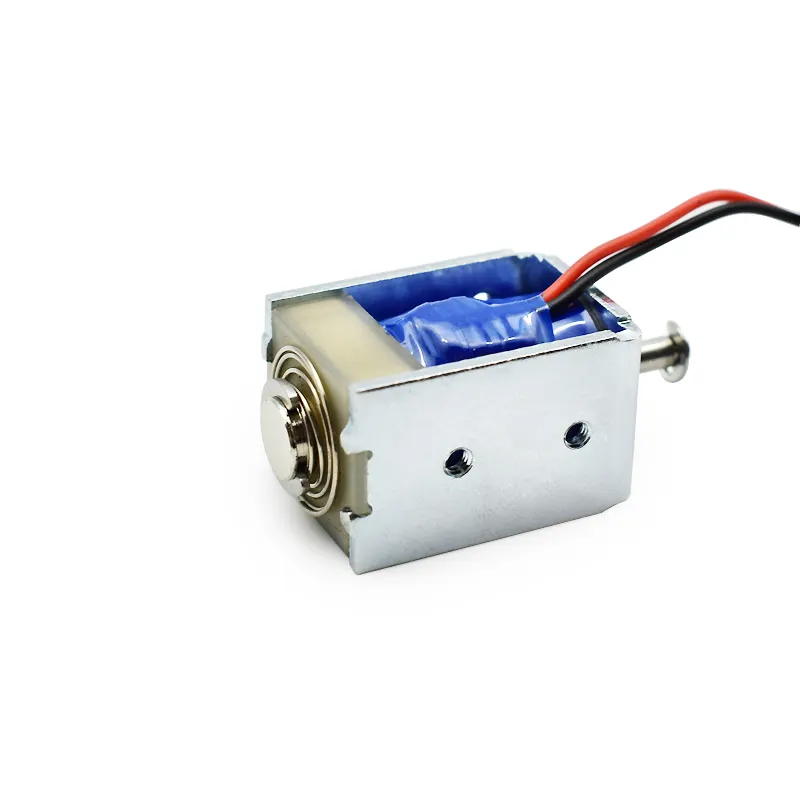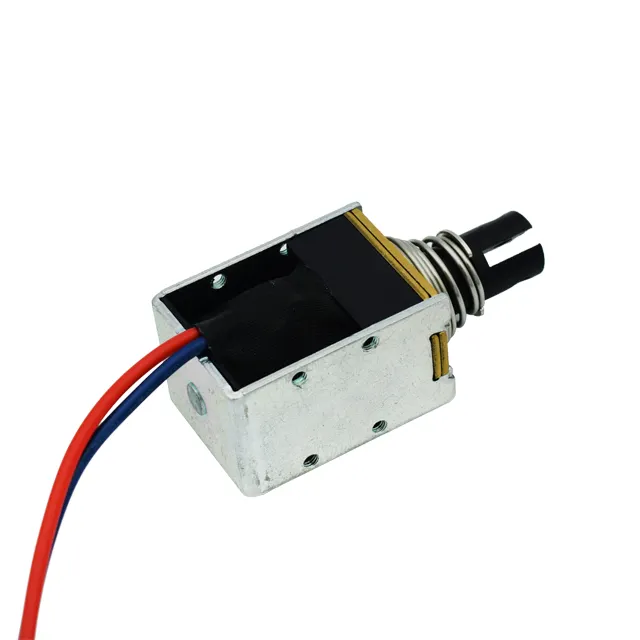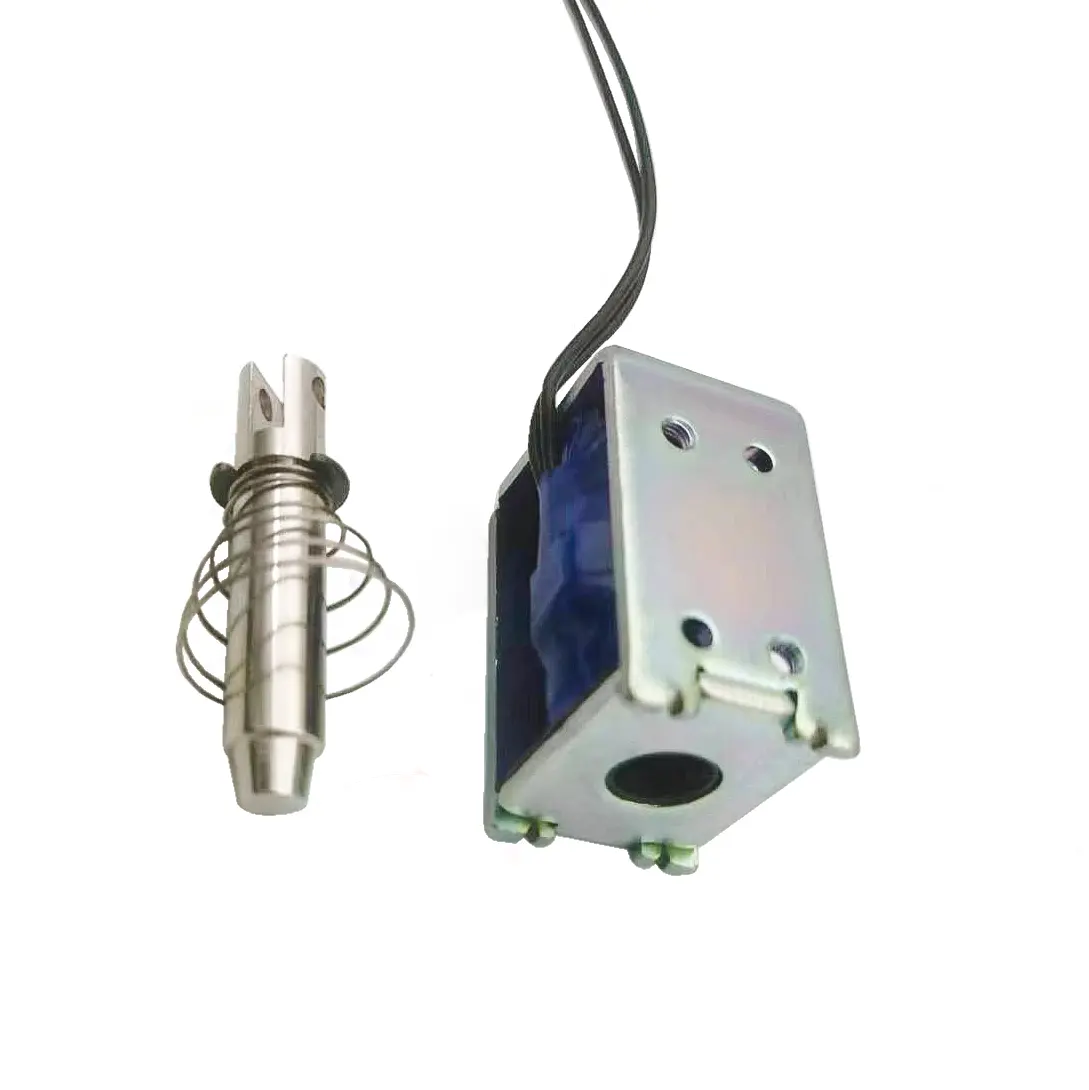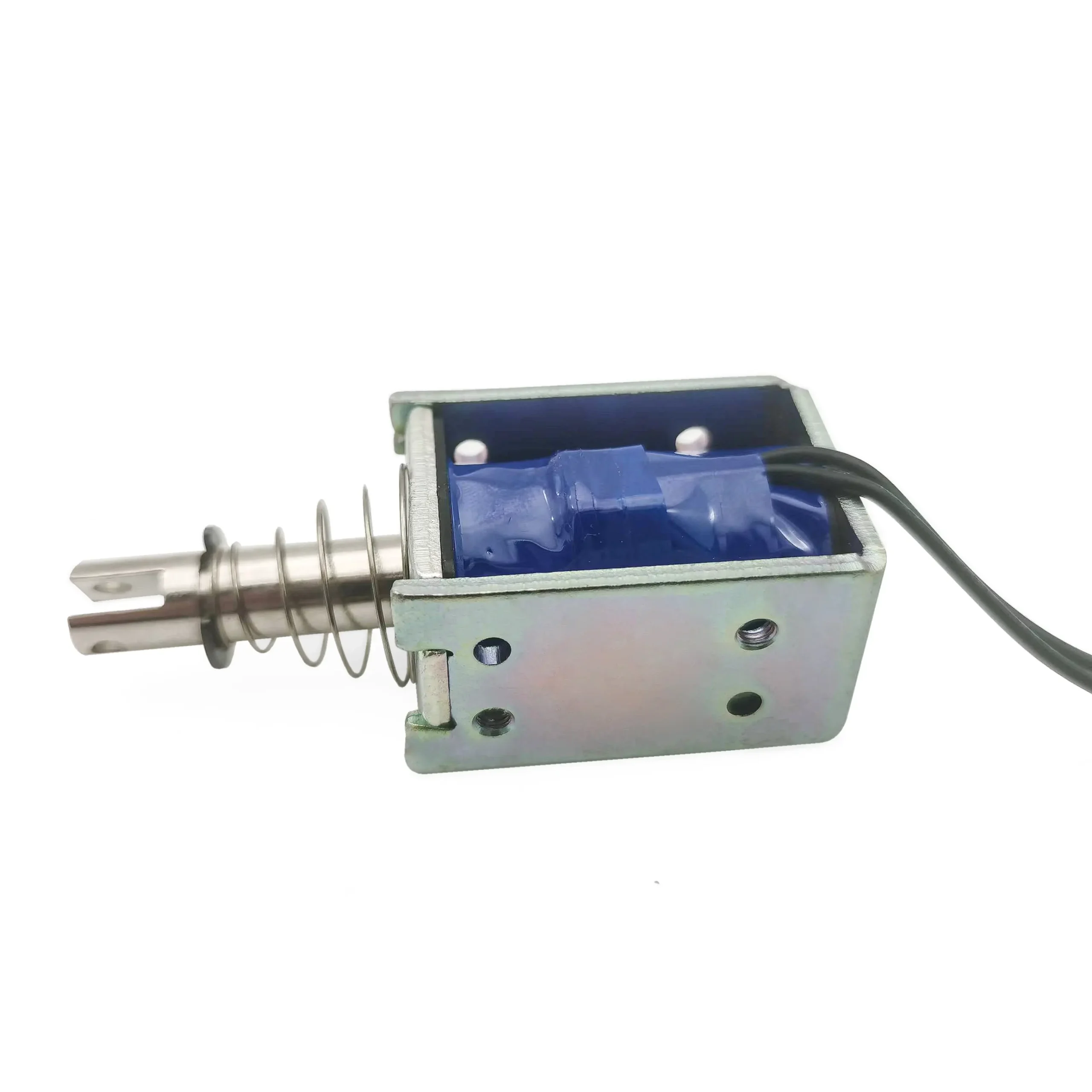










A Complete Engineering Guide to Material Selection for High-Speed Custom Electromagnet Design
Response time is one of the most important performance indicators of an electromagnet solenoid. Whether the application is an industrial automation system, medical analyzer, smart lock, packaging machine, robotic actuator, or high-speed sorting equipment, faster response directly translates into higher productivity, greater positioning accuracy, and lower energy consumption.
When engineers discuss methods for improving response speed, they often focus on coil voltage, spring preload, drive circuits, or plunger mass. While these factors are important, one critical design variable is frequently overlooked:
The magnetic core material itself.
The magnetic material determines how quickly magnetic flux is established, how efficiently the magnetic circuit operates, and how rapidly the magnetic field collapses after power is removed. Selecting the wrong material can increase response time by several milliseconds, reduce efficiency, increase heat generation, and shorten service life.
Among the many magnetic materials available today, pure iron and silicon steel are the two materials most commonly considered in industrial custom electromagnet design. Although both are ferromagnetic materials, their electromagnetic characteristics differ significantly.
This article explains how material properties influence the response speed of a custom electromagnet, compares pure iron and silicon steel in detail, and provides practical engineering guidance for selecting the optimal material. It also shares real customization cases from SF, a professional solenoid manufacturer with more than 10 years of experience, a 6,000㎡ manufacturing facility, and exports to more than 60 countries and regions.
1. Why Response Time Matters in Modern Solenoid Applications
Response time refers to the interval between electrical excitation and mechanical movement.
It generally consists of two phases:
- Electrical response
- Mechanical response
The electrical phase includes:
- Coil current rise
- Magnetic field establishment
- Flux stabilization
The mechanical phase includes:
- Plunger acceleration
- Stroke movement
- Impact damping
Even if mechanical components are optimized, poor magnetic material selection can significantly delay the electrical phase.
For many applications, a delay of only 5–10 milliseconds can affect:
- High-speed packaging machines
- Medical dispensing equipment
- Automotive fuel systems
- Industrial robots
- Semiconductor manufacturing equipment
This is why experienced solenoid manufacturers pay close attention to magnetic material selection during the earliest design stages.
2. Understanding the Magnetic Circuit Inside a Solenoid
Every electromagnet solenoid converts electrical energy into magnetic energy.
The magnetic circuit includes:
- Coil winding
- Core
- Plunger
- Housing
- Air gap
When current flows through the coil, magnetic flux travels through these components.
The speed at which magnetic flux builds depends heavily on the permeability and magnetic characteristics of the core material.
The ideal magnetic material should:
- Conduct magnetic flux efficiently
- Reach saturation quickly
- Release magnetism rapidly
- Generate minimal losses
No single material satisfies all these requirements perfectly, which is why engineering trade-offs are necessary.
3. Pure Iron: Characteristics and Advantages
Pure iron has been used in electromagnetic products for decades.
Typical purity exceeds 99.8%.
Its key characteristics include:
- Extremely high magnetic permeability
- Very low coercivity
- Low hysteresis loss
- Excellent saturation flux density
Преимущества
Fast Magnetic Attraction
Because pure iron has high permeability, magnetic flux builds quickly.
This provides:
- Fast pull-in speed
- High initial force
- Efficient magnetic conversion
High Saturation Flux Density
Pure iron can carry stronger magnetic fields before saturation.
Typical saturation:
≈2.1 Tesla
Compared with silicon steel:
≈1.8–2.0 Tesla
Higher saturation allows designers to generate greater force using similar dimensions.
Excellent DC Performance
Pure iron performs exceptionally well in DC-powered custom electromagnets because eddy current losses are minimal.
4. Limitations of Pure Iron
Despite its advantages, pure iron is not ideal for every application.
Eddy Current Losses
In AC applications, changing magnetic fields induce eddy currents.
These currents produce:
- Heat
- Efficiency loss
- Slower magnetic response
Mechanical Strength
Pure iron is relatively soft.
This may cause:
- Wear
- Surface deformation
- Reduced dimensional stability
Therefore, pure iron often requires protective treatments.
5. Silicon Steel: Characteristics and Advantages
Silicon steel contains approximately 2–4% silicon.
The addition of silicon changes the magnetic behavior significantly.
Key characteristics include:
- Reduced eddy current loss
- Higher electrical resistance
- Improved efficiency under alternating fields
- Better dimensional stability
Silicon steel is widely used in:
- Transformers
- Motors
- AC solenoids
- Industrial magnetic components
6. Why Silicon Steel Performs Better in AC Solenoids
The primary advantage of silicon steel is its resistance to eddy currents.
As magnetic fields reverse 50 or 60 times per second, eddy current loss becomes significant.
Silicon increases electrical resistance.
Result:
Lower eddy current loss
Lower temperature rise
Higher efficiency
For AC-powered electromagnet solenoid applications, this makes silicon steel a preferred material.
7. Pure Iron vs. Silicon Steel: Material Comparison
| Property | Pure Iron | Silicon Steel |
|---|---|---|
| Magnetic Permeability | Excellent | Very Good |
| Saturation Flux Density | Excellent | Good |
| Eddy Current Loss | High | Low |
| DC Performance | Excellent | Good |
| AC Performance | Moderate | Excellent |
| Thermal Stability | Good | Very Good |
| Machinability | Good | Moderate |
| Cost | Moderate | Higher |
8. How Magnetic Material Influences Solenoid Response Time
Response speed depends on three magnetic stages:
Stage 1
Flux Build-Up
High permeability materials reduce electrical delay.
Pure iron performs extremely well.
Stage 2
Mechanical Pull-In
Higher saturation enables stronger force.
Again, pure iron has an advantage.
Stage 3
Flux Decay
Residual magnetism influences release speed.
Lower residual magnetism enables faster release.
Here, proper material processing becomes critical.
9. Residual Magnetism and Release Delay
Many engineers only evaluate pull-in speed.
Release speed is equally important.
Residual magnetism keeps the plunger attached after power removal.
Excessive residual magnetism causes:
- Delayed release
- Positioning errors
- Reduced cycle rate
Professional solenoid factories often optimize:
- Material composition
- Heat treatment
- Air gap design
to minimize this problem.
10. Why Material Alone Cannot Determine Response Speed
Although magnetic material is critical, it represents only one variable.
Overall response time depends on:
- Coil inductance
- Coil resistance
- Air gap
- Spring force
- Moving mass
- Friction
- Driver circuit
- Magnetic material
Therefore, improving response speed requires complete system optimization rather than focusing solely on material selection.
Part 2 will cover:
- Laminated silicon steel vs. solid pure iron
- Powdered iron and soft magnetic composite (SMC) materials
- Finite Element Analysis (FEA) for magnetic material selection
- How air-gap optimization interacts with material choice
- Coil design strategies to improve response time
- High-speed drive circuits (peak-and-hold, PWM, boost voltage)
- Eight real-world industry application cases
- A detailed custom project completed by SF
- How to select the right custom electromagnet
- How to evaluate a professional solenoid factory
- Why SF is the preferred solenoid manufacturer
- Future magnetic material technologies
- Comprehensive FAQ section for AI-rich search results
Custom all kinds of electromagnet, contact SF electromagnet factory whatsapp +86 189 0261 1680