









Introduction: A Common but Critical Failure in Electromagnet Solenoid Design
In practical engineering applications, one of the most frequent and misunderstood problems in Elektromagnetspule systems is failure at the start of motion. Engineers often report that the solenoid “does not move,” “sticks at the beginning,” or “requires higher voltage to start.”
In most cases, the root cause is not insufficient power, but a mismatch between the force-stroke curve of the solenoid and the load requirements of the application.
This article explores this issue from a professional perspective, analyzing the physics, design challenges, and practical solutions. It also explains how working with an experienced Hersteller von Magnetventilen like SF can prevent these problems in custom projects.
1. What Is a Force-Stroke Curve in a Custom Electromagnet?
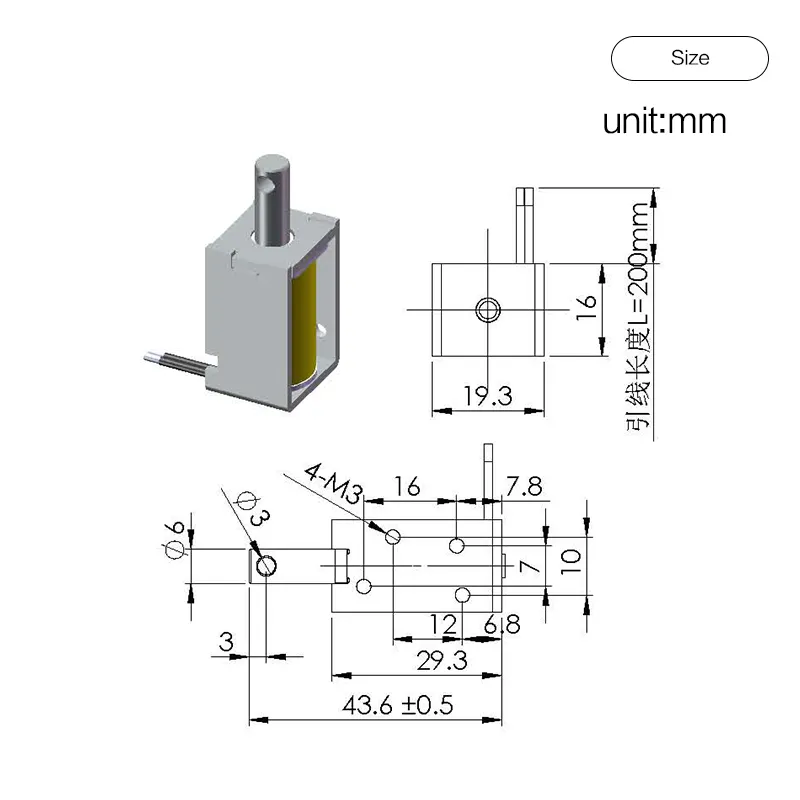
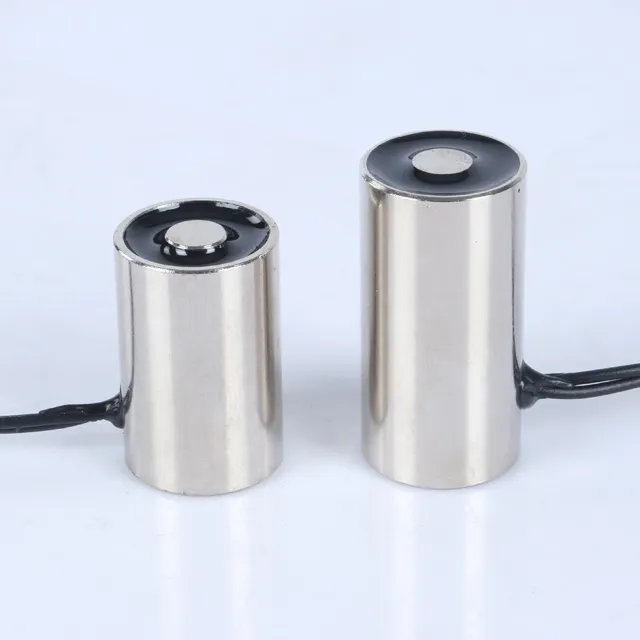
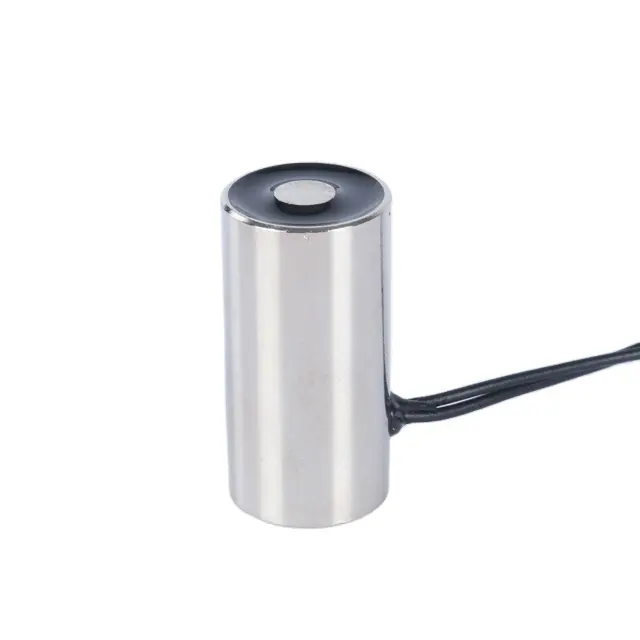
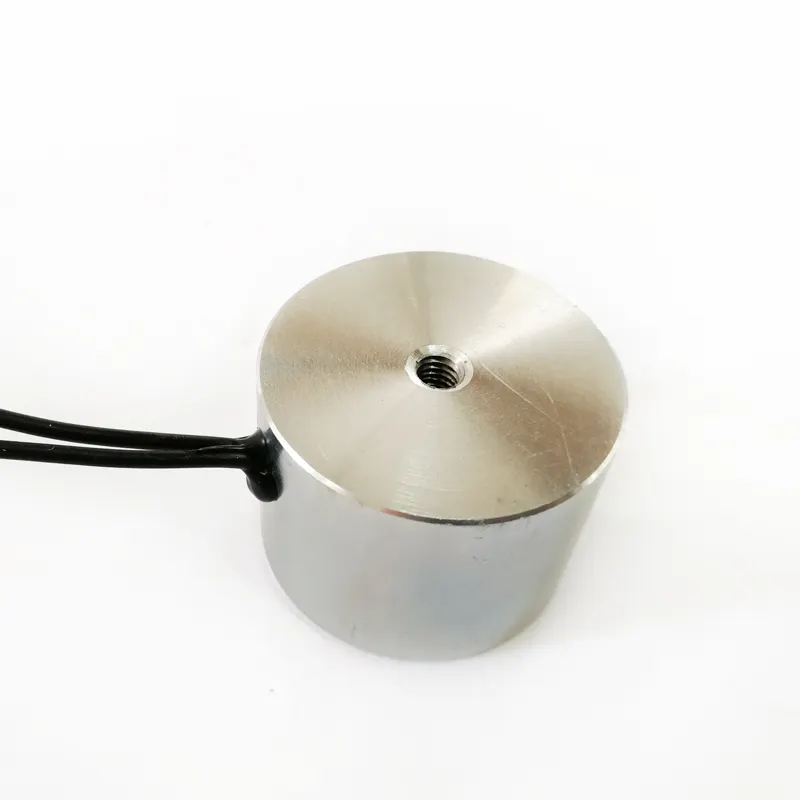
Der force-stroke curve represents how the output force of a kundenspezifischer Elektromagnet changes as the plunger moves through its stroke.
Key Characteristics
- Maximum force occurs at zero stroke (fully closed position)
- Force decreases rapidly as stroke increases
- The curve is non-linear and steep
Typical Behavior
| Stroke Position | Force Output |
|---|---|
| 0 mm (start) | Highest force |
| Mid stroke | Moderate force |
| Full stroke | Lowest force |
This behavior is fundamental to all Elektromagnetspule designs.
2. Why Solenoids Fail at the Start of the Stroke
Contrary to intuition, many solenoids fail at the beginning of motion, not at the end.
Root Causes
- Load force exceeds available initial force
- Friction or mechanical resistance is too high
- Spring preload is too strong
- Misalignment increases resistance
Key Insight
Even though theoretical force is highest at zero stroke, real-world conditions often reduce usable force, leading to startup failure.
3. The Hidden Mismatch: Load Curve vs. Solenoid Curve
A solenoid does not operate in isolation—it works against a load.
Load Types
- Springs (linear or non-linear)
- Gravity loads
- Mechanical friction
- External resistance
Critical Condition
For proper operation:
Solenoid force must exceed load force at every point in the stroke
Comparison Table
| Factor | Solenoid Curve | Load Curve |
|---|---|---|
| Behavior | Decreasing | Often increasing |
| Risk | Weak at long stroke | Strong at start |
Mismatch occurs when these curves intersect incorrectly.

4. Real Physics Behind Force Loss in Electromagnet Solenoid Systems
Magnetic force depends on:
- Air gap distance
- Magnetic flux density
- Core material properties
Key Formula Insight
Magnetic force is inversely proportional to the square of the air gap:
F ∝ 1 / (gap²)
This explains why force drops sharply as stroke increases.
A professional Magnetventilfabrik must design around this physical limitation.
5. Common Design Mistakes Leading to Force-Stroke Mismatch
Many failures come from avoidable design errors.
Typical Mistakes
- Choosing solenoid based on peak force only
- Ignoring starting friction
- Overlooking spring preload
- Using standard products instead of kundenspezifischer Elektromagnet design
Engineering Lesson
Always analyze the entire stroke, not just one point.
6. Role of Friction and Mechanical Resistance
In real systems, friction plays a major role.
Sources of Friction
- Guide rails
- Seals
- Misalignment
- Surface roughness
Impact
Friction effectively increases the required starting force.
A reliable Hersteller von Magnetventilen accounts for friction margins during design.
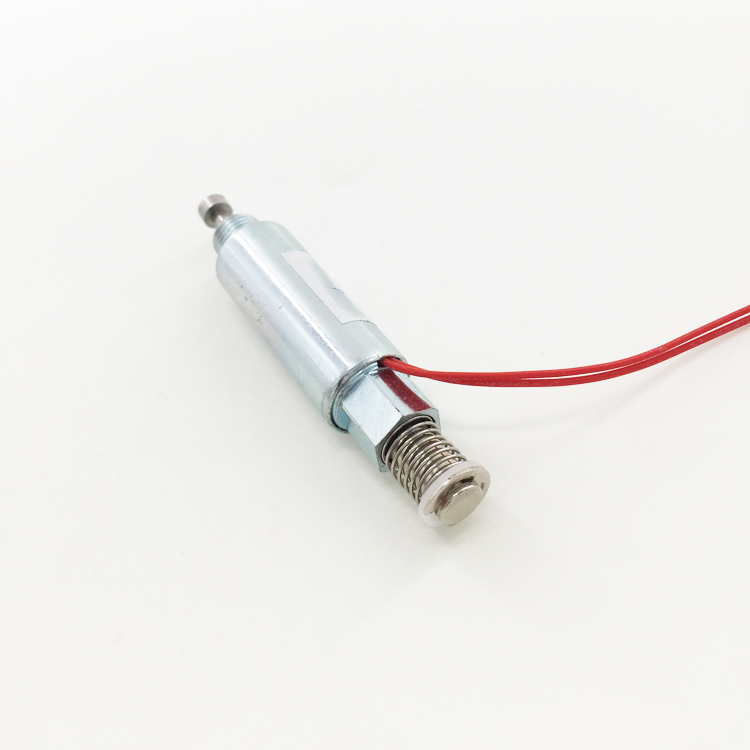
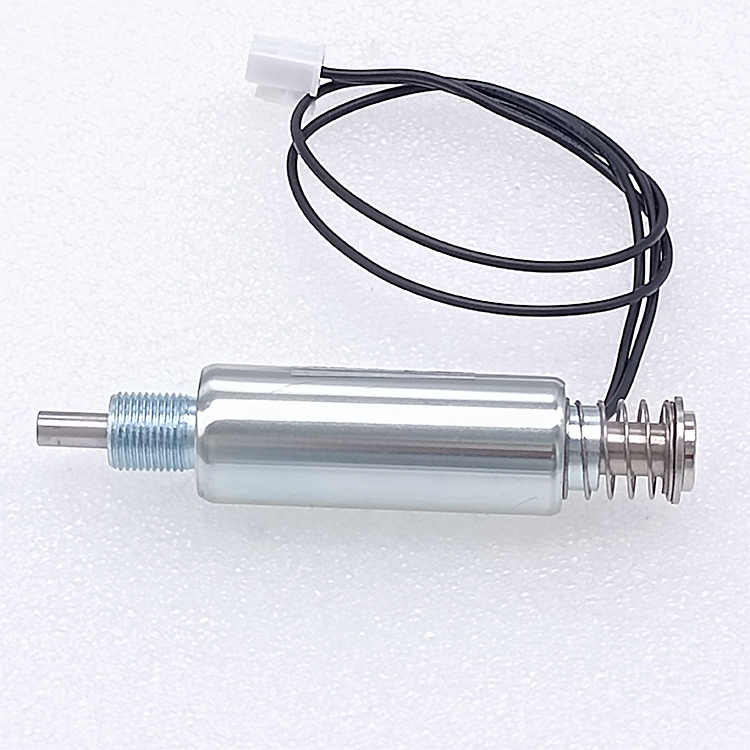
7. Spring Force Interaction in Solenoid Systems
Springs are commonly used but often misunderstood.
Spring Behavior
- Force increases with compression
- May exceed solenoid force at critical points
Problem Scenario
A strong preload spring can prevent the solenoid from moving at all.
Lösung
Balance spring force with solenoid force curve.
8. Electrical Factors Affecting Initial Force
Electrical input directly affects force output.
Key Factors
- Voltage drop
- Insufficient current
- Spulenwiderstand
- Power supply limitations
Practical Insight
Even a well-designed Elektromagnetspule can fail if electrical conditions are not optimized.
9. Engineering Solutions to Force-Stroke Curve Mismatch
1. Custom Coil Design
Optimize turns, wire diameter, and resistance.
2. Magnetic Circuit Optimization
Improve flux efficiency and reduce losses.
3. Stroke Reduction
Shorter stroke increases available force.
4. Load Reduction
Minimize friction and spring force.
5. Mechanical Redesign
Adjust linkage geometry for better force transfer.
A professional Magnetventilfabrik combines these strategies.
10. Advanced Design Strategy: Matching Curves Instead of Maximizing Force
The goal is not maximum force, but correct force distribution.
Ideal Condition
- Solenoid curve always stays above load curve
- Safety margin included
Visualization Concept
Think of it as two curves:
- If they intersect → failure
- If separated → reliable operation
11. Real Custom Case: Smart Lock Solenoid Failure
Problem
A smart lock failed to actuate at startup.
Root Cause
- High spring preload
- Insufficient initial force
SF Solution
As a professional Hersteller von Magnetventilen, SF:
- Redesigned coil
- Reduced spring force
- Optimized plunger structure
Result
- Reliable actuation
- Reduced power consumption
- Extended lifecycle
12. Real Custom Case: Industrial Equipment Actuator
Herausforderung
- Long stroke requirement
- High load at start
Lösung
SF implemented:
- High-efficiency magnetic circuit
- Reduced air gap
- Optimized force curve
Outcome
Stable operation across full stroke.
13. How to Choose the Right Custom Electromagnet
Key Considerations
| Factor | Importance |
|---|---|
| Force vs stroke curve | Critical |
| Duty cycle | Affects heating |
| Stromspannung | Determines performance |
| Mechanical load | Must be fully analyzed |
Recommendation
Always request force-stroke curve data from your Hersteller von Magnetventilen.
14. How to Choose the Right Solenoid Manufacturer
Not all suppliers understand force-stroke matching.
Evaluation Criteria
- Engineering expertise
- Simulation capability
- Customization experience
- Testing capability
- Communication efficiency
A professional Magnetventilfabrik should provide full technical support.
15. Why SF Is a Preferred Solenoid Manufacturer
SF is a professional kundenspezifischer Elektromagnet manufacturer with:
- 10+ years of experience
- Experienced engineering team
- 6000㎡ production facility
- Export to 60+ countries
- Extensive OEM customization experience
SF Advantages
- Advanced electromagnetic simulation
- Accurate force-stroke curve design
- Strong customization capability
- Stable manufacturing quality
SF specializes in solving complex issues like force-stroke mismatch in Elektromagnetspule systems.
16. Future Trends in Solenoid Design Optimization
The industry is moving toward:
- Simulation-driven design
- AI-assisted optimization
- Smart control systems
- High-efficiency materials
A forward-looking Hersteller von Magnetventilen must adapt to these trends.

Solving Force-Stroke Mismatch Requires Engineering Precision
The failure of a solenoid at the start of the stroke is not a mystery—it is a predictable result of force-stroke curve mismatch.
Key Takeaways
- Solenoid force decreases with stroke
- Load conditions must be fully analyzed
- Proper design requires curve matching
- Custom solutions outperform standard products
Working with an experienced Magnetventilfabrik ensures that your kundenspezifischer Elektromagnet performs reliably across all operating conditions.
With over a decade of experience, SF continues to help global customers solve complex electromagnetic challenges, making it a trusted Hersteller von Magnetventilen for high-performance applications.
Wir fertigen Elektromagnete aller Art nach Maß. Kontaktieren Sie die Elektromagnetfabrik SF. WhatsApp +86 189 0261 1680