









An Engineering Guide to Custom Solenoid manufacturer Manufacturing, Force Control, Process Capability, and Mass-Production Quality.
When an OEM customer orders 50,000 customized solenoids, the biggest manufacturing challenge is not simply producing 50,000 pieces. The real challenge is making sure that the 50,000th custom solenoid performs as consistently as the first production unit.
For an electromagnetic actuator, force is influenced by many variables, including coil resistance, wire diameter, magnetic material, plunger geometry, air gap, spring force, friction, machining tolerances, assembly alignment, temperature, and operating voltage. Even when every individual component appears to comply with its drawing, small variations can accumulate and create measurable differences in electromagnetic force.
This becomes particularly important in applications such as automotive components, smart locks, medical equipment, industrial automation, vending machines, office equipment, appliances, valves, and robotic systems. If the force of one unit is significantly different from another, the customer’s final equipment may experience inconsistent response time, incomplete movement, excessive current, abnormal noise, or premature failure.
A professional custom solenoid manufacturer therefore needs a manufacturing system designed around process consistency, not simply final inspection. For a 50,000-unit order, quality must be built into the process from raw material control through machining, coil winding, assembly, testing, packaging, and traceability.
This article explains how an experienced custom solenoid factory can control these variables and maintain stable force performance during high-volume production.
1. Custom Solenoid Force Starts With a Controlled Engineering Specification
The first step toward force consistency happens before production begins.
A professional custom solenoid project needs a clearly defined engineering specification. “Force: 10 N” is not enough information because solenoid force changes according to plunger position and operating conditions.
The specification should define:
- Rated voltage
- Minimum operating voltage
- Maximum operating voltage
- Гладить
- Force at specific stroke positions
- Pull-in force
- Holding force
- Release force where applicable
- Coil resistance
- Current
- Duty cycle
- Operating temperature
- Spring characteristics
- Maximum friction
- Required lifecycle
For example, instead of specifying:
“Solenoid force ≥ 10 N”
a more useful specification may define:
| Parameter | Requirement |
|---|---|
| Номинальное напряжение | 24 VDC |
| Гладить | 10 mm |
| Starting Force | ≥ 3 N |
| Force at 5 mm | ≥ 7 N |
| End Force | ≥ 12 N |
| Coil Resistance | X ± Y Ω |
| Operating Temperature | -20 to +70°C |
| Target Life | ≥ 500,000 cycles |
The exact values depend on the application.
This level of definition allows the завод соленоидов to design and control the product around measurable characteristics.
2. Custom Solenoid Material Control Is the Foundation of Force Consistency
The magnetic circuit is extremely sensitive to material properties.
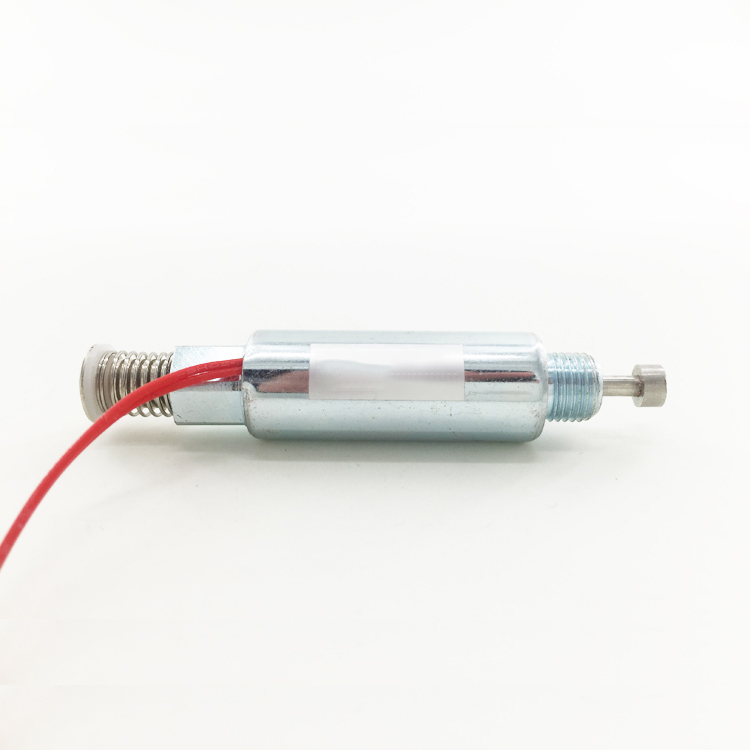
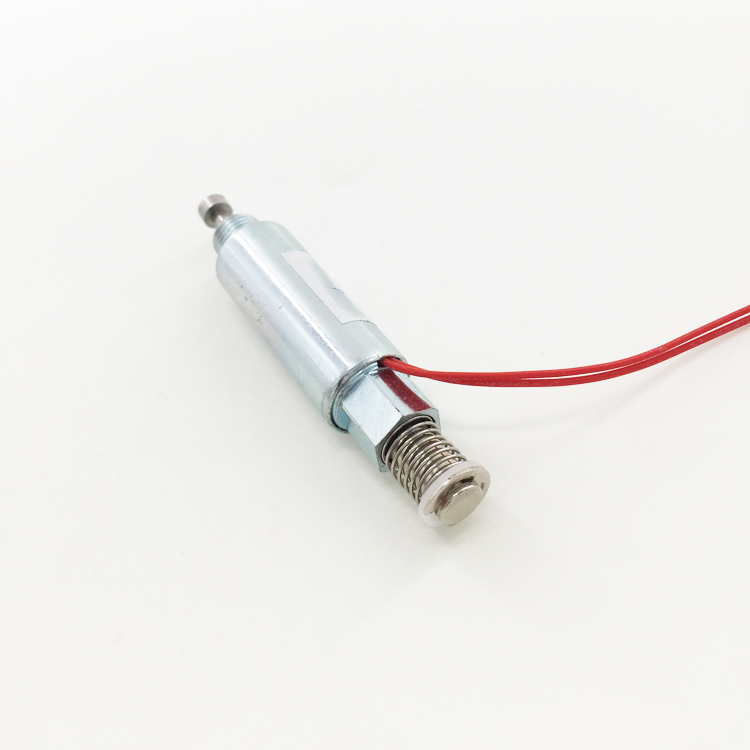
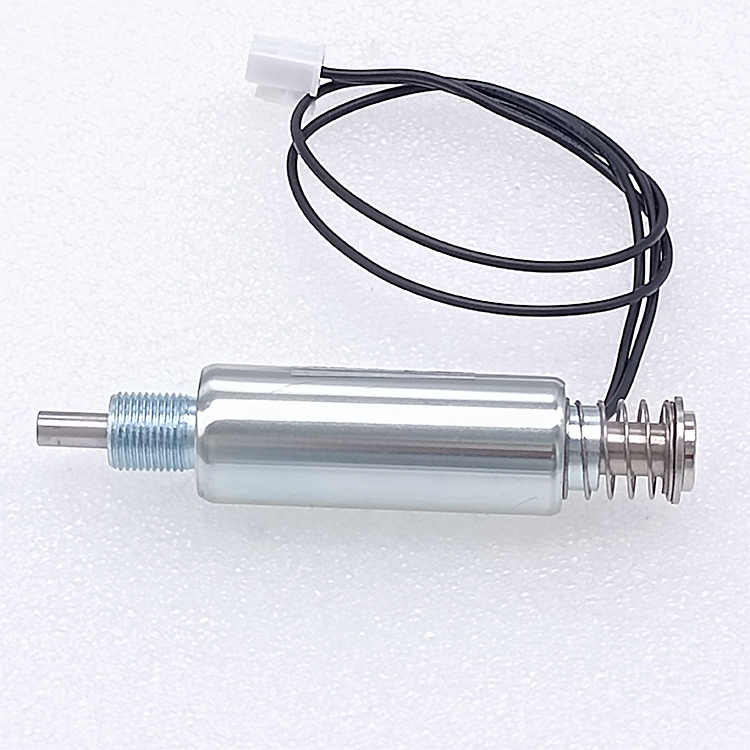
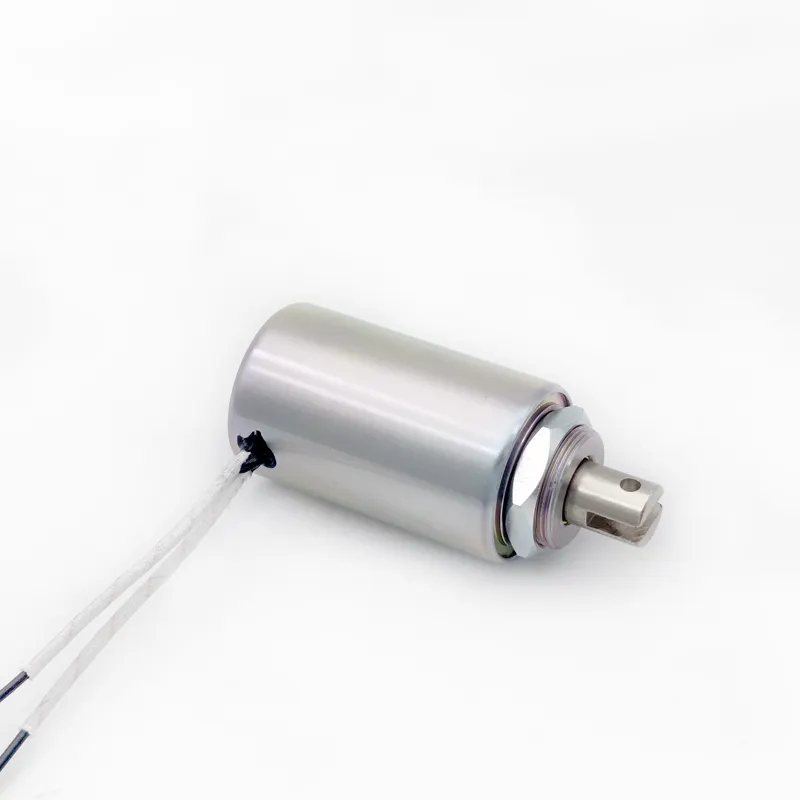
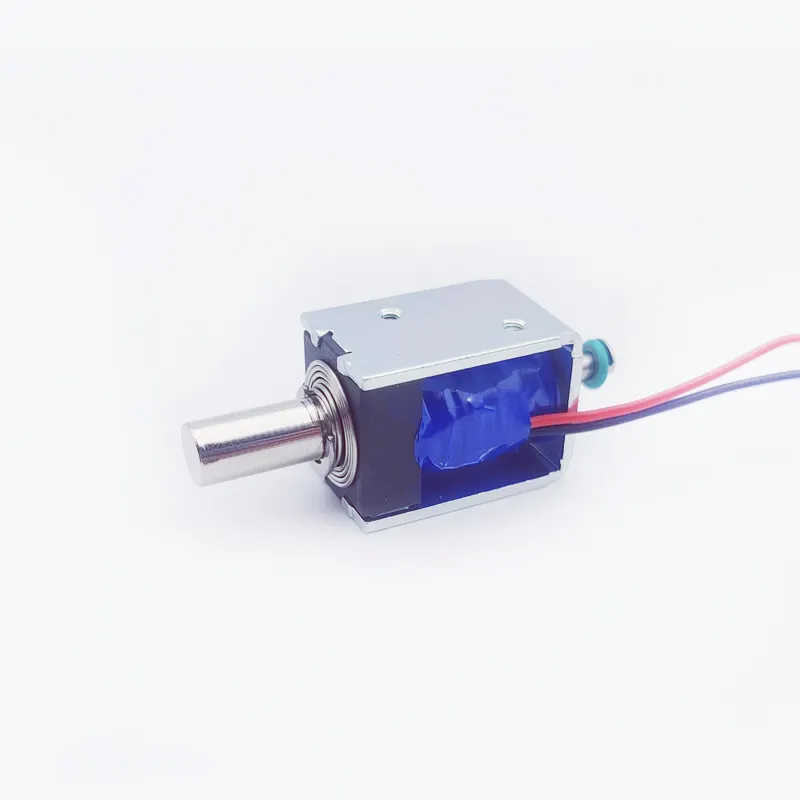
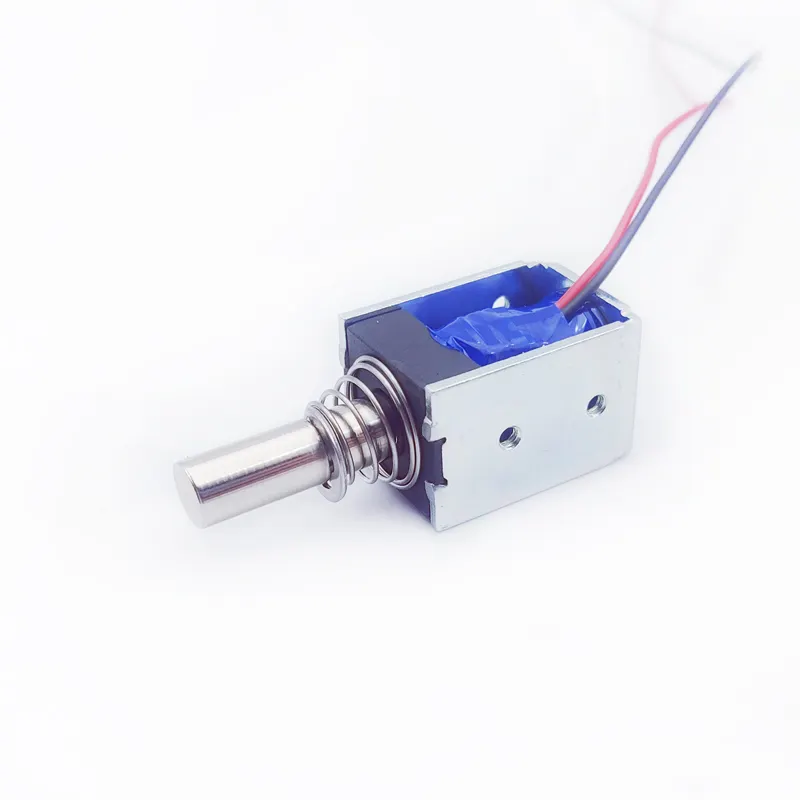
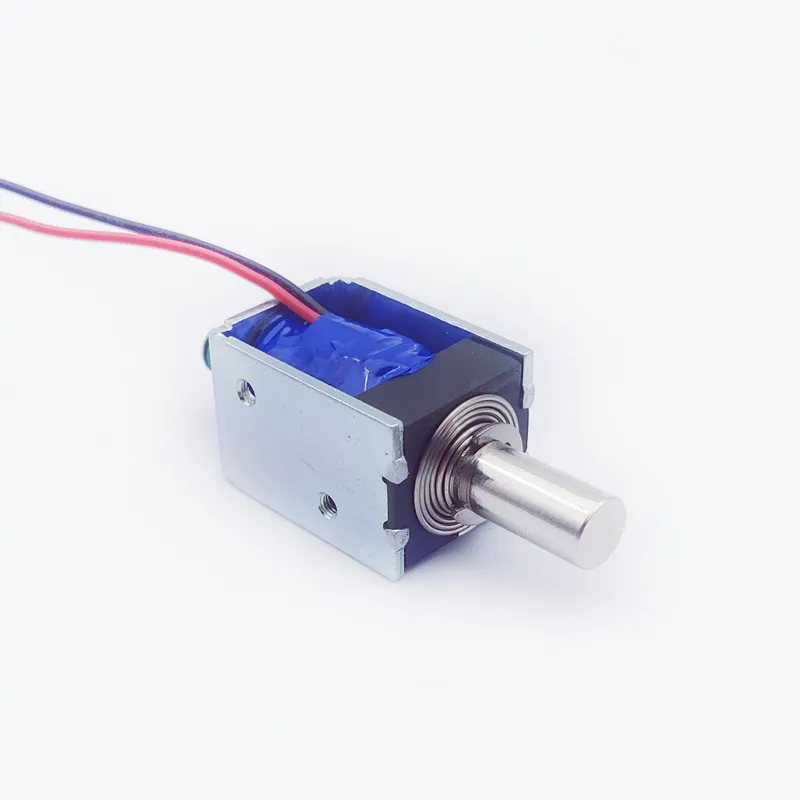
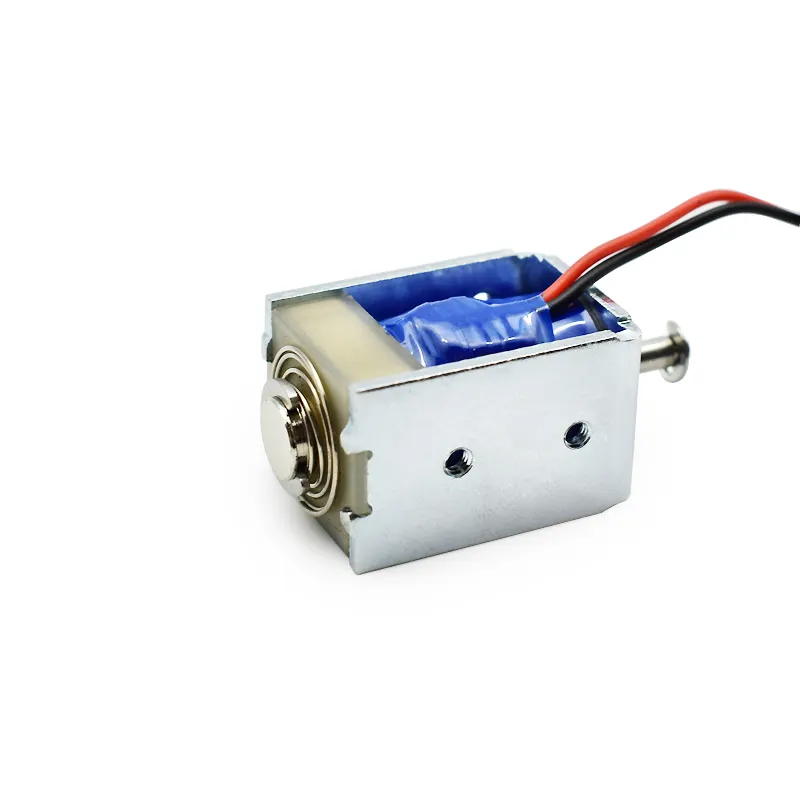
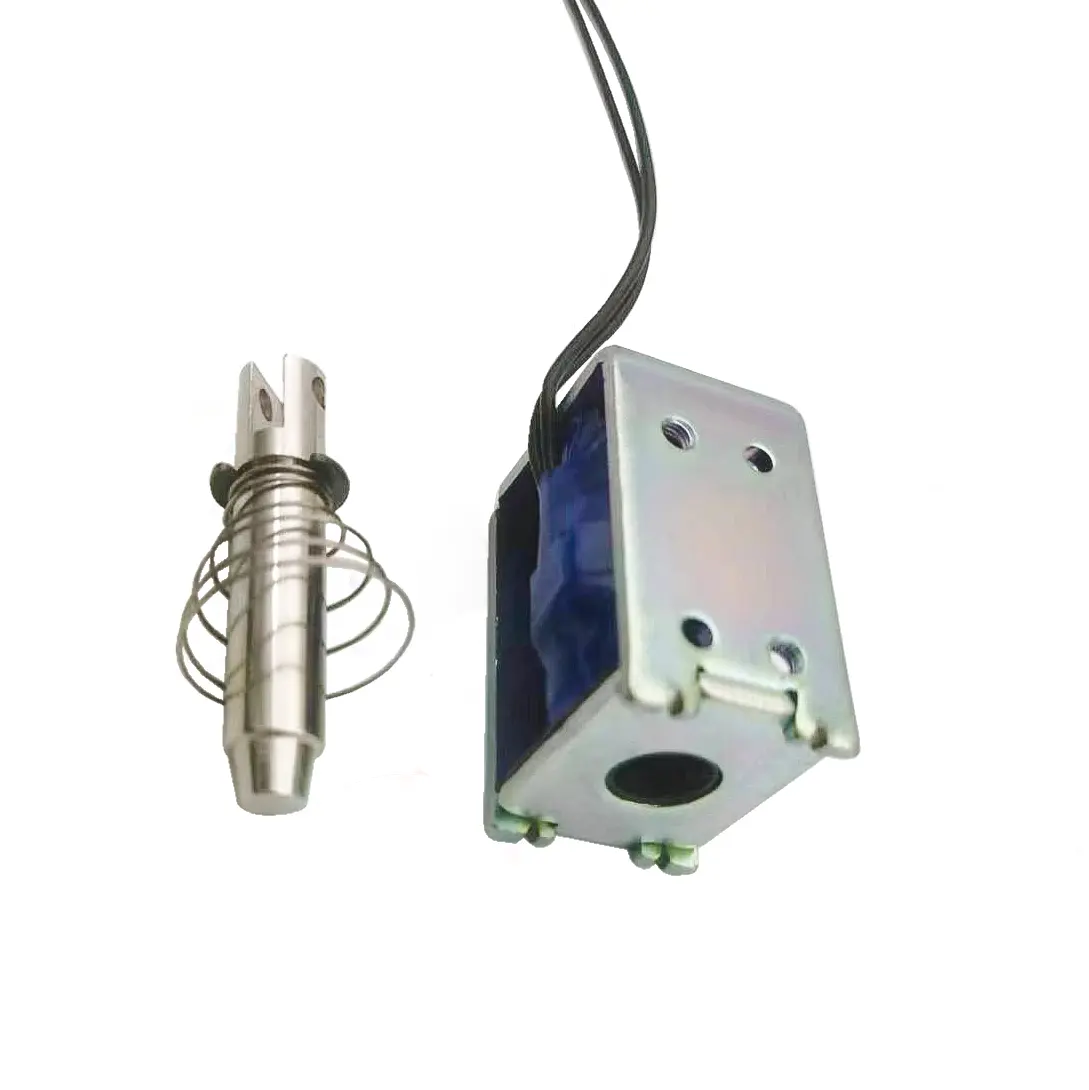
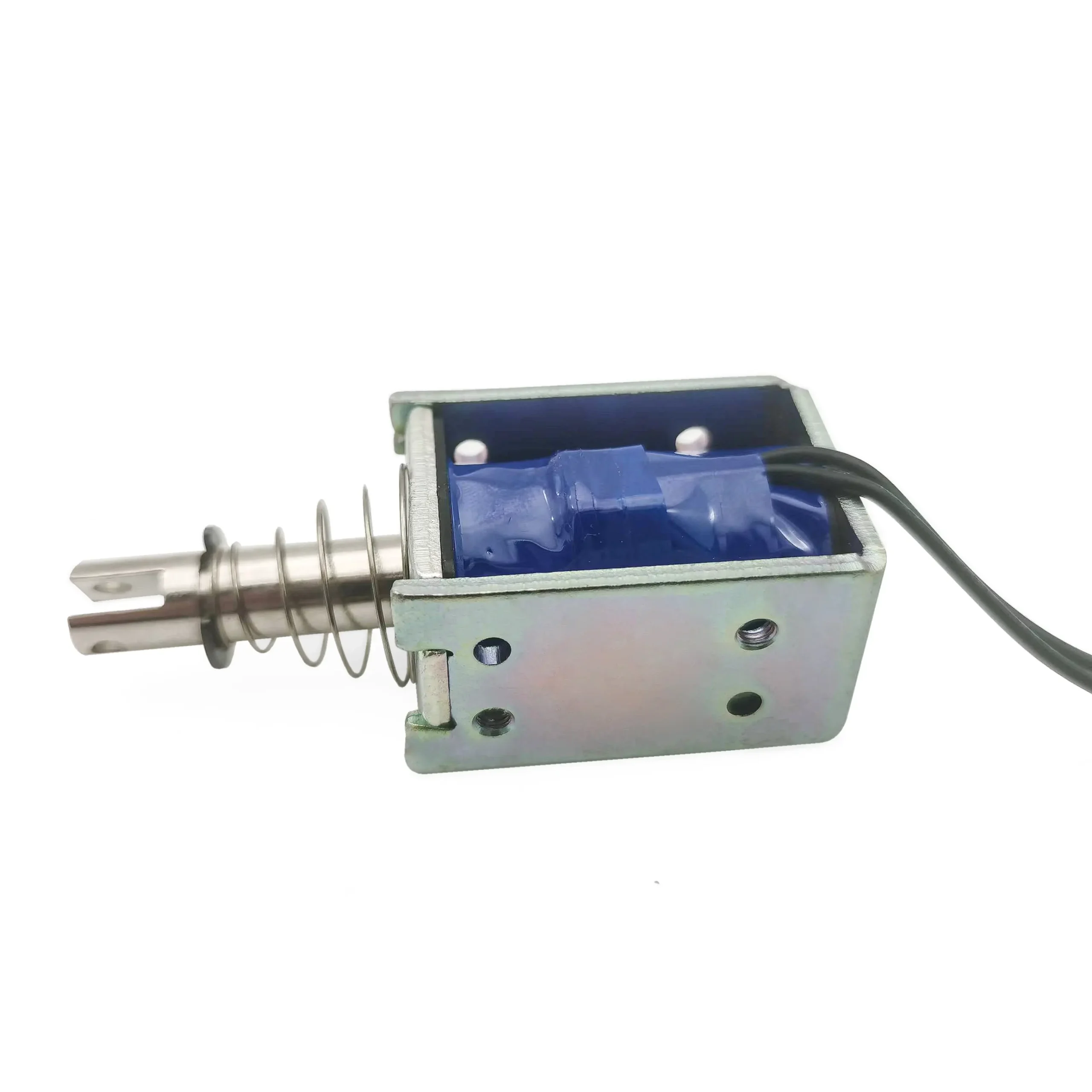
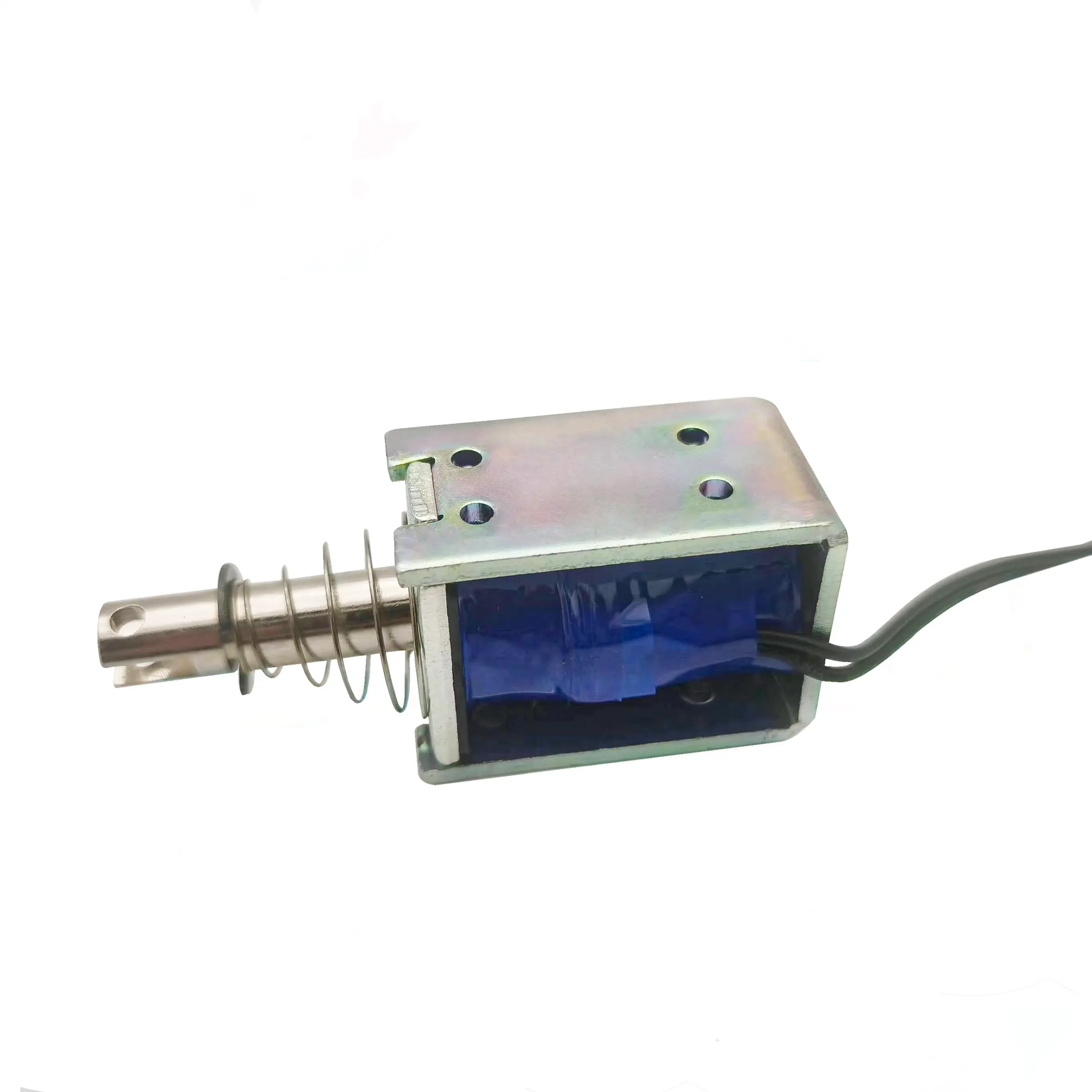
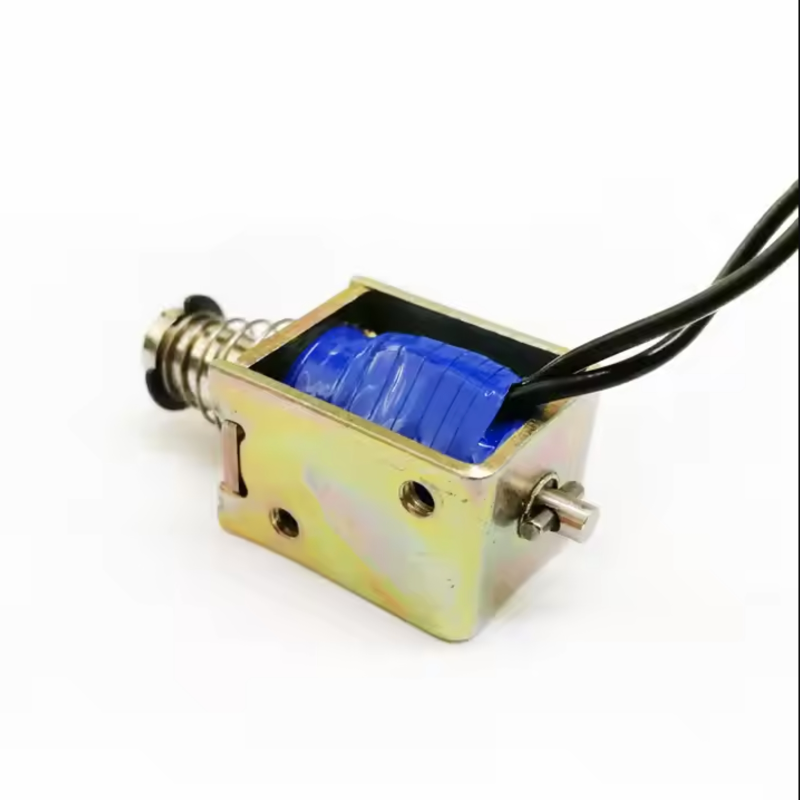
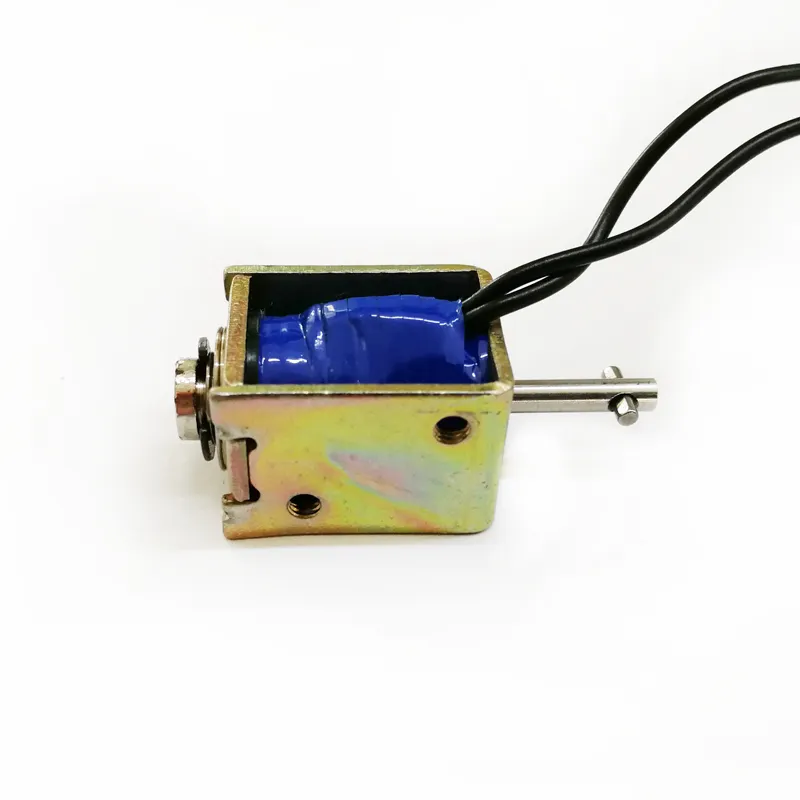
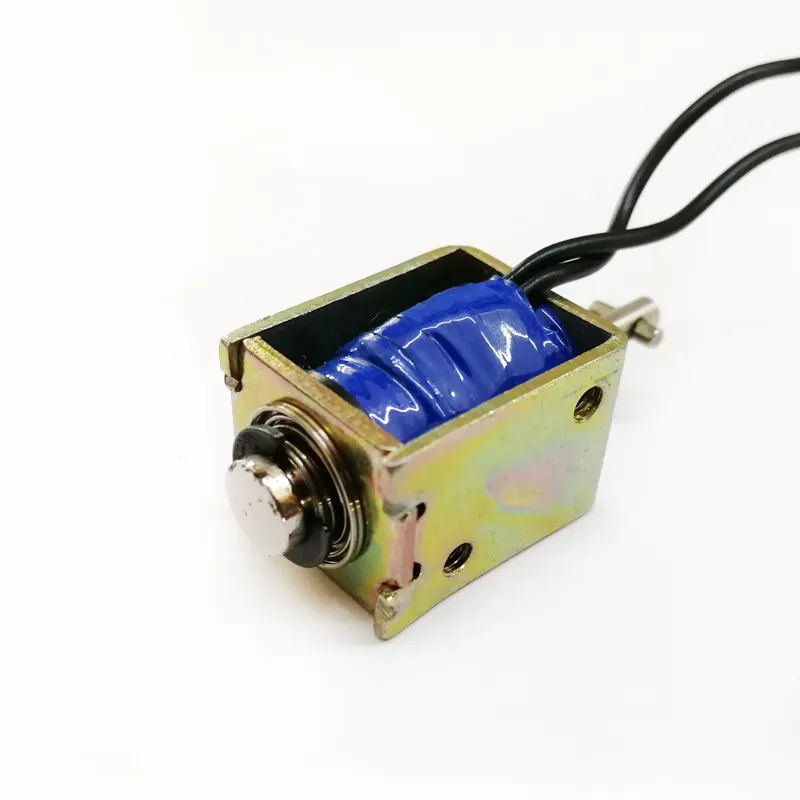
A custom solenoid may contain:
- Plunger
- Core
- Pole piece
- Magnetic housing
- Return spring
- Copper coil
- Guide components
The magnetic components must have stable material characteristics.
If one production batch uses magnetic steel with different permeability or magnetic saturation characteristics, force can change even when the dimensions remain identical.
A professional завод электромагнитов therefore controls:
- Material grade
- Supplier
- Material certificate
- Hardness
- Surface treatment
- Magnetic properties
- Lot number
Critical materials should be traceable back to the incoming material batch.
Why Traceability Matters
If units 1–10,000 use material batch A and units 10,001–20,000 use material batch B, the manufacturer should be able to identify whether a change in force corresponds with the material transition.
Without traceability, root-cause analysis becomes much more difficult.
3. Custom Solenoid Machining Tolerances Directly Affect Magnetic Force
Precision machining is one of the most important factors in mass-production consistency.
A small dimensional variation in:
- Plunger diameter
- Core diameter
- Air gap
- Pole geometry
- Guide bore
- Housing dimensions
can change magnetic flux and mechanical friction.
Он air gap is particularly important.
Because electromagnetic force is strongly affected by magnetic reluctance, small changes in the working air gap can create noticeable changes in force.
For example:
Smaller effective air gap → lower magnetic reluctance → stronger magnetic coupling
while:
Larger effective air gap → higher magnetic reluctance → lower force
Therefore, a professional custom solenoid manufacturer does not simply inspect overall dimensions. It identifies critical-to-function dimensions and gives them appropriate process controls.
4. Custom Solenoid Coil Winding Must Be Highly Consistent
The coil is another major source of variation.
The electromagnetic force depends on magnetic field strength, which is strongly influenced by coil current and the number of turns.
Coil production must therefore control:
- Copper wire diameter
- Number of turns
- Winding tension
- Winding position
- Layer structure
- Insulation
- Coil resistance
- Terminal connection
If the number of turns varies, resistance and inductance can change.
If winding tension changes, the coil geometry may also change.
If the wire diameter varies, electrical resistance changes.
For high-volume production, automated or highly controlled winding equipment is preferable because it reduces operator-to-operator variation.
Example
| Coil Variable | Potential Effect |
|---|---|
| Wire diameter | Resistance/current |
| Number of turns | Magnetic field |
| Winding tension | Geometry |
| Coil height | Magnetic alignment |
| Resistance | Current/heat |
| Insulation | Reliability |
For a 50,000-unit order, these variables must be controlled as manufacturing parameters rather than checked only after assembly.
5. Custom Solenoid Spring Force Must Be Controlled
The solenoid’s electromagnetic force is only one part of its actual operating force.
The net mechanical force can be thought of conceptually as:
Net Force = Electromagnetic Force − Spring Force − Friction − Other Mechanical Loads
Therefore, variation in spring force can produce variation in the customer’s actual actuator performance.
A production spring may vary in:
- Wire diameter
- Free length
- Coil diameter
- Number of turns
- Spring rate
- Preload
For demanding applications, a professional custom solenoid factory should inspect spring force at defined positions rather than relying only on dimensional inspection.
This is especially important when the solenoid operates close to its minimum force requirement.
A 5% variation in spring force may be insignificant in one application but critical in another.
6. Custom Solenoid Assembly Alignment Determines Real-World Force
Even when every individual component meets its dimensional specification, assembly alignment can create performance variation.
The plunger should move along the intended magnetic axis.
Problems can occur if:
- The guide is tilted
- The housing is deformed
- The plunger is installed off-center
- Components are pressed together unevenly
- Mounting force changes the geometry
Misalignment increases friction and can reduce the effective electromagnetic force available for useful movement.
A professional electromagnet solenoid assembly process should therefore control:
- Concentricity
- Axial alignment
- Press-fit conditions
- Assembly force
- Plunger movement
- Guide clearance
Automated fixtures and poka-yoke assembly methods can help prevent incorrect assembly.
7. Custom Solenoid Production Requires Statistical Process Control
For 50,000 units, simply measuring every finished product is not enough.
The manufacturer should understand how the process behaves over time.
Statistical Process Control (SPC) can monitor critical variables such as:
- Coil resistance
- Plunger diameter
- Air gap
- Spring force
- Гладить
- Pull force
- Current
- Response time
Instead of asking only:
“Did this unit pass?”
engineers should also ask:
“Is the manufacturing process stable?”
A process that produces 99% conforming parts today may drift tomorrow.
SPC helps detect trends before they become failures.
Typical Process Indicators
| Indicator | Purpose |
|---|---|
| Mean | Identifies process center |
| Диапазон | Shows short-term variation |
| Standard deviation | Measures dispersion |
| Cp | Potential capability |
| Cpk | Capability considering process centering |
| Trend chart | Detects process drift |
For critical characteristics, customers may request specific process-capability targets such as Cpk ≥ 1.33 or higher, depending on their quality requirements.
The exact acceptance criteria should always be agreed between the OEM and supplier.
8. Custom Solenoid Force Testing Should Be Based on a Defined Measurement System
Force measurement itself can introduce variation.
Imagine two technicians testing the same custom solenoid using different fixtures, different measurement speeds, or different plunger positions.
They may obtain different force values.
Therefore, the manufacturer must standardize the measurement system.
The test procedure should define:
- Напряжение
- Temperature
- Plunger position
- Measurement direction
- Test speed
- Fixture
- Sensor
- Sampling frequency
- Stabilization time
The force sensor must also be appropriately calibrated.
For high-volume manufacturing, measurement system analysis such as Gage R&R can help determine whether the inspection system itself contributes excessive variation.
A stable manufacturing process requires a stable measurement system.

9. Custom Solenoid 100% Testing vs. Sampling Inspection
For a 50,000-unit order, OEM customers often ask:
“Should every solenoid be force tested?”
The answer depends on the product’s criticality, test speed, cost, and failure risk.
100% Testing May Include
- Coil resistance
- Electrical continuity
- Basic actuation
- Гладить
- Current
- Functional response
Sampling Tests May Include
- Full force-stroke curve
- Temperature rise
- Lifecycle
- Destructive tests
- Material analysis
For a high-risk application, 100% functional testing may be appropriate.
For a lower-risk product, a combination of automated functional testing and statistical sampling may be more economical.
A professional custom solenoid manufacturer should be able to propose a testing strategy based on the customer’s risk level rather than applying the same inspection method to every product.
10. Custom Solenoid Production Lines Need Controlled Process Parameters
Consistency depends heavily on process control.
Important production parameters may include:
Machining
- Cutting parameters
- Tool wear
- Grinding conditions
- Dimensional compensation
Coil Winding
- Wire tension
- Winding speed
- Turns
- Layer position
Assembly
- Pressing force
- Alignment
- Fastening torque
- Adhesive quantity
Testing
- Напряжение
- Temperature
- Test duration
- Force measurement position
A professional China solenoid manufacturer should document these parameters and establish reaction plans for abnormal conditions.
For example:
If coil resistance begins trending upward, production should not simply continue until units fail inspection.
The process should be investigated before significant quantities are produced.
11. Custom Solenoid Traceability Is Essential for 50,000-Unit Orders
Large-volume manufacturing inevitably involves multiple raw material lots, production shifts, machines, operators, and inspection batches.
Without traceability, a quality problem can affect the entire shipment.
A robust traceability system may connect:
Raw Material Lot → Production Date → Machine → Operator → Assembly Batch → Test Data → Packaging Lot
This allows the manufacturer to identify exactly which units may be affected by a process deviation.
For example, if force measurements show an abnormal trend in units manufactured between 14:00 and 16:00, the factory should be able to isolate that production window.
Traceability is therefore not merely administrative.
It is a fundamental component of mass-production quality.
12. Custom Solenoid Environmental and Temperature Control
Force consistency should not be considered only at room temperature.
The actual operating environment can change electromagnetic and mechanical behavior.
Temperature affects:
- Copper resistance
- Coil current
- Magnetic properties
- Spring behavior
- Plunger dimensions
- Lubricant viscosity
- Friction
For demanding applications, production validation should consider:
- Cold temperature
- Normal temperature
- High temperature
- Minimum voltage
- Maximum voltage
- Continuous duty
- Intermittent duty
A custom solenoid that has excellent force consistency at 23°C may show greater variation at elevated temperature if thermal design has insufficient margin.
13. Custom Solenoid Batch Validation and Golden Samples
Before a 50,000-unit production run begins, a professional supplier should establish an approved reference.
This may include:
- Approved engineering sample
- Force curve
- Coil resistance
- Гладить
- Current
- Response time
- Noise
- Appearance
- Critical dimensions
This reference is sometimes called a golden sample or master reference.
Production units should be compared against the approved baseline.
However, the golden sample should not replace statistical process control.
It answers:
“Does this unit match the approved product?”
SPC answers:
“Is the manufacturing process remaining stable?”
Both are important.
14. How SF Controls Custom Solenoid Consistency in High-Volume Production
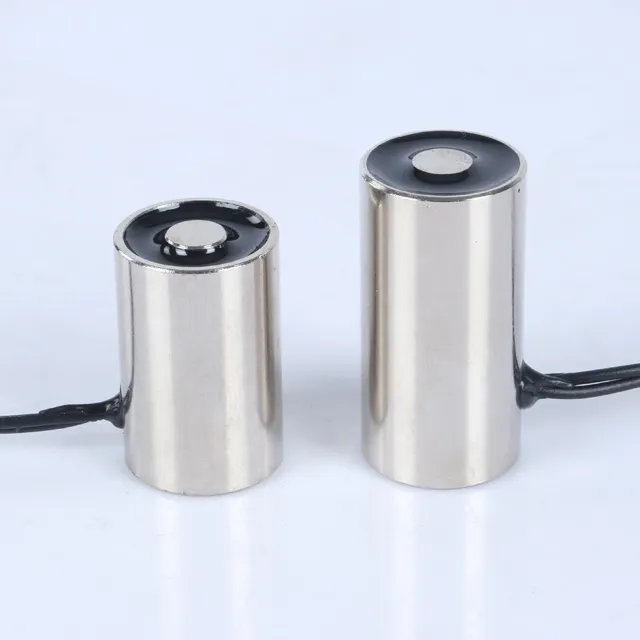
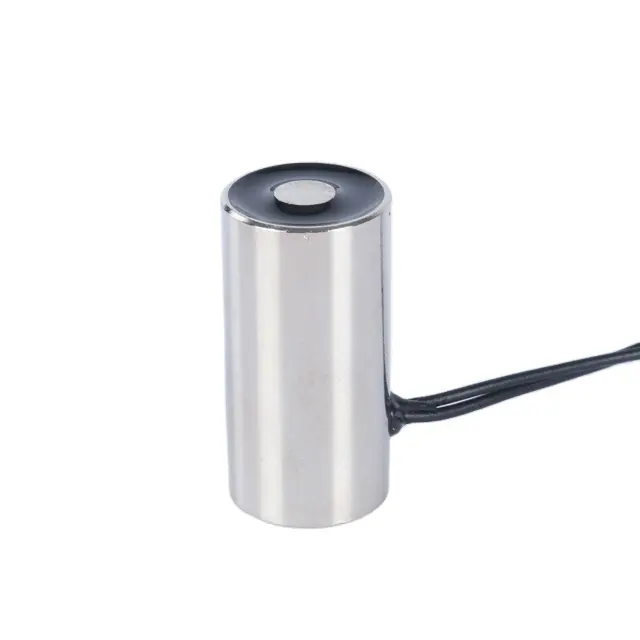
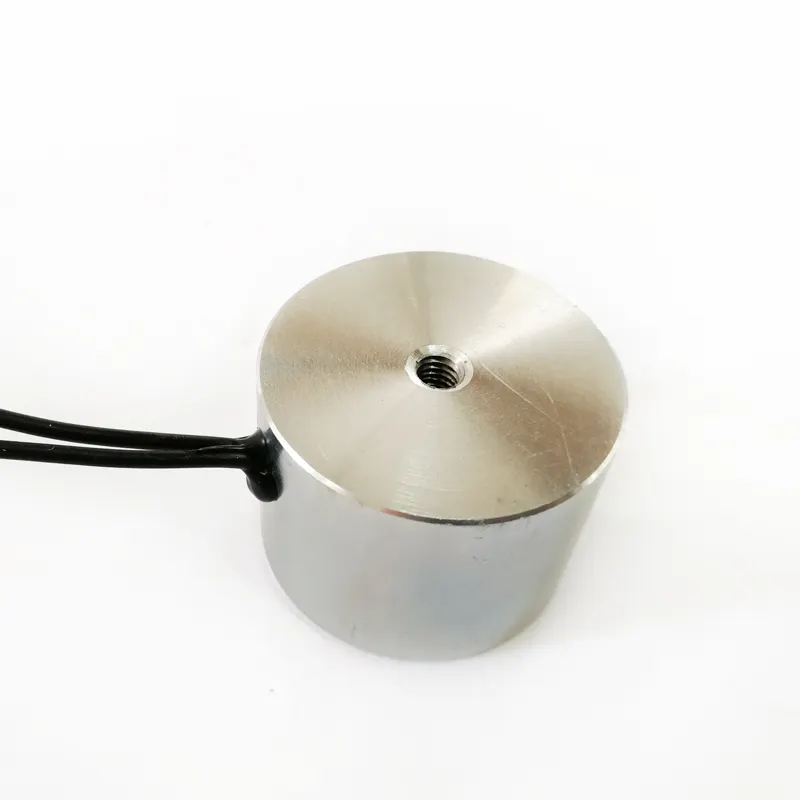
SF has more than 10 years of experience manufacturing customized solenoids and electromagnets, supported by an experienced engineering team and a 6,000㎡ manufacturing facility.
For high-volume OEM projects, our approach focuses on controlling the complete product-development and manufacturing chain:
Engineering Design → Prototype → Validation → Process Development → Pilot Production → FAI → Mass Production → Functional Testing → Final Inspection
Our engineers understand that a customer’s requirement is not simply to receive 50,000 pieces.
The requirement is to receive 50,000 pieces that behave like the same product.
SF can control key characteristics including:
- Coil resistance
- Plunger dimensions
- Magnetic components
- Гладить
- Spring force
- Assembly alignment
- Electrical performance
- Force characteristics
- Functional response
For appropriate products, production testing can be integrated into the manufacturing process to identify abnormal units before shipment.
SF has supported brand customers with customized electromagnet solutions and exports products to more than 60 countries and regions.
50,000 Custom Solenoids Require Process Control, Not Just Final Inspection
Producing 50,000 customized solenoids consistently is fundamentally a process engineering challenge.
The manufacturer must control variation across the entire product lifecycle:
- Engineering specification
- Magnetic material
- Machining
- Coil winding
- Spring production
- Assembly alignment
- Electrical characteristics
- Force measurement
- Temperature
- Manufacturing processes
- Statistical process control
- Traceability
- Functional testing
- Batch validation
- Final inspection
The most important principle is simple:
A manufacturer cannot inspect quality into a product if the manufacturing process itself is unstable.
Final inspection can identify defective units, but a mature custom solenoid manufacturer works to prevent variation from being generated in the first place.
For a 50,000-unit order, OEM buyers should therefore look beyond the factory’s quoted production capacity. Ask how the supplier controls critical dimensions, how coil winding is standardized, how force is measured, how process capability is monitored, how raw materials are traced, and how production drift is detected.
A capable custom solenoid factory should be able to demonstrate a systematic quality-control methodology rather than simply promise “100% inspection.”
With more than 10 лет опыта, an experienced engineering team, a 6,000㎡ manufacturing facility, customized electromagnet and solenoid production capabilities, and export experience across 60+ countries and regions, SF is positioned to support demanding OEM projects from prototype development through high-volume manufacturing.
For customers requiring 50,000 or more custom solenoids, the goal should not be merely high output.
The goal is high output + low variation + traceability + repeatable electromagnetic performance.
That is the foundation of reliable mass production.
How Can a Manufacturer Maintain Force Consistency Across 50,000 Custom Solenoids?
A professional custom solenoid manufacturer maintains force consistency through a combination of controlled magnetic materials, precision machining, standardized coil winding, spring-force control, assembly alignment, statistical process control, calibrated force measurement, environmental validation, traceability, and appropriate 100% functional testing.
The most critical variables affecting solenoid force include air gap, magnetic material, coil resistance, number of turns, operating voltage, plunger geometry, spring force, friction, and temperature.
For a 50,000-unit production order, final inspection alone is insufficient. The manufacturing process itself must be statistically controlled so that variation is detected and corrected before it creates large quantities of nonconforming products.
Сан-Франциско combines more than 10 years of custom electromagnet manufacturing experience, an experienced engineering team, a 6,000㎡ factory, and global OEM experience across more than 60 countries and regions to provide customized solenoid solutions for high-volume applications.
Изготовление электромагнитов на заказ всех видов, свяжитесь с заводом электромагнитов SF. WhatsApp +86 189 0261 1680