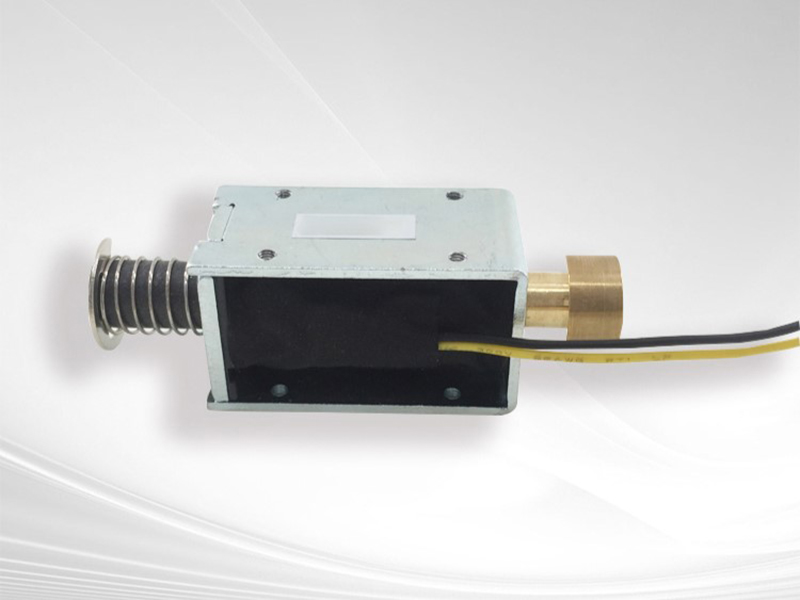
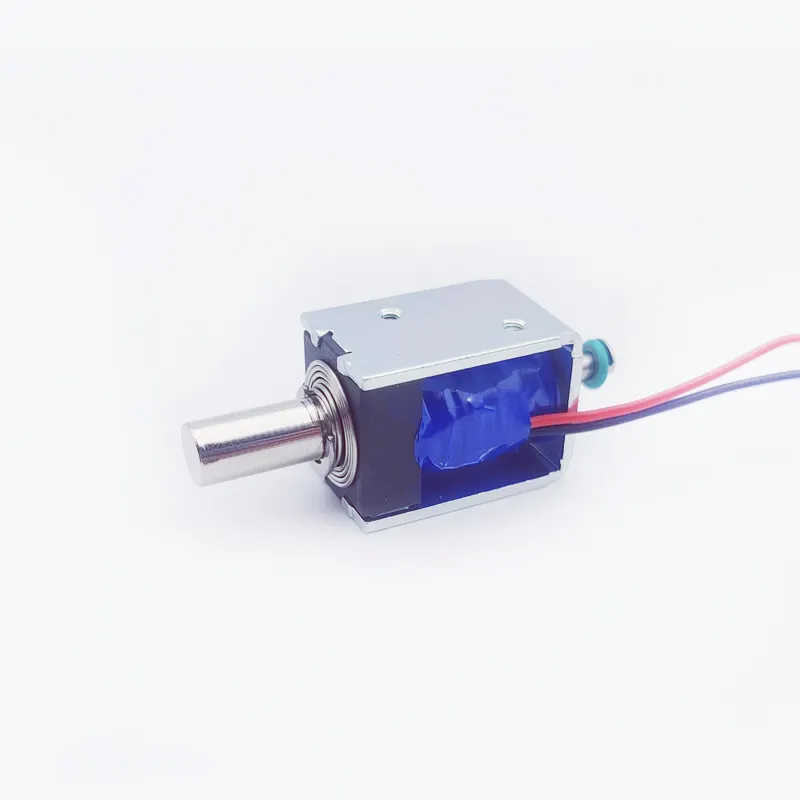
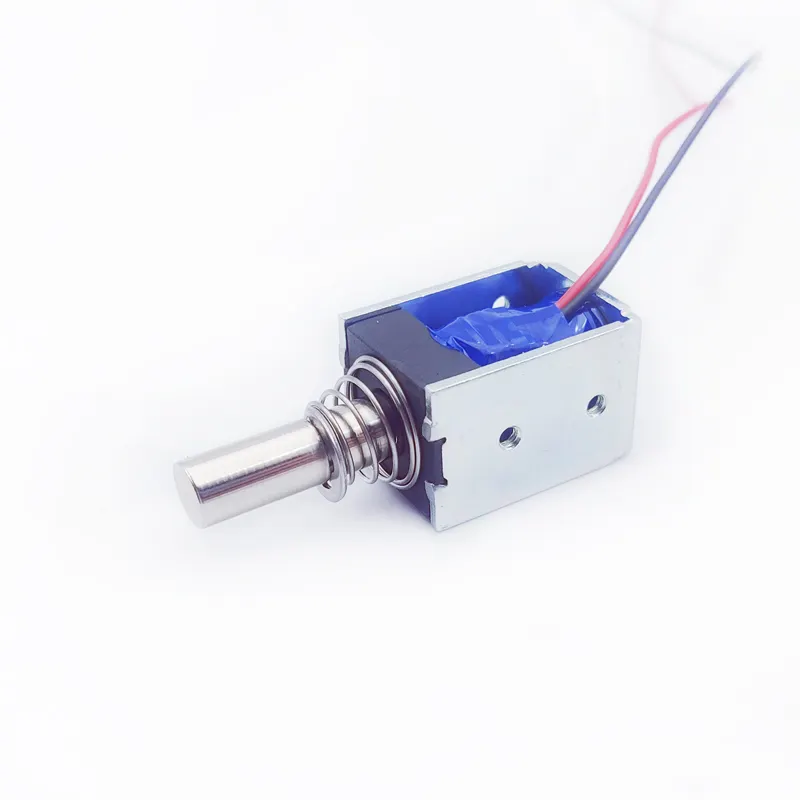
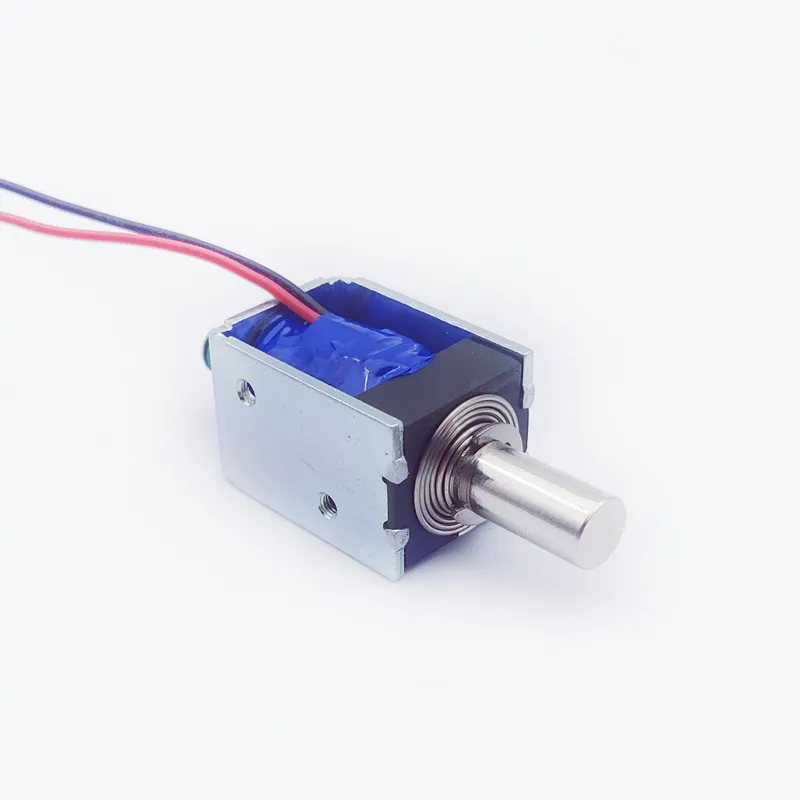
In the realm of electromagnetic technology, solenoides biestáveis are a unique breed that offer distinct advantages for various applications. Unlike traditional solenoids, which require continuous power to maintain their position, bistable solenoids utilize a pulsed current to switch between two stable states, significantly reducing energy consumption. Whether you’re developing an automated system, creating a locking mechanism, or integrating a valve control, choosing the right bistable solenoid is crucial for ensuring optimal performance and reliability.
This blog serves as a comprehensive guide to help you navigate the world of solenoides biestáveis, with a focus on key selection criteria, application considerations, and tips for evaluating potential suppliers. By the end, you’ll be equipped with the knowledge necessary to make an informed decision that aligns with your project’s requirements.
what are Bistable Solenoids
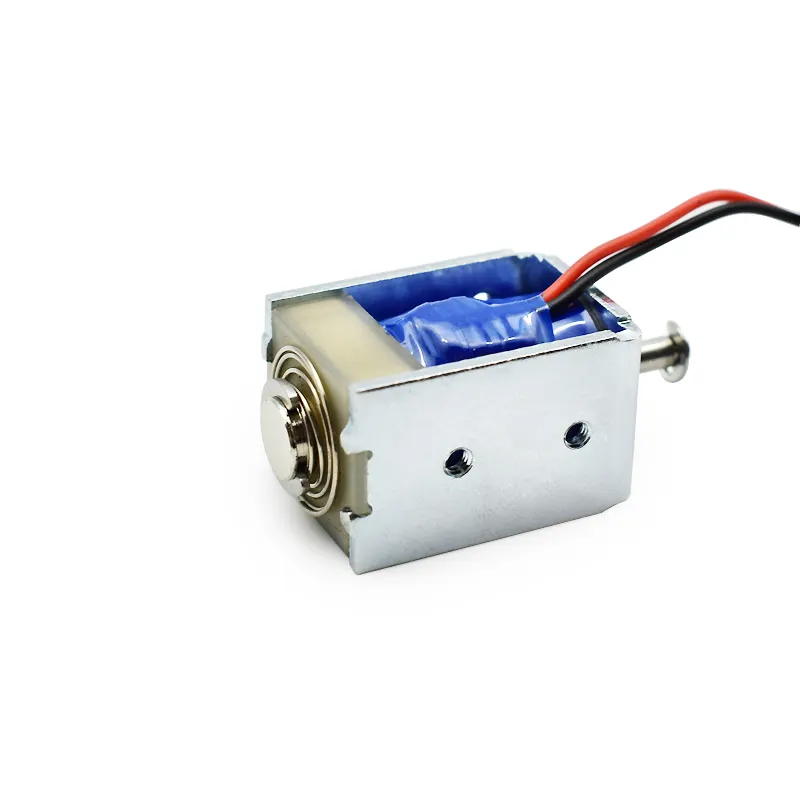
Before diving into the selection process, it’s essential to grasp the basics of solenoides biestáveis. A bistable solenoid operates on the principle of magnetic latching. When energized with a brief pulse, the armature (moving part) is attracted to either of two stable positions, held there by residual magnetism until the next pulse reverses its direction. This dual-state stability eliminates the need for continuous power, making bistable solenoids ideal for applications requiring low power consumption and long-term reliability.
Key Characteristics:
Two Stable States: The armature latches in one of two positions after being pulsed.
Energy Efficiency: No continuous power is required to maintain position.
Design compacto: Often suitable for space-constrained applications.
Long Lifespan: High durability due to reduced wear and tear.
Choosing the Right Bistable Solenoid: Key Criteria
Escolhendo o caminho certo solenoide biestável involves several critical steps, each requiring careful consideration to ensure compatibility with your application’s specific needs. Here are the primary criteria to evaluate:
1. Force and Stroke Requirements
Por que é importante: The force required to actuate the armature and the stroke (distance it travels) are fundamental parameters. They dictate the solenoid’s ability to perform the intended function, whether it’s moving a lever, locking a mechanism, or controlling a valve.
Evaluation Tips:
Calculate the Required Force: Determine the maximum force needed to overcome friction, inertia, or other loads in your application.
Consider Stroke Length: Measure the distance the armature must travel to engage or disengage the target component.
Exemplo: In a security locking system, a bistable solenoid with a high holding force ensures the lock remains secure, while an adequate stroke allows the latch to engage and disengage smoothly.
2. Power Consumption and Voltage Range
Por que é importante: Energy efficiency is a significant advantage of solenoides biestáveis. However, understanding the power consumption during pulsing and the operating voltage range is crucial for compatibility with your system’s power supply.
Evaluation Tips:
Assess Power Budget: Determine the maximum pulsed power your system can provide without overloading.
Voltage Compatibility: Ensure the solenoid’s voltage range aligns with your power supply specifications.
Exemplo: For battery-powered devices, selecting a low-power bistable solenoid extends operational life by minimizing energy consumption.
3. Size and Weight
Por que é importante: Space constraints and weight limitations often dictate the physical dimensions of components in many applications. A solenoid’s size and weight can affect installation, system balance, and overall performance.
Evaluation Tips:
Measure Available Space: Ensure the solenoid fits within the designated area without interfering with other components.
Consider Weight: Lightweight solenoids reduce stress on mounting structures and can be easier to integrate.
Exemplo: In aerospace applications, where every gram counts, choosing a compact, lightweight bistable solenoid optimizes payload and fuel efficiency.
4. Environmental Conditions
Por que é importante: Operational environment can significantly impact a solenoid’s performance and lifespan. Factors such as temperature, humidity, and exposure to contaminants can degrade materials and affect magnetic properties.
Evaluation Tips:
Identify Environmental Factors: Determine the temperature range, humidity levels, and potential contaminants in your application.
Select Appropriate Materials: Choose solenoids with materials that can withstand the identified environmental conditions.
Exemplo: In outdoor applications exposed to extreme temperatures and moisture, a bistable solenoid with rust-resistant coatings and temperature-stable materials ensures long-term reliability.
5. Duty Cycle and Lifespan
Por que é importante: The duty cycle (ratio of on-time to total cycle time) and lifespan (number of cycles before failure) are critical for applications requiring frequent actuation or long-term operation.
Evaluation Tips:
Calculate Duty Cycle: Estimate the solenoid’s operating time relative to the rest period.
Review Lifespan Specifications: Ensure the solenoid’s lifespan meets or exceeds your application’s expected operational duration.
Exemplo: In industrial automation, where solenoids may cycle thousands of times a day, selecting a high-durability bistable solenoid minimizes downtime and maintenance costs.
6. Control and Monitoring Requirements
Por que é importante: Controlling and monitoring the solenoid’s state is essential for ensuring system reliability and diagnosing issues. Compatibility with existing control systems and the need for additional sensors can influence your choice.
Evaluation Tips:
Assess Control System Compatibility: Ensure the solenoid’s control interface (e.g., voltage pulse, digital signal) matches your system’s requirements.
Consider Monitoring Needs: Determine if additional sensors (e.g., position sensors, temperature sensors) are necessary for real-time monitoring.
Exemplo: In a medical device, integrating a bistable solenoid with compatible control electronics and sensors ensures precise, reliable operation and enhances system diagnostics.
7. Certifications and Compliance
Por que é importante: Certifications and compliance with industry standards ensure that the solenoid meets safety, environmental, and performance benchmarks. They can be critical for gaining market acceptance and satisfying regulatory requirements.
Evaluation Tips:
Identify Relevant Standards: Determine the certifications and standards required for your application (e.g., UL, CE, RoHS).
Verify Compliance: Ensure the supplier provides documentation proving compliance with the identified standards.
Exemplo: In automotive applications, selecting a bistable solenoid with ISO/TS 16949 certification ensures it meets rigorous quality management standards.
Choosing the right supplier is as crucial as selecting the right solenoid. A reputable supplier can provide valuable insights, technical support, and quality assurance to ensure your project’s success. Here are some tips for evaluating potential suppliers:
1. Technical Expertise and Experience
Por que é importante: Suppliers with deep technical expertise and experience in solenoides biestáveis can offer tailored solutions, address complex challenges, and provide valuable recommendations.
Evaluation Tips:
Review Technical Literature: Assess the supplier’s knowledge base, white papers, and technical guides.
Consult with Engineers: Engage with their engineering team to discuss your specific requirements and challenges.
Exemplo: A supplier with a proven track record in custom bistable solenoids can design a solution tailored to your unique application.
2. Manufacturing Capabilities and Quality Control
Por que é importante: In-house manufacturing capabilities and robust quality control protocols ensure consistent performance and reliability.
Evaluation Tips:
Tour the Facility: If possible, visit the supplier’s manufacturing facility to observe processes and quality checks.
Request Quality Certifications: Ensure the supplier holds relevant ISO certifications for quality management.
Exemplo: A supplier with ISO 9001 certification demonstrates a commitment to high-quality manufacturing processes.
3. Customization and Prototype Support
Por que é importante: Customization capabilities and support for prototype development can加速 the design process and ensure the solenoid meets your exact specifications.
Evaluation Tips:
Discuss Customization Options: Inquire about the supplier’s ability to modify materials, dimensions, and control interfaces.
Request Prototype Development: Seek a supplier willing to collaborate on prototype development and testing.
Exemplo: A supplier that offers rapid prototyping services can accelerate your product development timeline.
4. Customer Support and After-Sales Service
Por que é importante: Responsive customer support and comprehensive after-sales service are essential for addressing issues, optimizing performance, and ensuring long-term reliability.
Evaluation Tips:
Request Customer References: Speak with existing customers to gauge the supplier’s responsiveness and support quality.
Review Service Agreements: Ensure the supplier offers comprehensive warranty and maintenance services.
Exemplo: A supplier with a dedicated customer support team and a robust warranty program ensures peace of mind and reduces long-term costs.
5. Sustainability Practices
Por que é importante: Environmental sustainability is increasingly important. Choosing a supplier committed to sustainable practices supports your efforts to reduce environmental impact.
6. Price and Cost-Effectiveness
Por que é importante: While price is a critical factor, it should not be the sole determinant. Evaluating the overall cost-effectiveness, which includes performance, reliability, and long-term maintenance costs, is essential.
Evaluation Tips:
Request Detailed Quotes: Ensure quotes include all necessary components, shipping, and any potential setup fees.
Assess Lifecycle Costs: Consider the solenoid’s expected lifespan and maintenance requirements when evaluating cost-effectiveness.
Exemplo: A slightly higher-priced solenoid with superior durability and lower maintenance costs may be more cost-effective in the long run.
Making the Final Decision of bistable solenoids
Escolhendo o caminho certo solenoides biestáveis involves a thorough evaluation of your application’s requirements and a careful assessment of potential suppliers. By focusing on key criteria such as force and stroke requirements, power consumption, size and weight, environmental conditions, duty cycle and lifespan, control and monitoring needs, and certifications and compliance, you can narrow down your options to those that best meet your needs.
Furthermore, evaluating suppliers based on their technical expertise, manufacturing capabilities, customization support, customer service, sustainability practices, and cost-effectiveness ensures you partner with a reliable, responsive organization committed to your project’s success.
Remember, the best bistable solenoid is not necessarily the cheapest or the most advanced; it’s the one that aligns perfectly with your application’s specific requirements and supports your long-term goals.
Additional Resources and Next Steps
As you continue your search for the ideal solenoides biestáveis, consider these additional resources and next steps:
Supplier Websites: Visit the websites of potential suppliers to learn more about their products, services, and technical capabilities.
Industry Publications: Read industry publications and trade journals to stay informed about the latest trends, advancements, and best practices in bistable solenoid technology.
Trade Shows and Conferences: Attend industry trade shows and conferences to network with suppliers, learn about new products, and gather insights from peers and experts.
Pilot Testing: Consider pilot testing a few selected solenoids in your application environment to validate performance and reliability before making a final decision.
By leveraging these resources and following the guidance outlined in this blog, you’ll be well-equipped to choose the right bistable solenoid for your application, ensuring optimal performance, reliability, and cost-effectiveness.
Sobre a fábrica de eletroímãs SF
A Shengfeng Electromagnet Co., Ltd. foi fundada em 2015 e está localizada no Parque Industrial de Xiansha, com belas paisagens e transporte conveniente. A empresa ocupa uma área de 16.000 metros quadrados e tem instalações de produção modernas, equipamentos de produção avançados e uma equipe técnica de alta qualidade. Desde sua fundação, sempre aderimos à filosofia corporativa de “inovação, qualidade e serviço”, com foco em pesquisa, desenvolvimento e produção de eletroímãs, A empresa está constantemente promovendo atualizações de produtos e progresso tecnológico, além de fornecer aos clientes produtos e serviços da melhor qualidade.
Por que escolher o eletroímã SF
QUALIDADE DE PONTA:Como o melhor fabricante de eletroímãs solenoides da China, nossa equipe de controle de qualidade garantirá que todos os produtos que você receber sejam da melhor qualidade. Temos uma máquina de teste de qualidade profissional.
DESIGN DO PRODUTO:Nosso departamento de amostragem tem um processo completo de transformar desenhos em realidade. Também aprimoramos o design do seu produto com base em nossos anos de experiência de trabalho.
TEMPO DE ENTREGA ESTÁVEL:Como o melhor fabricante e fornecedor de eletroímãs, temos capacidade de fabricação suficiente, grandes pedidos não nos vencem e ainda podemos entregar o pedido a tempo.
MELHOR PREÇO:Somos uma fábrica de fontes de eletroímãs e o melhor fabricante de solenóides da China, por isso podemos fornecer bolsas de alta qualidade com o melhor preço.
GERENCIAMENTO PRECISO:Nada pode ser alcançado se não implementarmos um gerenciamento preciso. Somos uma empresa com um sistema de gerenciamento completo.
7-24 SERVIÇO:Como o melhor fabricante de solenóides, resposta imediata 24 horas por dia, 7 dias por semana: Receberemos seu feedback para nos tornar um fornecedor melhor.
Perguntas frequentes sobre o eletroímã
Você é um fabricante ou um comerciante?
Somos uma empresa chinesa de ponta eletroímã e nossa fábrica está localizada em Dongguan. Bem-vindo a visitar nossa fábrica!
Qual é a sua linha de produtos?
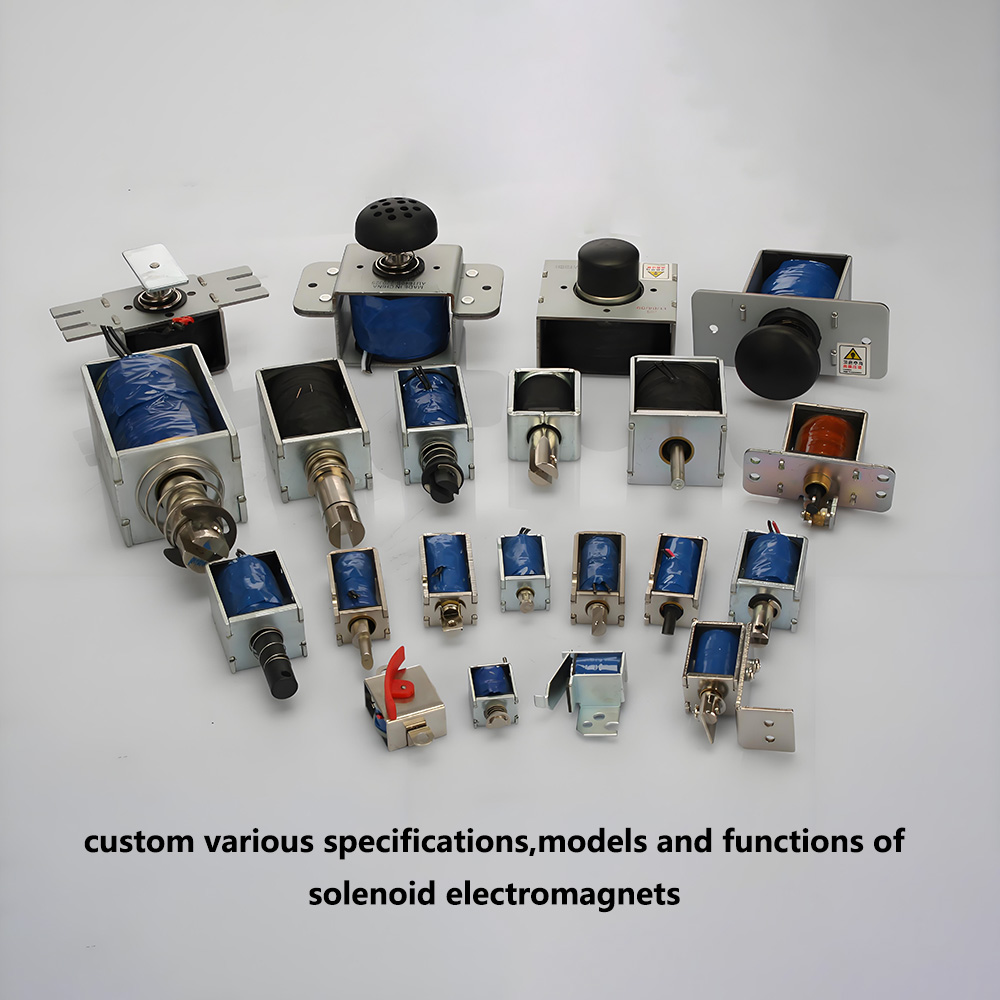
Somos especializados no design e na produção de produtos de alta qualidade eletroímã,válvula solenoide,como solenoide rotativo,solenoides biestáveis, solenoides de travamento, solenoides de estrutura aberta, solenoides tubulares, solenoide de retenção automática
Você pode fornecer amostras?
-É claro que, normalmente, fornecemos amostras grátis, e você só precisa arcar com o frete. Para amostras personalizadas de eletroímãs, envie-nos seus requisitos para verificarmos o custo da amostra. - A produção de amostras leva cerca de 7 dias.
Vocês podem fornecer um design gratuito para minha caixa?
Sim, fornecemos serviços gratuitos de design, design estrutural e design gráfico simples.
Posso personalizar meu logotipo, design ou tamanho?
Claro, podemos fazer qualquer eletroímã com seu projeto. Agora, abrimos um solenoide ODM que é para pequenas quantidades de 100 a 500 unidades, mas você ainda pode ter seu próprio logotipo.
Qual é o prazo de entrega?
Dependendo da quantidade do pedido e dos detalhes da produção, o prazo é de 15 a 20 dias.
Como podemos garantir a qualidade?
Sempre uma amostra de pré-produção antes da produção em massa; sempre a inspeção final antes do envio
Quais informações devo fornecer para uma cotação?
- Potência, uso, tamanho, material, quantidade, destino da remessa, etc. - Você também pode simplesmente nos informar suas necessidades e nós recomendaremos produtos para você.
Como enviar mercadorias?
- Por via marítima, aérea ou expressa. - Se você tiver seu próprio despachante na China, esse é o preço à saída da fábrica ou FOB. -CFR ou CIF, etc., se precisar que façamos o envio em seu nome. - DDP e DDU também podem ser usados. - Mais opções, consideraremos suas opções.
Quanto custa?
- O preço é determinado pela quantidade, material, método de processamento, tamanho e outros fatores. Além disso, devido à nossa contínua inovação tecnológica, os preços de alguns de nossos produtos são extremamente competitivos; entre em contato conosco para fazer uma cotação.
Diretor de negócios de comércio exterior
13 anos de experiência comercial
Atender a clientes de marcas conhecidas
Qualquer dúvida, entre em contato comigo imediatamente!
 English
  Portuguese