









In Part 1, we explored the magnetic properties of pure iron and silicon steel, including permeability, saturation flux density, hysteresis, and eddy current losses.(click for more) However, selecting the right magnetic material is only the beginning. Achieving an ultra-fast, reliable custom solenoid requires engineers to optimize the entire magnetic system—from core material and air-gap geometry to coil design and drive electronics.
This chapter examines advanced engineering techniques used by professional solenoid manufacturers to maximize response speed while maintaining force, efficiency, and long-term reliability.
11. Laminated Silicon Steel vs. Solid Pure Iron
One of the most common engineering questions is whether laminated silicon steel should replace a solid pure iron core.
The answer depends primarily on the operating frequency.
Solid Pure Iron Core
Solid pure iron remains the preferred material for most DC-operated custom electromagnets because of its exceptional magnetic permeability and high saturation flux density.
Vantaggi
- Highest magnetic permeability
- Excellent saturation characteristics
- Strong pull force
- Simple machining
- Lower manufacturing cost
- Best choice for DC push-pull solenoids
Limitations
- Higher eddy current losses under AC excitation
- Slightly slower magnetic decay during de-energization
Typical applications include:
- Smart locks
- Industrial automation
- Solenoid valves
- Medical actuators
- Vending machines
Laminated Silicon Steel Core
Laminated silicon steel consists of thin insulated sheets stacked together.
This structure interrupts eddy current paths, significantly reducing power loss during rapidly changing magnetic fields.
Vantaggi
- Low eddy current loss
- High-frequency operation
- Reduced heating
- Better AC efficiency
Limitations
- Lower saturation flux density than pure iron
- More complex manufacturing
- Higher production cost
- Less suitable for miniature precision solenoids
Applications include:
- AC contactors
- Relays
- Transformers
- Industrial AC electromagnets
Table 8. Laminated Silicon Steel vs. Solid Pure Iron
| Property | Solid Pure Iron | Laminated Silicon Steel |
|---|---|---|
| DC Performance | Excellent | Good |
| AC Performance | Fair | Excellent |
| Eddy Current Loss | High | Very Low |
| Saturation Flux Density | Excellent | Good |
| Manufacturing Cost | Low | Più alto |
| Response Speed (DC) | Excellent | Good |
| High-Frequency Operation | Limited | Excellent |
Engineering Insight: Laminated silicon steel is not inherently “better” than pure iron. For most DC-operated custom solenoids, solid pure iron still provides superior force density and faster response.

12. Powdered Iron and Soft Magnetic Composite (SMC) Materials
As industries demand lighter, smaller, and more energy-efficient actuators, engineers are increasingly exploring advanced magnetic materials.
Two promising options are powdered iron and Soft Magnetic Composites (SMCs).
Powdered Iron
Powdered iron cores are manufactured by compressing insulated iron particles into a solid shape.
Vantaggi
- Reduced eddy currents
- Isotropic magnetic properties
- Complex geometries
- Lower noise
Limitations
- Lower permeability than pure iron
- Lower saturation flux density
- Higher cost
Soft Magnetic Composite (SMC)
SMC materials consist of iron powder coated with electrically insulating materials before compaction.
Vantaggi
- Extremely low eddy current losses
- Three-dimensional magnetic flux capability
- Lightweight
- Excellent for high-frequency applications
Applications include:
- Automotive actuators
- Electric vehicle systems
- Compact robotics
- Aerospace
Although SMC technology is rapidly evolving, it is not yet a universal replacement for traditional soft iron in high-force elettromagnete solenoide applicazioni.
13. Finite Element Analysis (FEA): Why Simulation Is Essential
Modern solenoid manufacturers increasingly rely on Finite Element Analysis (FEA) to predict electromagnetic performance before prototypes are built.
FEA enables engineers to evaluate:
- Magnetic flux distribution
- Flux leakage
- Saturation regions
- Pull force
- Response time
- Heat generation
- Air-gap optimization
Benefits of FEA
- Reduced prototype cost
- Faster development cycles
- Improved design accuracy
- Better material selection
- Optimized magnetic efficiency
Engineering Insight
Changing magnetic material without simulation may produce unexpected results.
Per esempio:
A higher-permeability material may saturate earlier if the magnetic path is undersized.
FEA allows engineers to visualize these effects before manufacturing.
14. Why Air Gap Optimization Is More Important Than Material Alone
Many customers ask:
“Should I upgrade from silicon steel to pure iron?”
In many cases, optimizing the air gap provides greater performance improvement than changing the material itself.
The air gap is the highest reluctance section of the magnetic circuit.
Even a tiny reduction in gap length can dramatically increase magnetic force.
Small Air Gap
Advantages:
- Higher pull force
- Faster response
- Better efficiency
Potential problems:
- Manufacturing difficulty
- Increased friction
- Thermal expansion sensitivity
Large Air Gap
Advantages:
- Better tolerance to contamination
- Easier manufacturing
Disadvantages:
- Lower force
- Higher current requirement
- Slower response
Table 9. Air Gap Effects
| Air Gap | Pull Force | Response Speed | Coil Current |
|---|---|---|---|
| Small | High | Fast | Inferiore |
| Medium | Balanced | Balanced | Balanced |
| Large | Inferiore | Slower | Più alto |
Key Takeaway: Before upgrading magnetic materials, optimize the air gap. In many cases, this yields greater performance gains at a lower cost.
15. Coil Design Strategies to Improve Response Time
Magnetic material is only one part of a high-speed actuator.
Coil design strongly influences response time.
Key parameters include:
- Number of turns
- Wire diameter
- Coil resistance
- Inductance
- Current rise time
- Thermal performance
Lower Inductance
Advantages:
- Faster current rise
- Faster response
Trade-off:
- Higher current consumption
Larger Wire Diameter
Advantages:
- Lower resistance
- Higher peak current
Trade-off:
- Fewer turns in the same space
Optimized Coil Fill Factor
Professional custom electromagnet manufacturers maximize copper fill while maintaining insulation integrity.
This improves efficiency without increasing coil size.
16. High-Speed Drive Circuits
Mechanical design alone cannot achieve the fastest response.
Drive electronics are equally important.
Peak-and-Hold Drive
A high initial current rapidly moves the plunger.
Current is then reduced to a lower holding level.
Advantages:
- Faster response
- Lower heating
- Improved efficiency
Widely used in:
- Fuel injectors
- Medical equipment
- Precision valves
PWM Current Control
Pulse Width Modulation regulates average current.
Benefits include:
- Reduced heat
- Adjustable force
- Energy savings
Boost Voltage
Some applications briefly apply a voltage significantly higher than the rated coil voltage.
Per esempio:
24 V coil
↓
48 V for 20 ms
↓
24 V holding
Advantages:
- Extremely fast response
Requires careful thermal design to prevent coil overheating.
Table 10. Drive Circuit Comparison
| Method | Response Speed | Coil Heating | Complexity |
|---|---|---|---|
| Direct DC | Standard | Moderare | Low |
| Peak-and-Hold | Excellent | Low | Medium |
| PWM | Very Good | Low | Medium |
| Boost Voltage | Excellent | Moderare | High |
17. Eight Industry Application Examples
Smart Locks
Preferred Material:
Pure Iron
Reason:
Fast response with low power consumption.
Coffee Machines
Preferred Material:
Pure Iron + Nickel Plating
Requirement:
Reliable valve operation under humid conditions.
Medical Equipment
Preferred Material:
High-purity soft iron
Requirement:
Stable repeatability.
Automazione industriale
Preferred Material:
Pure Iron
Requirement:
High pull force.
Automotive Electronics
Preferred Material:
Silicon Steel or SMC (depending on operating frequency)
Requirement:
Temperature stability.
Robotics
Preferred Material:
Pure Iron + FEA optimization
Requirement:
High-speed positioning.
Aerospace
Preferred Material:
SMC
Requirement:
Weight reduction.
Electric Vehicles
Preferred Material:
Soft Magnetic Composite
Requirement:
High-frequency efficiency.
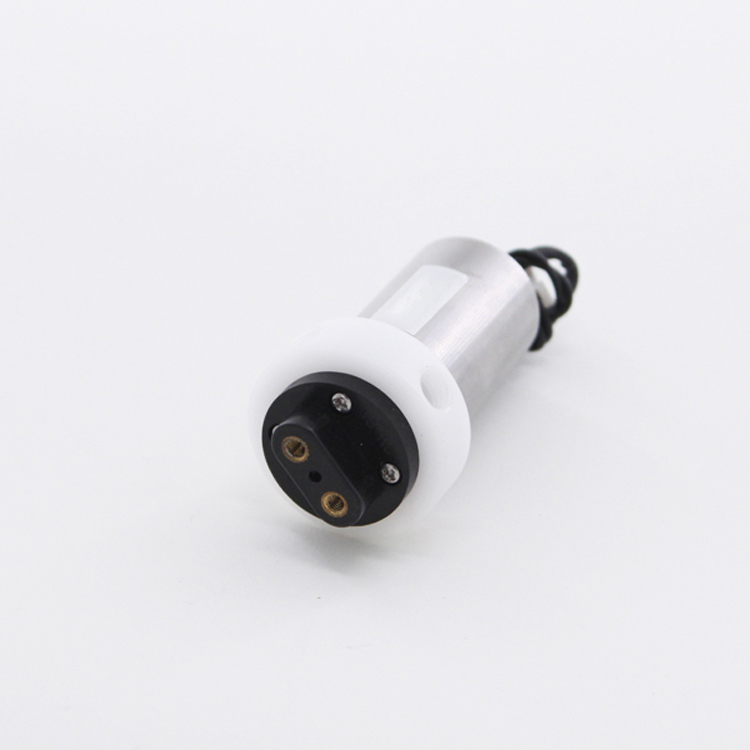
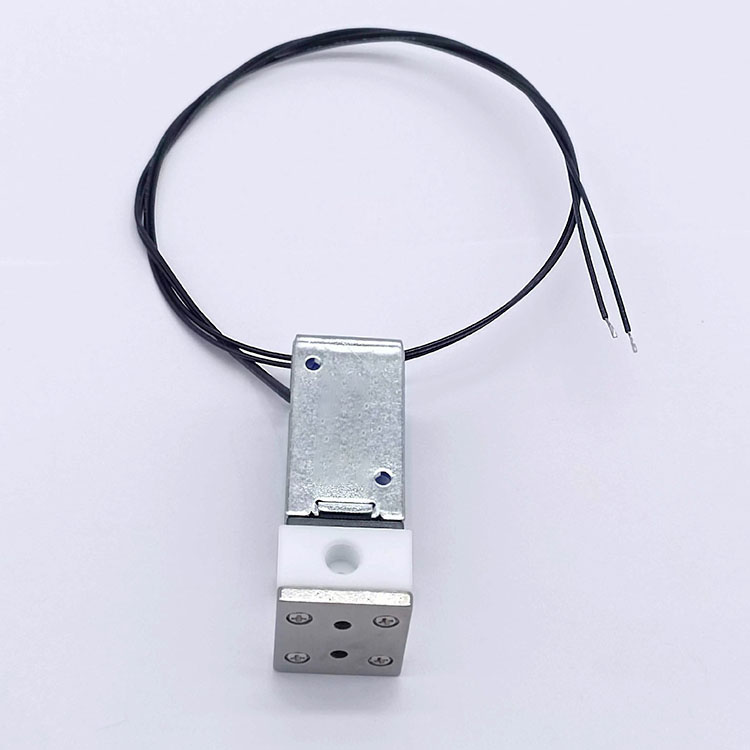
18. OEM Case Study – SF Customized High-Speed Solenoid for Intelligent Lock Systems
A European smart lock manufacturer approached SF with the following requirements:
- Response time below 15 ms
- 1 million life cycles
- Low power consumption
- Compact dimensions
- Outdoor durability
Engineering Challenges
The original actuator used standard carbon steel, resulting in:
- Slow response
- Inconsistent force
- Excessive magnetic remanence
SF Engineering Solution
Our engineering team redesigned the actuator using:
- High-purity soft iron core
- Electroless nickel plated plunger
- Optimized air gap
- Precision ground guide sleeve
- Peak-and-hold drive recommendation
- FEA magnetic optimization
Results
| Performance | Original | SF Solution |
|---|---|---|
| Response Time | 21 ms | 12 ms |
| Operating Current | 100% | -18% |
| Life Cycle | 1 Million | 5 Million+ |
| Aumento della temperatura | High | Reduced |
| Noise | Moderare | Very Low |
The customer successfully integrated the customized solution into its premium smart lock product line, achieving improved reliability and lower power consumption.
19. How to Select the Right Custom Electromagnet
Selecting the correct custom electromagnet requires evaluating multiple engineering factors simultaneously.
Selection Checklist
- Tensione di funzionamento
- ciclo di lavoro
- Required force
- Stroke length
- Temperatura ambiente
- Operating frequency
- Response time target
- Space limitations
- condizioni ambientali
- Service life
- Noise requirements
- Drive circuit type
- Magnetic material
- Surface plating
- Manufacturing tolerances
A professional engineering review at the design stage can significantly reduce development time and improve overall system reliability.
20. How to Evaluate a Professional Solenoid Factory
Not all factories have the capability to develop high-performance electromagnetic solutions.
When choosing a fabbrica di solenoidi, evaluate:
Ingegneria
- Electromagnetic simulation (FEA)
- Thermal analysis
- Material expertise
- Mechanical optimization
Produzione
- CNC machining
- Precision grinding
- Automated coil winding
- Surface treatment quality
- Clean assembly process
Test
- Pull force testing
- Response time measurement
- Temperature rise testing
- Salt spray testing
- Lifecycle testing
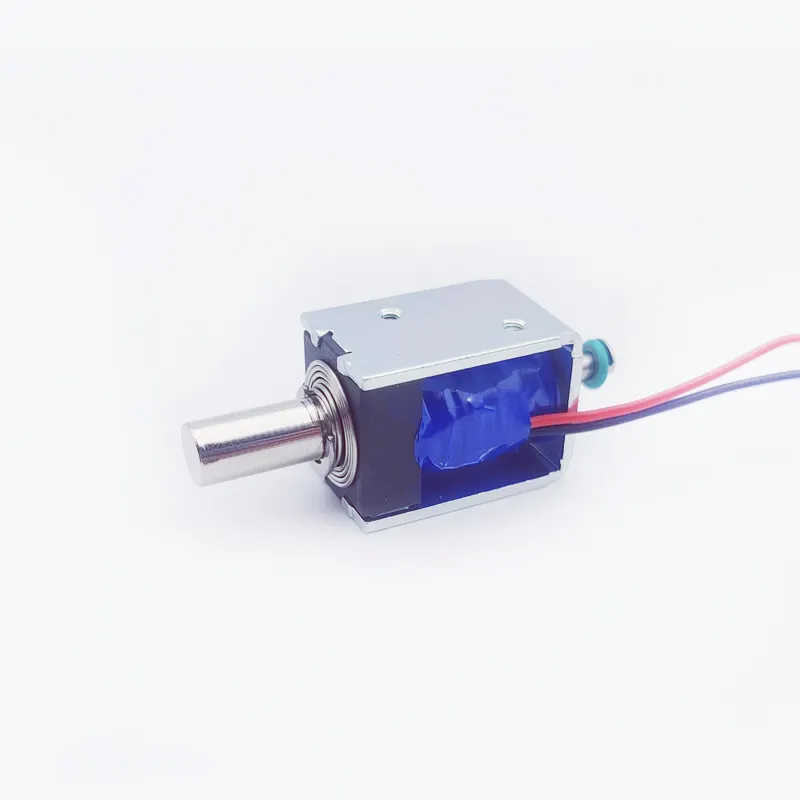
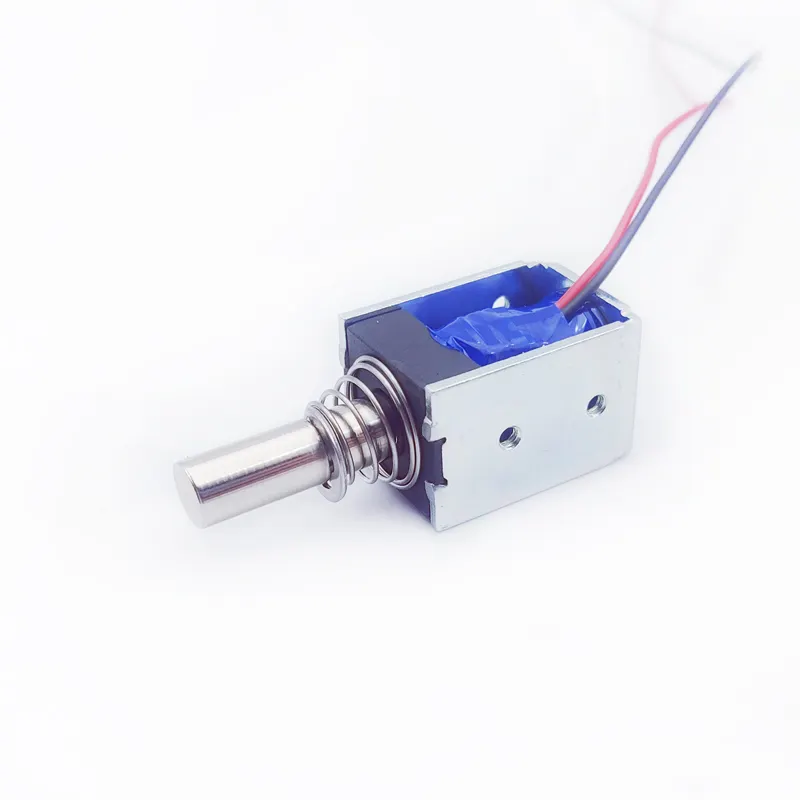
21. Why SF Is the Preferred Solenoid Manufacturer
With over 10 anni di esperienza, SF specializes in developing customized elettromagnete solenoide solutions for global OEM customers.
Our strengths include:
- Experienced engineering team
- 6,000㎡ modern manufacturing facility
- Advanced FEA design capability
- Precision machining and assembly
- Comprehensive lifecycle testing
- Customized solutions for smart locks, medical devices, coffee machines, industrial automation, robotics, and automotive applications
- Export experience to more than 60 countries and regions
From concept development and prototype validation to mass production, SF provides complete engineering support to help customers achieve higher performance, longer service life, and lower total ownership costs.
22. Future Magnetic Material Technologies
The future of custom solenoids will increasingly rely on advanced materials and digital engineering.
Emerging technologies include:
- Nano-crystalline soft magnetic alloys
- Amorphous magnetic metals
- High-performance Soft Magnetic Composites (SMCs)
- Additive-manufactured magnetic components
- AI-assisted electromagnetic optimization
- Digital twin simulation for predictive performance
These innovations will enable smaller, faster, and more energy-efficient actuators for next-generation industrial and consumer applications.
23. Frequently Asked Questions (FAQ)
Q1. Is pure iron always better than silicon steel for solenoids?
Not always. Pure iron is generally preferred for DC-operated solenoids requiring high force and fast response, while laminated silicon steel performs better in AC or high-frequency applications.
Q2. Does magnetic material determine response time?
It is a major factor, but response time also depends on air-gap design, coil inductance, plunger mass, friction, spring force, and the drive circuit.
Q3. Can FEA replace physical testing?
No. FEA significantly reduces development time and improves design accuracy, but prototype validation remains essential.
Q4. What is the advantage of Soft Magnetic Composite (SMC)?
SMCs offer very low eddy current losses and support complex three-dimensional magnetic paths, making them suitable for high-frequency and lightweight applications.
Q5. How can I increase response speed without increasing coil size?
Optimize the magnetic material, minimize the air gap, reduce moving mass, improve coil design, and use a peak-and-hold or boost-voltage drive circuit.
Q6. Which industries benefit most from customized electromagnets?
Automotive, industrial automation, medical equipment, robotics, home appliances, smart locks, coffee machines, aerospace, and electric vehicles.
Q7. Why work with a custom solenoid manufacturer instead of buying standard products?
Custom engineering allows optimization of force, stroke, response time, thermal performance, service life, and integration, often resulting in better overall performance and lower lifecycle costs.
How to choose
Selecting the optimal magnetic material involves more than choosing between pure iron and silicon steel. High-performance custom solenoids are the result of a balanced engineering approach that combines magnetic material selection, air-gap optimization, coil design, surface treatment, and intelligent drive electronics.
Professional solenoid manufacturers use tools such as FEA simulation, precision manufacturing, and lifecycle testing to optimize every aspect of the magnetic system. By integrating these capabilities with more than 10 years of OEM experience, a Stabilimento di produzione di 6.000 m², and exports to Oltre 60 paesi e regioni, SF delivers customized electromagnet solutions that meet demanding requirements for speed, reliability, efficiency, and long-term durability. This integrated engineering approach is why SF is the preferred partner for global OEMs seeking advanced custom electromagnet E solenoid solutions.
Elettromagneti personalizzati di ogni tipo, contattare la fabbrica di elettromagneti SF WhatsApp +86 189 0261 1680